The X-Files: Perihelion Offers a Bad New Beginning Rather Than a Long Needed Ending
Perihelion refuses to offer closure and sends the sprawling mythology of The X-Files in a new, terrible direction
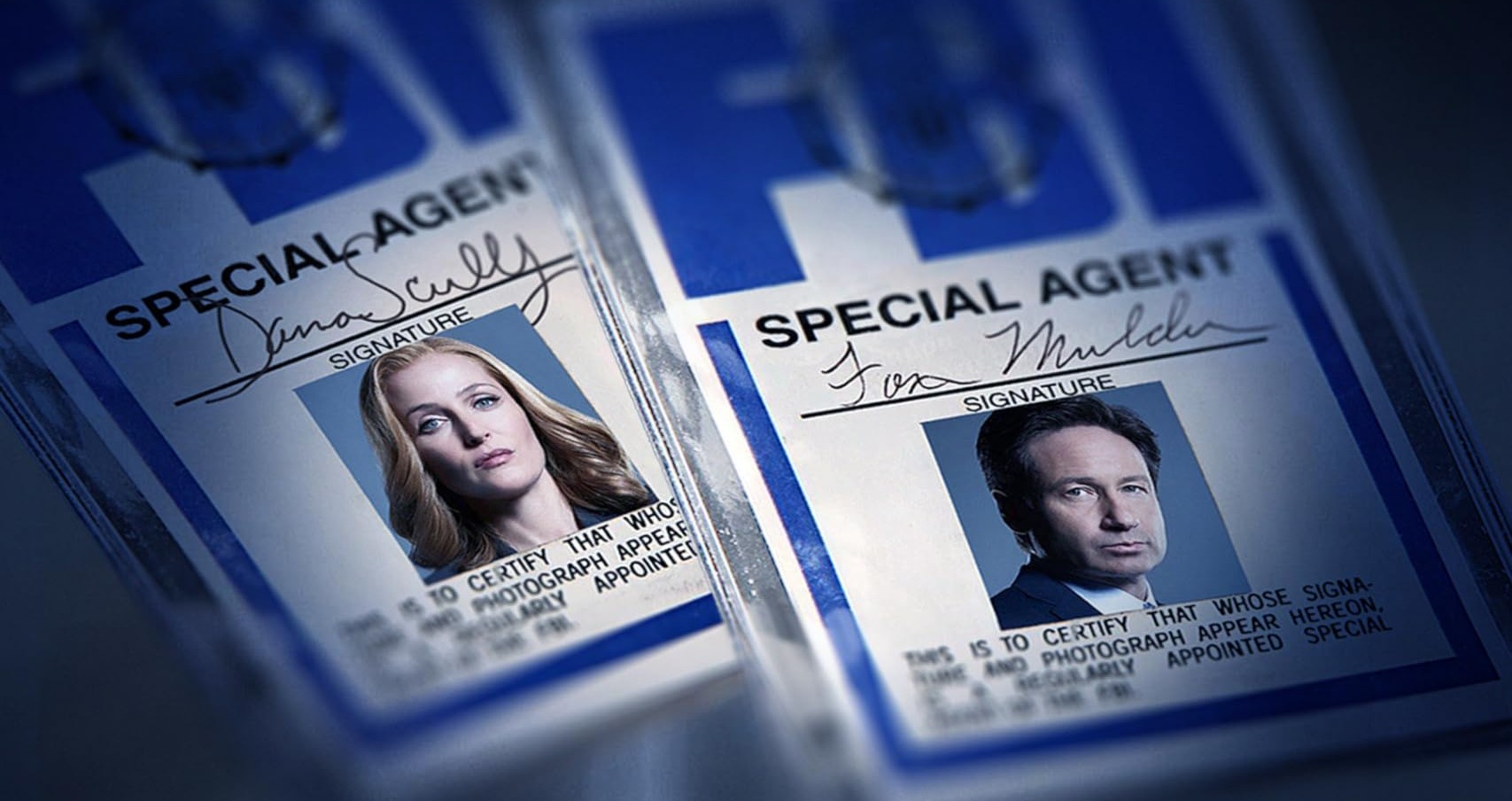
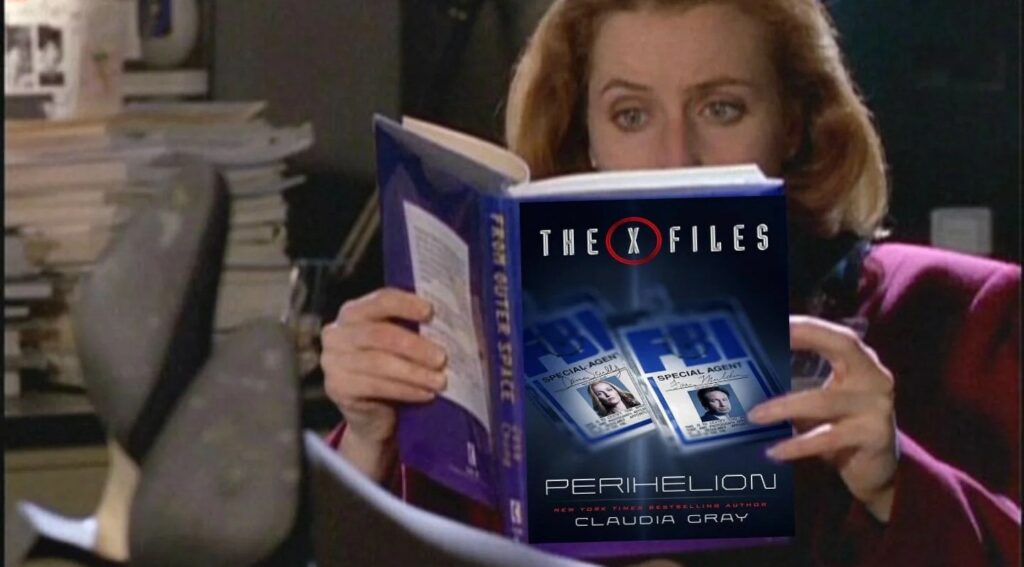
The X Files: Perihelion is not the ending I was expecting. In fact, it’s not an ending at all. After wrapping up with a lame kinda-sorta series finale, The X-Files returns in novel form, with Claudia Gray penning Perihelion, set soon after the events of the final season. I was expecting, or at least hoping, it would act as an epilogue for the show. A valiant attempt at an impossible task, trying to bring some closure to the convoluted storytelling. Chris Carter couldn’t end his series so let someone else. Wrap up the loose ends and let Mulder and Scully walk into the sunset for good. But no. Instead of an iris out, the world expands anew in a direction I just don’t like. Perihelion is a new beginning when it could and probably should have been something different: a conclusion.
I didn’t want a culmination, that ship has sailed, there’s no way to wrangle everything into a satisfying, coherent finale, but Perihelion was the place for a small goodbye. A farewell for fans. At the start it seems to be just that, confirming the state of each supporting character after the abrupt end of the show. There’s no doubt that the Cigarette-Smoking Man is dead (although we’ve thought that before), Skinner is alive though comatose, William is out there somewhere but dead as far as anyone knows, and Mulder and Scully are having a baby girl.
One last check in with everyone, apart from Doggett. Where is Doggett?! It all started to feel like a solid, low key wrap-up, with Mulder and Scully moving on with their lives, free of conspiracy, and when they are offered a return to the X-Files I was expecting them to turn it down. That would have been a satisfying ending for me. The two of them not being fired or the office closed down for the hundredth time. Rather, them choosing to let it go, that the Syndicate’s plans are over, that they can move on and choose each other rather than the work. But no, they do go back to work and the cycle continues. It goes on and on and on and the novel feels like a pilot for yet another revival.
But before tackling the plot, I want to discuss the characterisation because that is the novel’s strength. At least with Scully. Finally, there’s a female perspective the show didn’t have. I think Gray handles Scully’s inner thoughts well, offering insight the show rarely attempted and when it did it butchered. Gray and Scully are aware of the convoluted nature of the character’s new pregnancy: “my second pregnancy will result in my third child, who will be the first one I will be able to raise myself.” I didn’t like the pregnancy reveal in season 11, it was a ludicrous repeat of an already exhausted storyline, but with someone other than Carter writing it there’s new material to explore. There even feels like meta jabs at the storyline: “I resent that so much of my life journey – even as an FBI agent – is tied to my maternity.” Gray dives deep into how this pregnancy affects an older Scully, actually reckoning with the positives and negatives, rather than treating it as some great miracle that is the only thing Scully cares about.
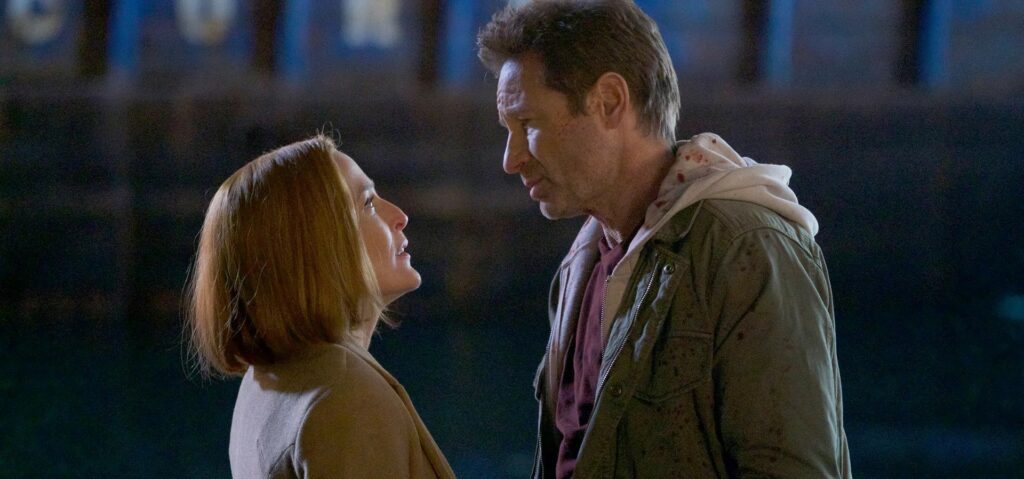
Gray does a good job at capturing Scully’s voice, and not just literally: “her voice had become husky.” The character here feels like a more natural evolution of the character than she did across much of the revival seasons. And her flowery inner monologue works much better as a written journal that it does a pretentious voiceover in an episode. There’s a big jump in the novel from Carter’s purple prose to more natural conversation. Although it does often feel too casual for my taste. Some new characters seem totally unprofessional in a way which irks me, particularly the scientist aiding Scully, Karen Jones. We even get the first F-bomb of the series.
Aside from a perfect “Sculllaaay!”, Gray is weaker at reproducing Mulder’s specific voice. In general, there’s much more insight into Scully than Mulder. We get a deeply personal journal entry written by her followed by a dry mission report written by him. She goes to church, which makes sense, he goes to the gym, which I just don’t see. I personally don’t think his characterisation matches the Mulder I know from the show. He wouldn’t say “delish” unironically. And he wouldn’t watch Star Trek: Strange New Worlds. He’s in a state of arrested development: he just watches the same episodes of original Star Trek from his youth again and again. There’s actually a surprising number of references to other media and it often feels like Gray is unnaturally forcing the characters to like what she likes, which makes the novel too often feel like fan fiction. It also doesn’t make sense because SNW and Andor (also mentioned) wouldn’t exist when the novel is set, immediately after the last season in 2017.
At the beginning of Perihelion, Scully has a good job at an advanced medical company Genomica while Mulder is still looking for work. He’s lost, occasionally guesting on conspiracy podcasts, which is a fun inclusion. He initially thinks it’s an outlet for the truth but sees that it changes nothing. There is no mainstream media anymore, no truth. “Evidence is irrelevant.” Everyone believes what they want to believe. Objectivity is dead. It’s a welcome continuation of the modernisation of the themes of the show that Darin Morgan explored in his episode The Lost Art of Forehead Sweat but the mythology at large ignored (because it kills the show). Gray gives the ideas lip service in regards to small cases but promptly pushes them to one side to create a whole new conspiracy storyline.
Mulder struggles to find new work because nothing would be as fulfilling as helping those in need. Mulder’s pursuit of the truth is described as wholly selfless. That it’s not self-indulgent and he wants vindication less for himself and more for the countless victims whose strange stories go unbelieved by a corrupt government. This is also a place I find myself disagreeing with Claudia Gray’s version of the character. I wouldn’t paint Mulder as selfish but I believe his personal answers and beliefs do come first, that his sister dominated his reasons for his investigations and in some ways still does, and there are multiple examples of him being less than kind to people in rough circumstances because they don’t have the specific information he seeks. It doesn’t make him a bad guy, it makes him a good character with an interesting personal drive and I find the painting of him as a pure and noble figure here to be untrue.
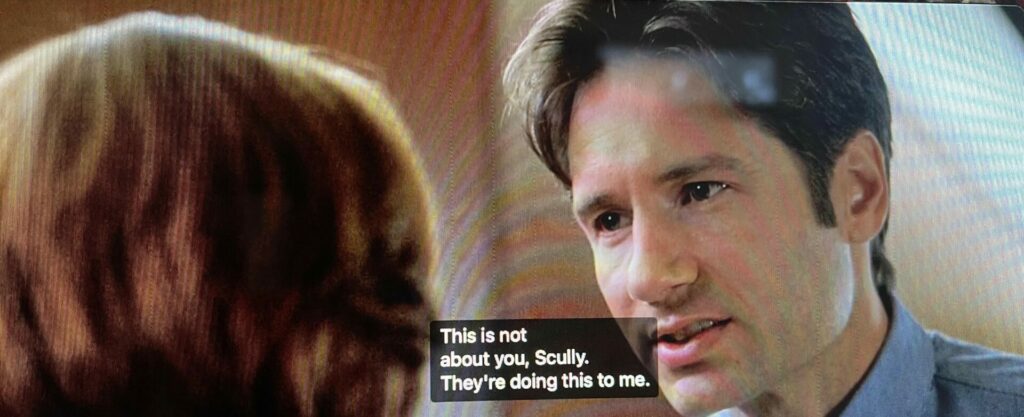
However I do like Mulder’s perspective on William and his conflict with Scully about the boy they believed was their son. Mulder helps externalise an argument raging within Scully. At the start of the book she’s denying what she felt for William. “William was an experiment. He was never Mulder’s. He was barely mine. He wasn’t our child.” Across the novel she comes to accept that the ‘truth’ of his parentage doesn’t change how she felt for so many years. Mulder has a great line during an argument: “Finding out William had another father didn’t patch the hole in my gut. It just tore another one.” This is the kind of reconciliation of storylines I wanted from this novel. I didn’t like the reveal of who William’s father truly was in the show but the book can make it work. Chris Carter used the reveal as a way to quickly cast aside the plot, four seasons of storytelling promptly concluded, but Perihelion takes to time to delve into what the reveal actually means for the characters.
“To hell with all the cryptids in the world. He just wanted to get home to Scully.” Perihelion is a shipper’s novel through and through. It’s clear that Claudia Gray cares deeply for the relationship between Mulder and Scully and doesn’t shy away from it being romantic. I’ve always liked the characters more as platonic. That them being in a relationship removes the more interesting drama and replaces it with more boring, standard fare, but at this point the decision is well and truly made and the show (and now novel) needs to commit to them as a couple. And it does. I’m sure the book works wonderfully for those just wanting Mulder and Scully to be together. They live together in a new townhouse, though have different rooms at the start, and for the first 100 pages Mulder and Scully sharing dinner, peeling potatoes, is the plot. I didn’t mind it, although I didn’t need descriptions of absolutely every meal they consume.
It’s when the two of them go back to work at the FBI that Perihelion falls off a cliff. It turns out there’s been an explosion of X-Files cases, which in turn explodes the very concept of The X-Files. “The entire world is about to be an X-File.” Mankind is mutating on a global scale, the alien virus having unforeseen circumstances and altering everybody’s DNA. Huge numbers of people are becoming genetic mutants. The world has yet to notice because it’s more focused on political strife, which even with the current political climate is hard to believe when there’s an influx of superhumans walking around. The one interesting aspect of this is that Mulder now ponders whether his job should be to keep things a secret rather than revealing the truth, but this idea is contained to a single passage.
The X-Files is all about the strange fringe cases among normal life. This twist means there is no more normal life. No contrast, and it makes the mutations uninteresting. When everyone’s weird nobody is. Gray acts as if this is the catalyst for the show continuing in some way but it would get boring fast. Every case would have the same explanation. There are hints that there’s now a Tooms 2.0 out there and even plants and animals are affected for some reason. It uproots everything on a massive scale I don’t find interesting.
The mutations are portrayed less as horror stories befitting The X-Files and more like superpowers, making the new storyline feel incredibly generic. Scully even gets superpowers, being able to control electricity, although being Scully she refuses to believe it for the bulk of the novel. It’s just silly and feels like weak fan fiction. The virus is also responsible for lengthening the telomeres in her DNA, explaining her ability to conceive and maybe giving an answer to her theorised immortality, which I’ve never wanted to be more than a fun jokey idea. The powers are too much like X-Men than X-Files. I don’t like the new direction at all, and the potential fix is just as bad. Mulder wants to rewrite the virus and mess with mankind’s DNA yet again but there’s little discussion of the morals of such an action. It’s all gotten too big and too silly. Whatever happened to aliens in this story?
Meet the new syndicate, same as the old syndicate. Perihelion introduces us to ‘the Inheritors,’ a new group profiteering off the actions of the old conspiracy, wishing to use the new superpowered individuals for profit. There’s no real modern political ideas underpinning the new mythology storyline, just generic sci-fi villainy. Robin Vane is the primary antagonist, a mutant assassin who can teleport in a puff of smoke. He’s even directly compared to Nightcrawler from the X-Men. I always wondered about connecting the mythology story to a monster-of-the-week case. The X-Files can often feel like two different shows. Vane connects them, a mutant who works for the conspiracy, and I quite like that idea, like if Tooms was hired as a spy, but that idea expanding to being the entire point of the new mythology, an army of supervillain assassins, is too silly.
Mulder and Scully get a new superior at the FBI in Ruth Morrison, who is described as Judi Dench’s M, because the book is obsessed with making references and it’s easier to copy a character than create a new one. In fact, the Bond vibes run deep because Scully is kidnapped in a very polite James Bond fashion, being offered tea, a meal, and new clothes. And rounding out the Inheritor cast is ‘Avatar’, the new informant character. She’s a Star Wars shirt-wearing nerd who is at the upper echelons of the conspiracy and drops clues for Mulder. At least she’s a very different person than past informants, taking on a modern disguise as opposed to just another old guy in a suit, but she doesn’t really do anything. She’s there because it’s part of the formula, that’s all. And it feels like Gray very indulgently inserting herself into the universe as this character.
There are two different plots in Perihelion, two different villains watching Scully’s home for two different reasons. It tries to be both a standalone case and an instalment of the serialised mythology but unfortunately the serial killer plot slowly evaporates into nothing. It starts strong, playing with different tropes of the show, from a stalking in a parking garage to an upbeat song diegetically playing over a murder. It’s dark, too, with the killer hunting pregnant women and leaving foetal remains scattered around their bodies. I wish this was the main plot but as soon as the mythology is introduced it takes over everything and the story is forgotten and just ends. There’s very little detective work in the novel, little horror or atmosphere past the opening, and the killer turns out to be very generic and is promptly arrested. Scully even reminisces at the end, “you know it’s been a big night when arresting a serial killer slips your mind.” Even the characters forget it ever happened.
An accomplice to the villainous Vane is Cherish Craddock, a psychic medium who channels the dead. It’s one aspect too many for the plot but I do like the idea of Vane being so malicious that he speaks to his victims from beyond the grave through her. I wonder if the double-C name was a reference to Chris Carter, channelling the past as an advisor to Gray on the novel. Craddock’s power allows Mulder to converse with the Cigerrete-Smoking Man, or Carl as he’s often referred, which I can’t get used to. Gray does a good job at capturing his voice, the dialogue is well written. Death has given him a godlike perspective, with Vane, a man who can literally turn to smoke, being his earthly acolyte. It’s a decent way to include the character in the book without resurrecting him but I don’t like how powerful they make him even in death. He can even send dreams to Mulder, which is just stupid. Everyone gets superpowers in this book.
I was very disappointed in The X-Files: Perihelion. I think Claudia Gray is a good author, I’ve read and enjoyed several of her Star Wars novels, but I think Perihelion is a big miss. I don’t think it pushes the already messy mythology in the right direction: a huge gene-editing program changing humanity into superhumans, with two groups vying for control. In fact, I don’t think it needed pushing in any direction. It needed ending. This should have been the final word but there’s barely any resolution. The conflict unresolved, the world teetering. It’s a new beginning which I doubt we’ll see continue.
If there is a bright spot it’s some of the characterisation, largely Scully’s, and giving at least some closure to the William storyline that the show denied. Mulder and Scully come to the realisation “in some ways, William wasn’t our son. But we were his parents.” I’ll take it. Unfortunately, the novel then ruins it by suggesting the CSM may have been wrong about William’s parentage and Mulder may be the father after all. For clarity’s sake, I’m just going to add that to the list of things from The X-Files I’m going to ignore. Sadly, Perihelion adds more to that list than it removes.