Does The Acolyte Visual Guide Answer Lingering Questions From The Cancelled Star Wars Show?
The visual guide for The Acolyte may not answer the biggest mysteries but it does offer plenty of valuable information
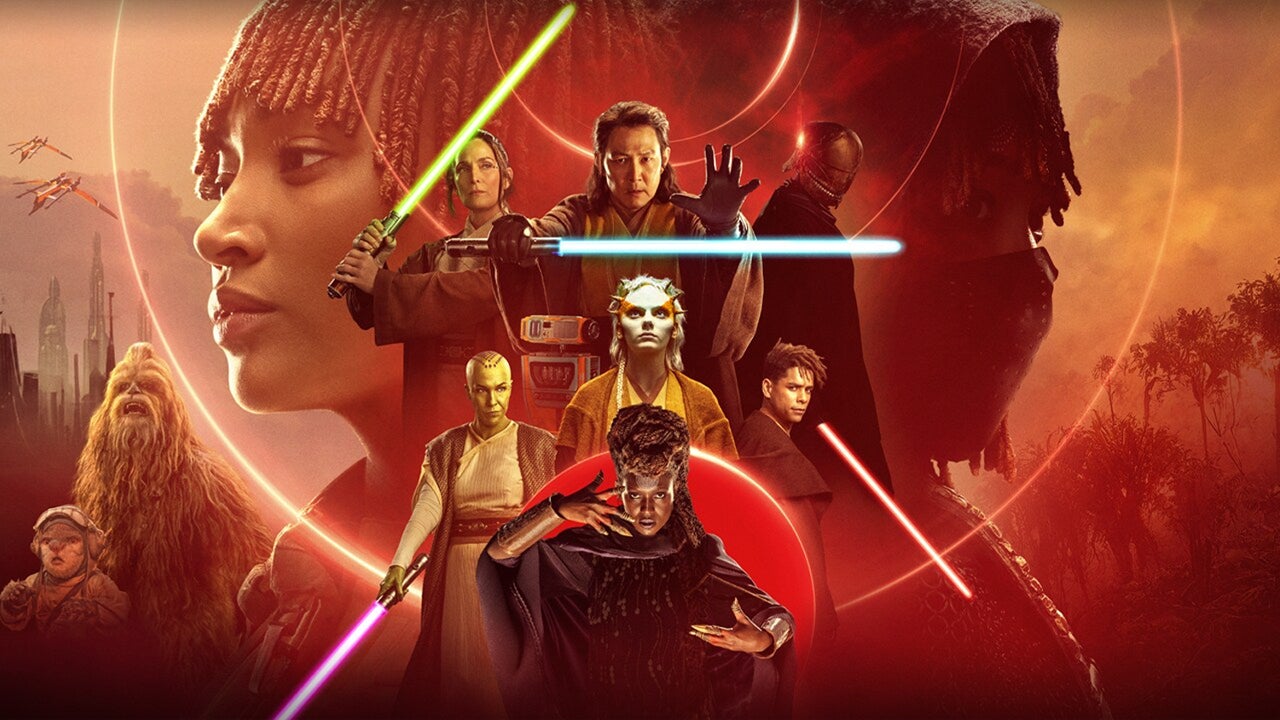
I do love a Star Wars visual guide. I usually protest against the Star Wars fan clichés, that actually it’s the deep thematic resonance of the stories that appeals to me, but as soon as Pablo Hidalgo puts out a new visual dictionary or guide I go straight back to being an obsessed kid, desperate to learn the name and history of every background character and world. Yet beyond the hilariously in-depth character details (“a stress ulcer irritating Blex’s lung pods leads to frequent exasperated sighs” and “secure data cache hidden in gallbladder” being highlights) there’s often some genuine insight into the storytelling with these books. With The Acolyte sadly cancelled, the underrated series disappearing faster than Torbin’s hairline, leaving behind lingering questions, is the recently published visual guide for the show home to the answers?
Short answer: no.
But! There are details, big and small, which impacted my latest rewatch of the series. Details worthy of highlighting and discussing. The reference book smooths out some of the storytelling, clearing up little issues and shaping the discussion towards the questions the show intentionally wants us to ponder rather than focus on what it doesn’t.
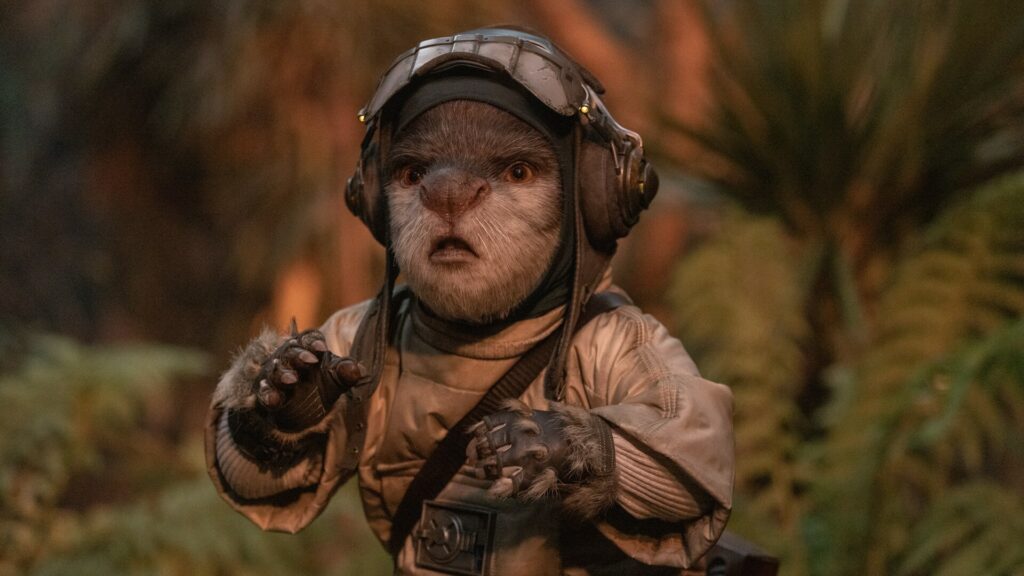
Let’s start with Bazil. That beavery little rat fella, working as a tracker for the Jedi, confused the hell out of me when watching the show. Why did he act the way he did? Why prevent Sol from stopping Mae after spending an episode trying to stop her himself? Turns out, he acts like an idiot because he probably is one. Firstly, the book states that he’s only nineteen, he’s new to this. He’s also simply a citizen from the Tynnan embassy, it’s not routine to use him or any other Tynnan on these missions. It’s not like he’s trained. He’s not well travelled, only speaks his native tongue, and is confounded by Pip despite being from a technologically-advanced culture. We learn Tynnans are governed by lottery, with every citizen having a chance to serve in their legislature. I think that clears it up. The guy’s a moron, lucking into his job and being out of depth. He’s “eccentric for a Tynnan,” his “attention may be scattered.” Essentially, he’s the Jar Jar of the species.
Of course, this is likely a post-show retcon by Hidalgo to try and explain the inexplicable. There are a few more examples of this dotted throughout the guide. In this era the Jedi should be welcoming civilians to their temples, so why does the gatekeeper droid on Olega act so unfriendly? Turns out “a misloaded program update has given it a surly personality.” Why put Osha on a prison transport instead of the Jedi taking her to Coruscant themselves? Well, there are complex extradition laws, CorpSec has its own independent law enforcement arm, and the Jedi don’t want a standing captivity fleet. Okay, sure, fine, whatever.
Like a lot of Star Wars fans, I love a map of the galaxy. The book features an updated galaxy map including the planets of The Acolyte. The “unknown planet” where Qimir takes Osha sadly remains unnamed, but it is right next to Ossus, the planet where Luke builds his Jedi academy. Brendok meanwhile is deep in the unknown regions, further out from the outer rim than any other world marked. It’s Brendok and the Sith (and a possible connection between the two?) that most of the unanswered questions surround, and the book does offer some insight into both. Or rather, some information. Which might make things a bit more confusing than insightful.
Regarding the Sith, Hidalgo writes, “they carefully calculate their next move.” The use of “they” is interesting. Unless Plagueis (the dark figure in the cave is confirmed to be him) is non-binary, this confirms that two Sith are working together. That is to be expected, I guess, but there was always the theory that maybe Qimir/Stranger didn’t know Plagueis was watching him. Maybe they’d split up, Qimir seeking his own apprentice to get back at his former master, rather than them being in cahoots. The books even states, regarding the Stranger being a Sith: “It is entirely possible he is a pretender to that lineage,” and yet does repeatedly call him a Sith throughout.
We find out that Mae has been with the Stranger for 2 years while Osha has been working as a Meknek. I was not a fan of this word when I thought it was just a Star Wars-y term for a mechanic, but it turns out it is specifically a Huttese word for those working as cheap labour starship mechanics in exchange for lodging aboard a host vessel. We learn Osha was previously a meknek in Hutt Space and Qimir has spent time gunrunning in Hutt Space. I thought this was just part of his cover story but the book states it like it’s fact. Was this an attempt to find Osha before he previously found Mae? Was this gunrunning before or after meeting Plagueis, hinting they have parted company? More questions rather than answers.
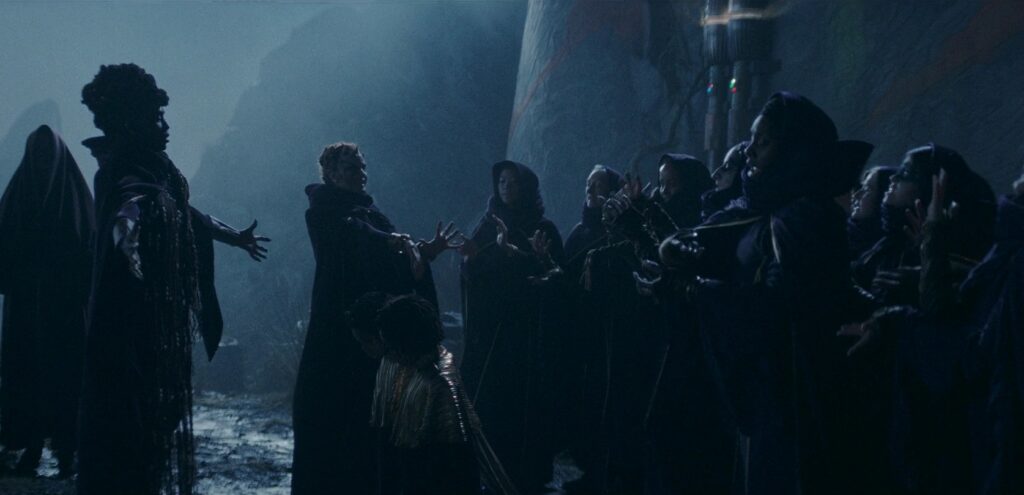
There’s little new information on the past of the Brendoki witches. They are “exiled force witches” but exiled by whom from where for what? It is confirmed however that they are not Nightsisters, although are an offshoot discipline. No more information is given regarding Mother Aniseya creating Mae and Osha but that’s something I’ve never really needed more explanation for. She’s very powerful and channelled the energy from a force vergence to create life. Simple. It’s not like there’s an actual scientific answer we’re waiting for. Now, to what end, that is an important unresolved question. In her foreword, Amandla Stenberg mentions she discussed dyads with Pablo Hidalgo but rewatching the series I think Mae and Osha are something very different.
We learn the witches are living in an old mining facility. The original occupants disappearing after they dug too deep, Moria style. Now I want to see a horror movie of what actually happened. It’s a cool location and perhaps the most revelatory part of the book is when it explains the witches’ ritual that happens there. The ritual serves as a fulcrum between the opposite poles of the moon’s convergence and the force vergence deep in the borehole. It’s about balance, not darkness, which is not clear in the show. I thought it was all about drawing energy from the dark well, and I think differently of the witches now. And it is hypothesised that “the exposed heart of Brendok” could have come from meteor deposits from the moon.
Also not clear in the show is that it’s the exact same Jedi ship, the Polan, that Sol uses in the present as was on Brendok 16 years earlier. I thought it was just the same model, them being interchangeable. Osha and Mae could have made more of that fact. It’s also interesting that the meeting with the senators in the finale takes place in the Jedi diplomatic tower within the temple instead of it being in the senate building like meetings in the prequels, an interesting difference in the high republic era. And it’s mentioned that Indara has recorded a holocron of her teaching martial arts. I’d love to see another Jedi character watching that in future storytelling, maybe Sabine in Ahsoka.
So the visual guide isn’t a compendium of answers. A wrap-up of the show now that it’s not getting a second season. And it’s unfair to ever assume it would be. While it doesn’t answer the big, lingering questions, I do think it points out which are the questions we should still be asking. Questions about Osha and Mae’s purpose, and the Sith in this era, from the Stranger’s past with Vernestra to Plagueis’s plans for the future. It’s put into perspective that the mystical witches and the force vergence are best left ambiguous. And, of course, Hidalgo’s book fulfils its purpose as a tome of little details. I would never have noticed that Torbin’s robes have faded after a decade of wear, or that an Umbaran couple walk the streets of Olega, without it. And at least he cleared up the whole Bazil thing, too.