George Romero’s The Crazies Is The Dr. Strangelove Of Horror Movies And Very Relevant in 2025
Funny, relatable, and terrifying in equal measure, Romero’s The Crazies is massively underrated. Or rather, half of it is
Roughly 50% of George Romero’s The Crazies is one of my favourite horror movies. I’m not crazy about the other half. What I love so much about (part of) the film is that it does for biological warfare what Stanley Kubrick did for nuclear warfare. The Crazies is the Dr. Strangelove of horror movies.
I know this isn’t a novel comparison to make. There are times when Romero’s film quite unsubtly references Kubrick’s comedy. There are the shots of the bombers, carrying nukes, taking off and circling the town. There’s the repeated use of ‘When Johnny Comes Marching Home’ (although the real cool kids know that melody from Die Hard with a Vengeance.) Then there’s the ironic song over the credits.
But what truly makes the films comparable is the portrayal of hapless experts. The Crazies is a film where the horror comes from doltish officials as much as it does from infected homicidal maniacs. As with Dr. Strangelove, it’s about crisis management. The hands which hold the fate of the world, and the empty brains controlling them. The shoddy, very human operation trying to contain armageddon, with Romero’s film being about the accidental release of a biological weapon on a small American town. Angry phone calls ensure.
Both the horror and comedy of the film come from human ineptitude, and it’s hard to know where the line is drawn between the two. The government figures, from the military to scientists, are not portrayed as they easily could have been, as malicious villains. Instead they are flawed human beings making poor choices. The enemy is misinformation, inaction. They are just as relatable, perhaps even more so, than the heroes. The Crazies highlights what Romero does so well in his other, more popular zombie films: the humanity in the horror.
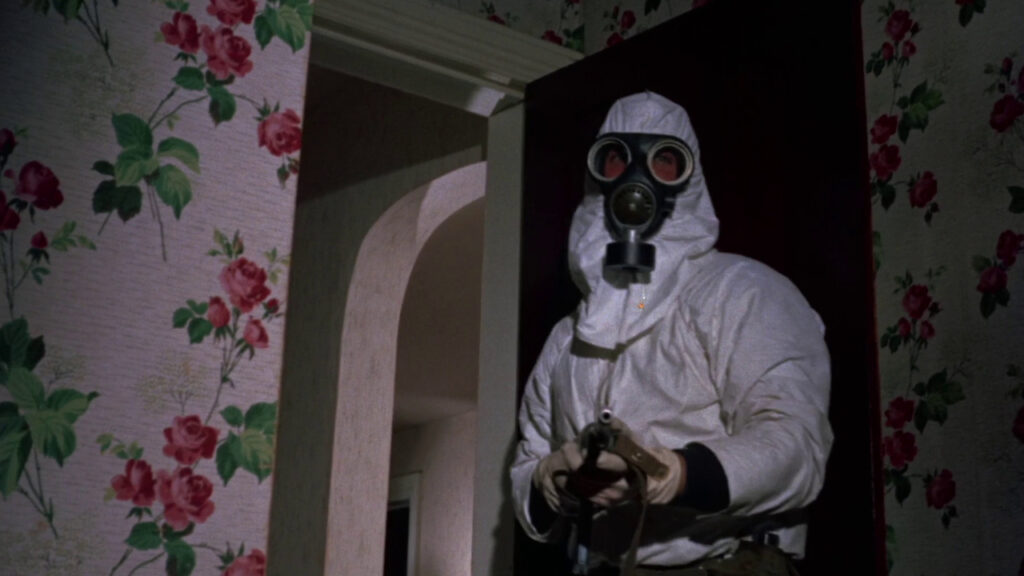
The faceless, white hazmat-suited soldiers are still the ‘baddies’ but they are far from the Star Wars Stormtroopers they resemble. They’re just people. When they are shot at for just doing their job, trying to contain a virus, they stand there stupefied. Shocked at what’s happening. Their dialogue is darkly yet genuinely funny and characterful. I love the colonel who just wants his superior to arrive already so he can stop having to make big decisions. And then there’s the frustrated scientist played by Richard France, essentially the same character he plays in Dawn of the Dead, who is working to make a cure to save the world but is stuck trying to figure out how the voiceprint telephones work.
The very low budget of Romero’s The Crazies certainly helps the realistic nature of the film. The interactions on the government side of the story feel real. As do the vignettes set across the town, with genuine regular citizens being used, shot in a documentary verité style. It’s clear from the crying children that many had no idea what was going on as armed soldiers suddenly barge into their homes and imprison their parents. But it was the seventies, traumatising children was all the rage.
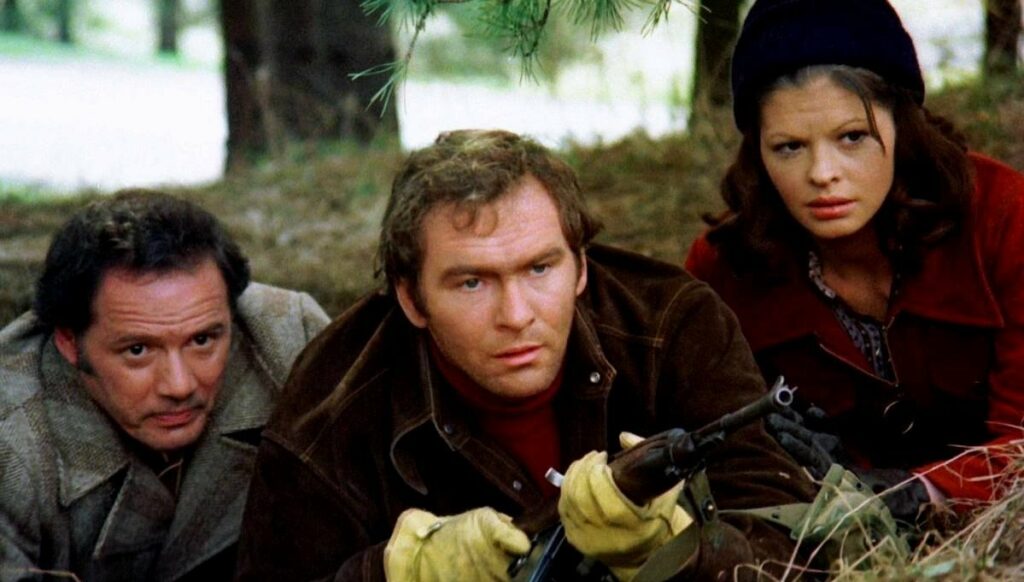
The film is excellent in this wider view, the ensemble of officials trying to contain the situation to humorous and horrific degrees, and the effects on the town as a whole. It’s shame that the other half of the film is a failure. Romero offers us a rather lame, uninteresting group of hero characters we keep cutting back to as they try and escape the town, including two firefighters, a pregnant nurse, and a father and daughter. They are profoundly dull and from a much lesser film. Romero’s survivor characters are usually much better than this, such as the great quartet from Dawn of the Dead, but The Crazies just collapses whenever they are onscreen. There’s no humour or life to them.
Unfortunately, the 2010 remake focuses entirely on the perspective of the survivors, losing the insight into the government and military. That means it doesn’t have much of a point. It’s decently shot, with a solid cast, but it’s a film about nothing and follows a more traditional, simple narrative. There’s no humour and the films paints the government as faceless evil overlords who might as well be programmed automatons rather than interesting, flawed people. It also doubles down on the Dr. Strangelove references while being unconcerned with the actual heart of that film: it ends with a nuclear explosion and begins with Johnny Cash’s rendition of ‘We’ll Meet Again’.
Two of the group in Romero’s film are Vietnam vets, which connects to the real world parallel the film echoed when it was released in 1973. Government distrust and paranoia were at a peak and when it comes to the Vietnam war, talk about massive mismanagement. The Crazies paints the core conflict as the same as in the war, now on US soil with US citizens. Characters say things like “I’m getting out of here” and “the army ain’t nobody’s friend” before being shot. A priest self-immolates in a way which calls to mind the famous image of the burning Buddhist monk in Saigon. And a soldier states “You never know what you’re doing or why you’re doing it. You just do it because you’re told to.”
Watching today, the film offers much broader interpretations and possible real world parallels. The eponymous ‘Crazies’ hunted by the government can represent any subculture perceived as deviants to be purged. And the incompetent, unprepared government response to the crisis brings to mind the pandemic. Maybe why the film works so well in 2025’s American political landscape, why the messy response by the authorities in the film makes such an impact, is that the the true horror at the heart of The Crazies is that the people in charge are unqualified morons.