Star Wars: Sanctuary Tells The Bad Batch Story The TV Show Couldn’t
Lamar Giles’s excellent novel slows down the usual frantic pacing of The Bad Batch to tell a tale the animated series couldn’t
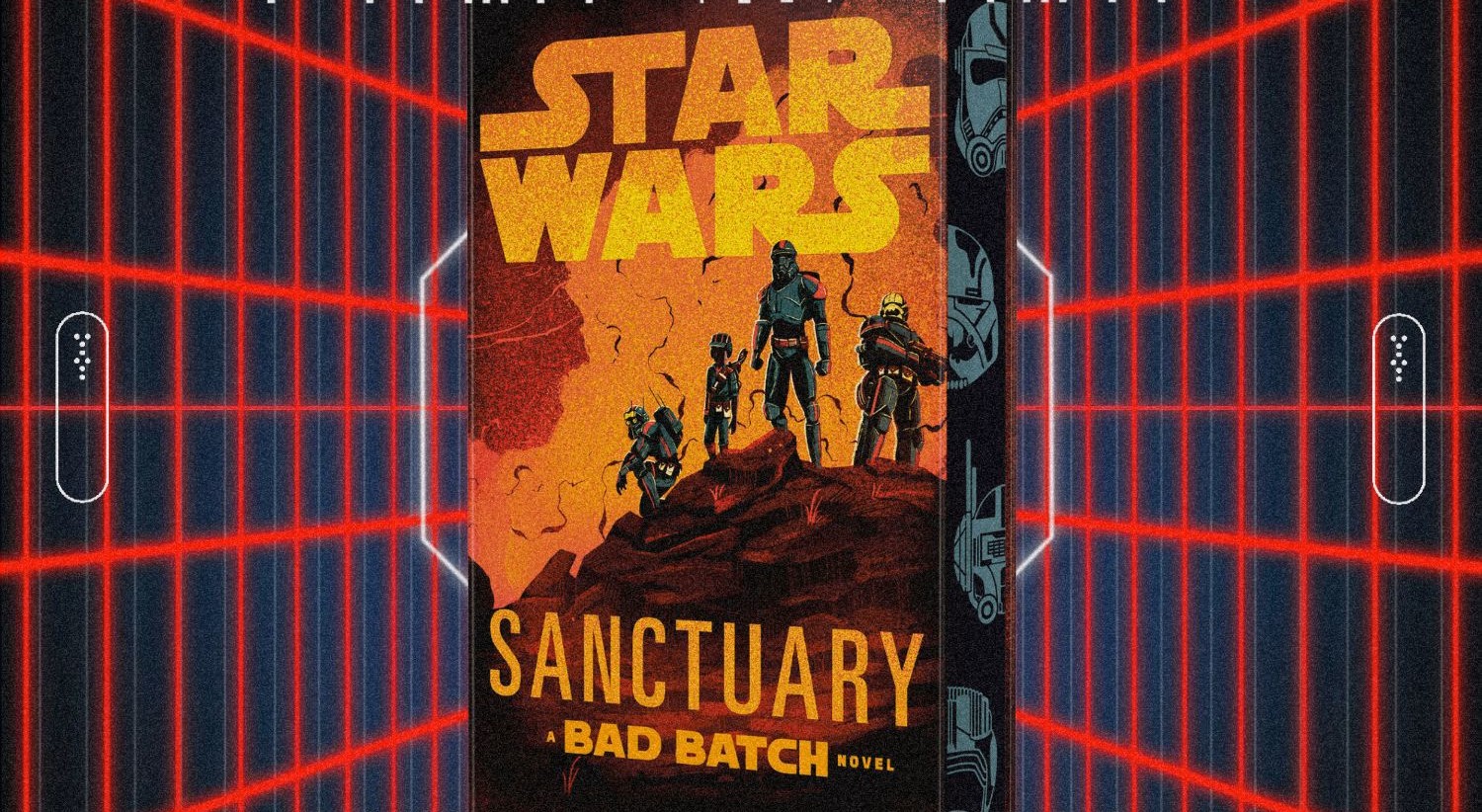
I’ve missed Clone Force 99. I didn’t realise how much I’ve missed Hunter, Wrecker, Tech, and Omega until cracking open Star Wars: Sanctuary, the new novel by Lamar Giles. Suddenly it hit me, that it’s been over a year since The Bad Batch ended and I’ve missed these wonderful characters and this particular section of the Star Wars galaxy. I enjoyed the show’s third and final season but perhaps not quite as much as the first two, the second of which I rank as one of the best seasons of Star Wars television ever produced, animated or live action. So it was a joy to read Sanctuary, a novel snuggled between the events of episodes in season two. But not only was the book a fun return, it managed to tell a story that the show was unable to.
The Bad Batch is a series rich with thematic depth and drama, very watchable to adult audiences. Snootier people may disagree but I think it makes for a good companion series with Andor. Yet the animated series still has to be accessible to kids. And so it should. Sanctuary however is able to skew more adult. I’m not talking about language or violence, although that is a little more amped up on the page than it is onscreen. It’s the pacing. The series was restricted to twenty-odd-minute episodes and often felt like they had to hit an action quota. A big monster fight at the end. The novel is just that, a novel. There’s still some very Bad Batch action at the beginning and end but in the middle it’s afforded the ability to slow down, to get into the heads of the characters, to be introspective. Giles paces the novel well and I loved the restraint shown in the middle.
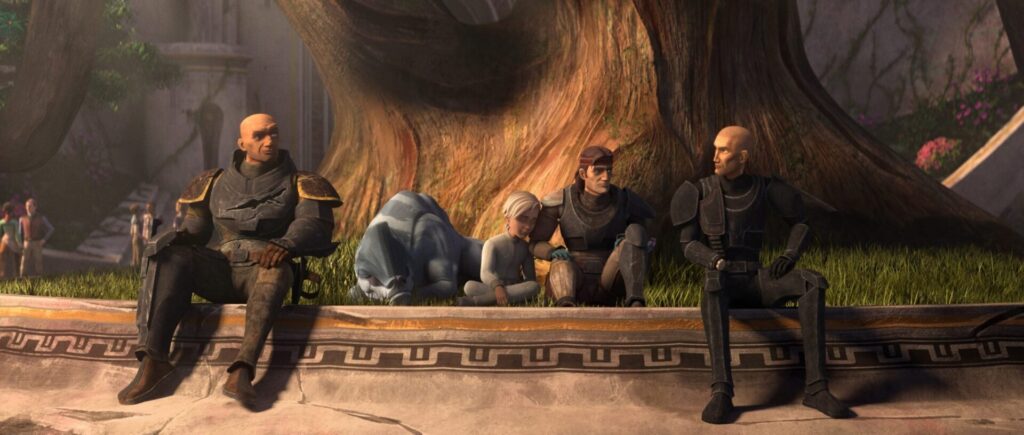
My favourite passages were characters talking, trying to understand each other, reckoning with their situation. The animated series added greater depth to the characters than the almost purposefully stereotypical portrayals seen in the final season of The Clone Wars. Sanctuary pushes it even further. There’s a great moment with Wrecker, who’s much more than the explosion-mad giant, where he explains where he wants to live and whether he can settle down. Sanctuary poses a question to all members of the Batch: how and where do they want to live. The show asked and answered that too, of course, with Pabu, but here we get more in-depth and personal answers.
To aid exploration of this idea, Giles creates the new characters of Sohi and Ponder, who parallel the lead characters in a few interesting ways. Firstly, Sohi is a former separatist spy and it’s great to see that conflict between her and the Batch, the opening of old wounds. Some of my favourite episodes of The Bad Batch were the ones which saw them have to face separatists, the enemies they were bred to fight now often allies in the war against the empire. Sohi is escaping her former spymaster, a man who taught her her murderous skills, choosing her new family instead. That’s essentially the same conflict the Bad Batch find themselves in with the empire, and it’s great to see the characters realise this yet struggle with the implications of that. How much are they willing to forgive?
Part of what makes the Sohi and Ponder relationship so fascinating is that Ponder is a clone, with Sohi pregnant with their child. On a surface level this answers a long standing question about whether clones are biologically able to father children, but deeper this has implications for the Batch and other rebellious clones. Through Ponder they can see a different possible life for themselves. Created and trained for nothing but war, they can have children, have a family, another huge leap towards individualism and self-actualisation. Ponder, a wounded veteran treated as an outcast, now a possible figurehead and role model.
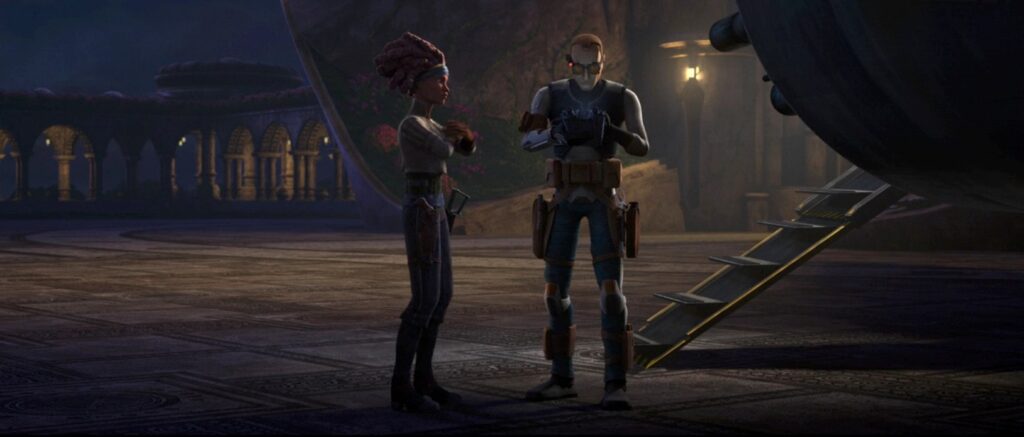
Sohi and Ponder’s love leaves an impression on Tech, my favourite member of the group. I love that the novel is set when it is because it means we get to spend more quality time with Tech, and him trying to compute his feelings for Phee. Their flirtatious relationship, limited in the series, is on full display here. I’m very thankful to the novel for this. We get more from that relationship while maintaining Tech’s tragic fate in the series. I love Tech and perversely that’s why I love his death in The Bad Batch so much. It hurts and that’s the point, it’s supposed to. Now it hurts even more having spent more time seeing what could have been between him and Phee (who’s also great in her own right in Sanctuary). Thanks for that, Lamar Giles.
Yet the novel’s greatest success might actually be Hunter. Don’t get me wrong, I’ve always liked Hunter, it’s just that he’s by far my least favourite. He can be a little dull at times, the steadfast worrier and leader with the least extreme personality. Sanctuary made me like him a whole lot more by actually making him more unlikable. His worrying and controlling nature was amped up here to the point where I was actively annoyed by him at times and that’s great. It feels like that was the intention because his eventual recognition of his issues and growth was satisfying. It made me appreciate him in the series more, and I’m eager to rewatch while paying more attention to Hunter.
There’s so much meaty conflict and comparison the novel slows down for in the middle of the book with the heroes that it does leave the villains twiddling their thumbs a little. That’s my only complaint with the book, and it’s a small one. I like both of the antagonists, spymaster Crane and uber-rich wannabe-governor Celia Moten, and their fragile alliance, but it feels as if they are in a holding pattern while the real juicy goodness is happening with Sohi and Clone Force 99. Thankfully both villains come to satisfying, brutal ends. The level of violence is certainly higher than the animated series. Hunter threatens/tortures someone with a knife to the throat, drawing blood, and has no problem coldly executing him if needed. Even young, sweet Omega has to resort to pulling out her own hair to leave a trail for Hunter to follow to save herself and a newborn baby.
Sanctuary, and I can’t write this without it bringing to mind memes of both Vin Diesel and Carrie Fisher, is about family. It’s true! And it was delightful to spend more time with this particular family of rogue clones, the novel ending sweetly on a family meal. Pabu physically features much less than I was expecting but its spectre, the promise it holds and represents, looms large over the story. Sanctuary is able to take its time and really delve deeply into the questions and ideas present in the series. Giles is able to not only capture the voices of the Bad Batch but further develop and deepen them as characters within the confines of a story already told. I would love to see him be able to craft more tales, whether set between episodes or perhaps after the events of The Bad Batch.