Dope Thief Needed To Be More Fargo
Ridley Scott’s Apple TV crime series suffers from an identity crisis and needed to take inspiration from Fargo

It takes great care to make a good messy show. An intricate plan behind what appears slapdash and tangential. Dope Thief, however, is just a mess. The plot, the tone, the style are all over the place. At first I was enjoying it, seemingly another entry in Apple TV+’s catalogue of strong TV offerings, but it soon span wildly out of control, losing grasp of so many aspects. It made me sad to see the potential wasted and I couldn’t help feeling that the 8-episode limited series could have been repurposed much more successfully into a season of Fargo.
There is something very Coen Brothers about the basic set up of Dope Thief. An out-of-his-depth protagonist, Ray, steals money from the wrong people. A small-time criminal suddenly finding himself in a world of killers. On the run, he doesn’t know who’s after him. The cops are even unsure exactly who Ray is and who he might work for, everything existing in a great big ball of confusion. It’s easy to see the parallels with No Country for Old Men or Fargo.
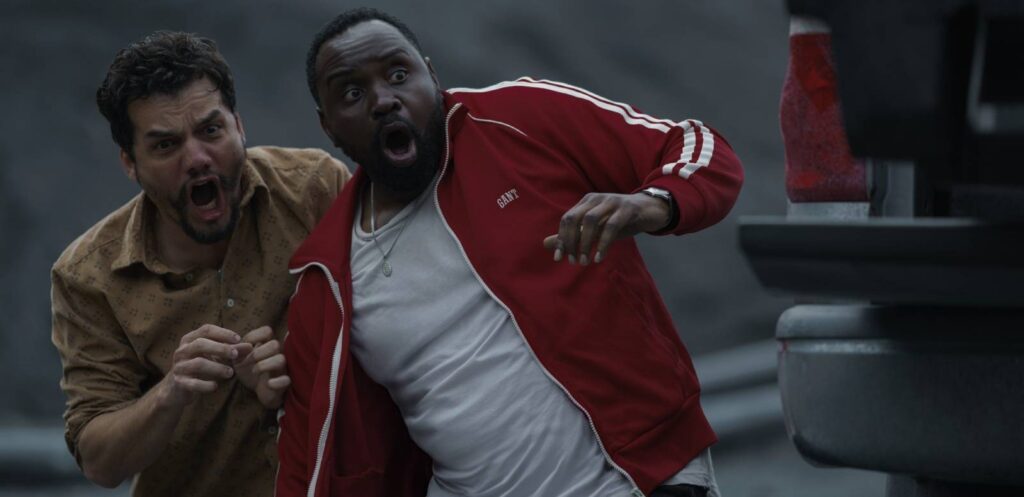
Dope Thief works best when it is echoing these films. When there’s an obvious joy in the tangled plotting. The early episodes have some great scenes of both tension and dark comedy that felt like Noah Hawley’s Fargo TV series at times. A character is unexpectedly crushed between a truck and a wall in an inventive way I hadn’t seen before. It’s brutal but also a little humorous. The back-and-forth between Ray and his friend Manny is also funny. The two are so far out of their comfort zone they turn into goofballs who constantly argue while miraculously surviving the killers sent after them. Move the scenes out of Philadelphia and into Brainerd and you’ve got a new season of Fargo.
But Dope Thief isn’t all like that. It’s a good show when it’s operating at a frenzy but the second it slows down it begins to fall apart. The series suffers from a major identity crisis, caught between realism and a heightened realm. It wants to be a serious crime drama but also at times an outlandish comedy. It’s a tricky balancing act. Fargo is able to thrive in the centre of that Venn diagram, always managing to be two or more things at the same time. Dope Thief struggles with the tonal inconsistency. I found myself enjoying it as fairly silly story but those elements are ultimately stripped away and the show tries to wrap up by being a serious drama. It falls flat.
Dope Thief is at its worst when it’s at its most serious. The black and white flashbacks of Ray’s past – his guilt over his girlfriend’s death, his relationship with his father – are so incredibly trite and unsubtle, done better in a million other shows. Ray develops a relationship with a Quaker lawyer out of nowhere and this, we’re told in the finale, helps him work through all his past trauma. The actual character arcs are so poorly handled I didn’t realise what they were supposed to be until the final episode outright states them.
While Ray and Manny are bumbling about in their comedy show in the first half of the season, the police characters are in a different show entirely. There’s some complex criminal conspiracy they talk seriously about but it’s hard to follow or care about. The bad guys are blandly called ‘the Alliance,’ like a dull villainous group on Star Trek or something. This side of the show is missing humour and personality. Bryan Tyree Henry as Ray carries the show and it struggles when he’s not onscreen.
The cops needed to be more like Fargo characters. Endearing and offbeat in a way similar to the criminals. Instead, the show plays their side of the story as a serious cop drama and Ray’s as a comedy until he eventually gets enveloped into their dull world. One of the cops is shot in the throat and has to use an electrolarynx voice box to communicate. That’s a perfect setup for a quirky Fargo character! But instead she ditches the device after one episode and growls dramatically for the rest of the show. The villain is also initially played like a Coen Brothers/Noah Hawley character. He’s incredibly arch, only heard through phones and walkie talkies as he lectures his villainy like a Bond villain. Maybe the show should have committed to a Fargo style embodiment of pure evil rather than the eventual lame reveal of his identity.
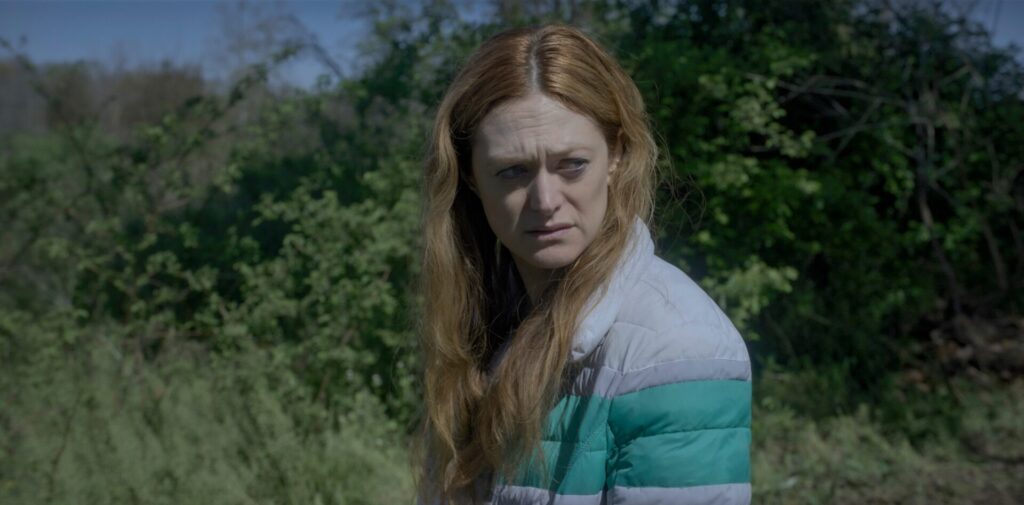
The issue is that no matter how far into broad comedy or outlandish plotting the show might initially tread, writer Peter Craig is intent on dragging it back down to the real world. He clearly wants the show to be about current issues. He still wants us to know he’s serious and the whiplash caused by that is severe. I’d argue that comedic shows can still do that very successfully. The Sopranos works as well as a comedy as it does a drama. The latest season of Fargo took on debt as a theme and ultimately became a lesson in civics, all while having an immortal 500-year-old sin eater as a character. Dope Thief struggles to balance one iota of that tonal and storytelling range. While Ray and Manny are with a gang of clown-faced morons waging a war, the main cop is recounting how her daughter died of a fentanyl overdose. It does not work.
There’s a big long explanation of the baddie’s plan, supposed to be taken with hyper realistic seriousness, only for him to then be taken out and Ray survive in a ludicrously unbelievable way. Maybe Dope Thief would have benefitted from a supernatural aspect like Fargo. It could be used to explain how a biker gang could enter a hospital, seemingly butcher everyone inside, and leave undetected with this event never being mentioned again. The show wants to be taken seriously as a gritty crime drama and then does something as huge and fantastical as that. Few shows can manage it.
Dope Thief works from Ray’s perspective, hunted with little knowledge as to why and by whom, the audience knowing as much as he does. I was hoping for the Burn After Reading ending. The cops or officials looking back on all that has happened to him and scratching their heads in bafflement, accepting they’ll never know what exactly happened. Instead, it goes the opposite direction, bringing Ray into the investigation and giving us a long convoluted answer to everything. The final two episodes are supposed to be a hard-hitting drama. In this respect, and many others, the creatives behind Dope Thief simply needed to follow the mantra ‘be more Fargo’. And while I state I wish Dope Thief was more like Fargo, I guess what I really mean is I wish Dope Thief was better.