The Cons of Watching Star Wars: The Clone Wars Chronologically
Why I’ve changed my mind and recommend NOT watching Star Wars: The Clone Wars in chronological order
People certainly have opinions when it comes to the order in which to watch Star Wars. Release order; chronological order; machete order. Skip this, ignore that. Usually I like to keep it simple: release order. Prequels are designed to be viewed as prequels, with knowledge of what comes after. But! The one part of the saga I’m tempted to recommend watching in chronological order is animated series Star Wars: The Clone Wars. It can be a little confusing to do so, with the official Star Wars website offering a list but sadly no button on Disney+ to shuffle the episodes into timeline order.
Watching through The Clone Wars for the first time can be a confounding experience. Characters die and then appear in future episodes. Resolved conflicts are suddenly seemingly reignited. Characters interact for multiple episodes before then being introduced to each other as if for the first time. Is Ziro the Hutt in or out of prison? It soon becomes clear that the episodes are wildly out of order, at least until it starts to smooth itself out around the middle of season 3. The show allows George Lucas to go full Lucas, making prequels to prequels to prequels.
A handful of years ago I watched through the series for the umpteenth time but notably for the first time chronologically, my boxsets strewn around the room as I tried to find the right disc for the next episode. It took some work but it was enlightening, seeing how the storylines fit together and not being surprised by certain characters’ unexplained resurrections. To prepare for Maul: Shadow Lord I thought I’d rewatch the show again and once more opted for chronological. This time, I began to see the issues. The cons of chronology became more apparent than the pros.
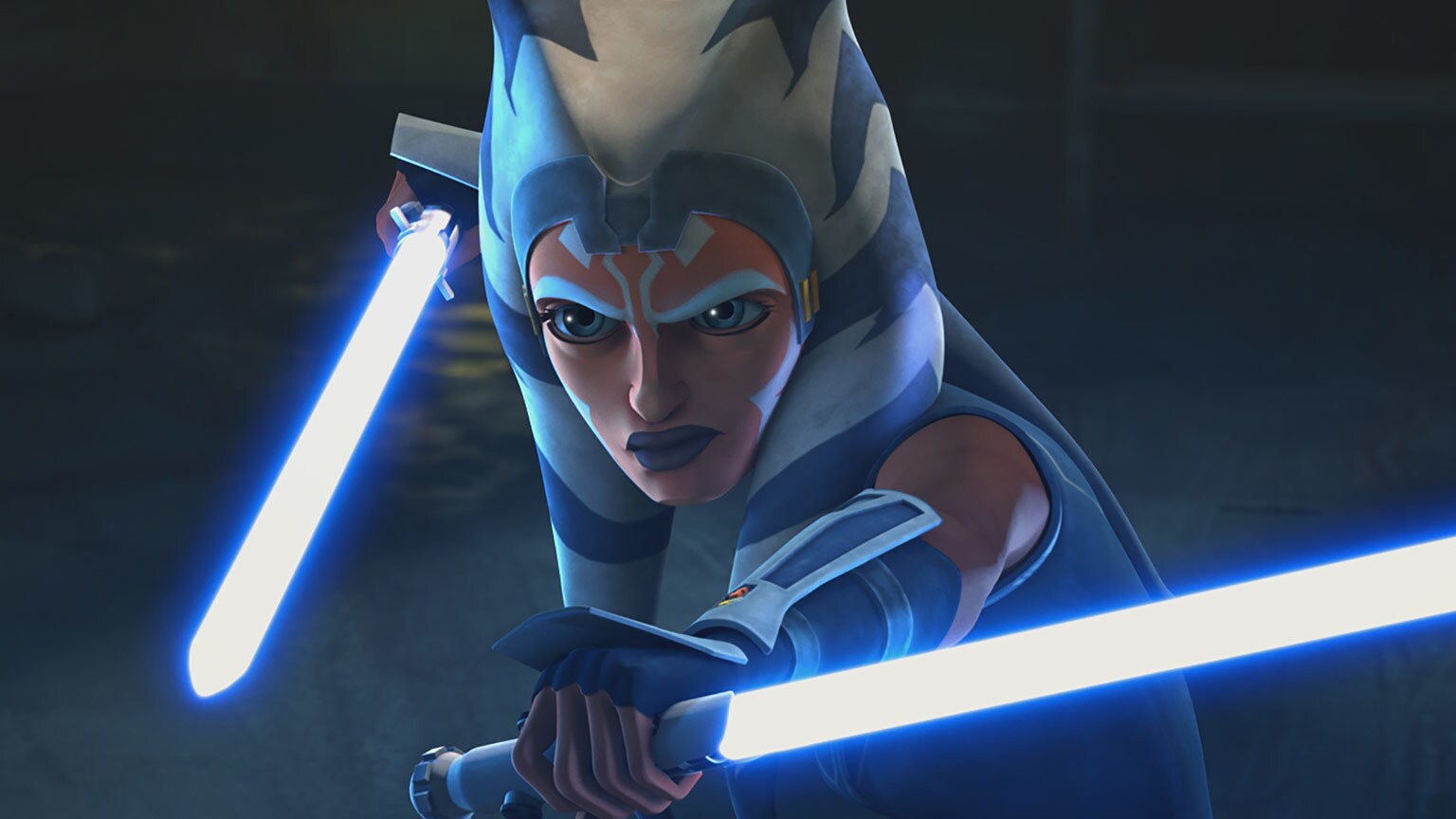
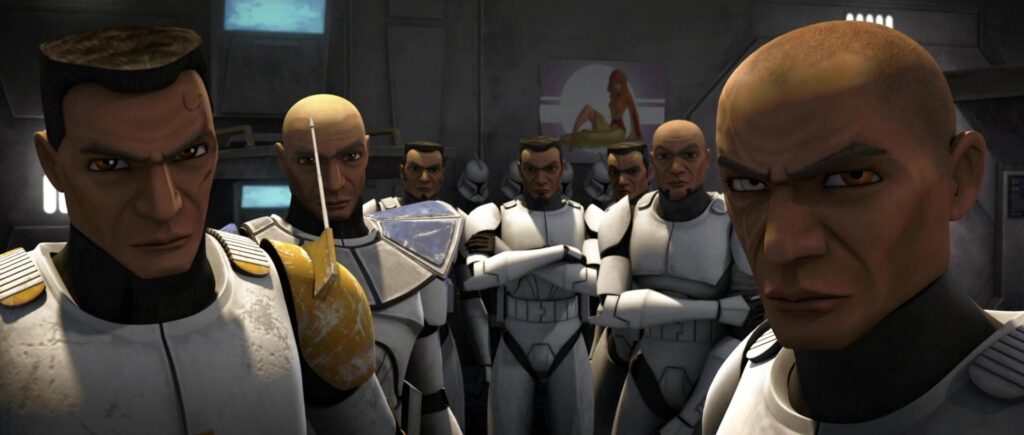
As rough as it is, the Clone Wars movie is where you should start. Ahsoka and the clone troopers are the key throughline of the series, and the film introduces these elements decently well. Watching chronologically, the episodes Cat and Mouse and Hidden Enemy are set before the film and, while I think they are both good episodes, do not act as a particularly strong introduction to the series for newcomers. There’s no Ahsoka and it’s weird to have the very first clone story involve a clone traitor. That’s subverting the role of the clones before introducing the base characterisation; it doesn’t really work. Hidden Enemy was the sixteenth episode of the show aired and it was intentionally left so late because the creators felt introducing a clone turncoat any earlier would be detrimental. Chronologically, it’s now the second episode.
The release order of the episodes has intention behind it. Storylines are spaced out, tones juggled, plots paced very differently to the chronological order. Watching chronologically might help understand the sequence of events but the flow of the series, the evolution of it, is messed up. Ahsoka is introduced in the movie and then disappears for too long when the show is better served seeing her settle into her role. The chronological order pushes some of the stronger episodes (which might convince people to keep watching the show considering the rocky beginning) deeper into the series run, like the Malevolence, Ryloth, and Mandalore arcs. Instead, we get a random Jar Jar episode that sets up the Toydaria and Ryloth arcs, although in a way which expects the viewer to already be familiar with them.
Episodes designed to be character introductions are no longer introductions. Bombad Jedi, a notorious episode I quite enjoy, is supposed to be Jar Jar’s first outing but chronologically we get Supply Lines first instead. Even the most diehard Jar Jar fan would struggle with those two in such quick succession rather than paced out over three seasons. Cad Bane’s debut is delayed, now with the opening three-episode arc of season 2 being his first episode(s), and while a strong outing, it makes it weird when the season 1 finale finally comes around in chronological order and we’re introduced to him like we’ve never seen him before.
Quite simply, the episodes designed to be prequels are best viewed as a prequel. Clone Cadets is a prime example. Chronologically it comes very early but it’s best viewed after Rookies and immediately before Arc Troopers, which is how it originally aired. The contrast between Clone Cadets and Arc Troopers is the entire point, seeing where they’ve come from and where those characters are now. The episodes aired as a two-part premiere of the third season while chronologically they are separated by 45 episodes!
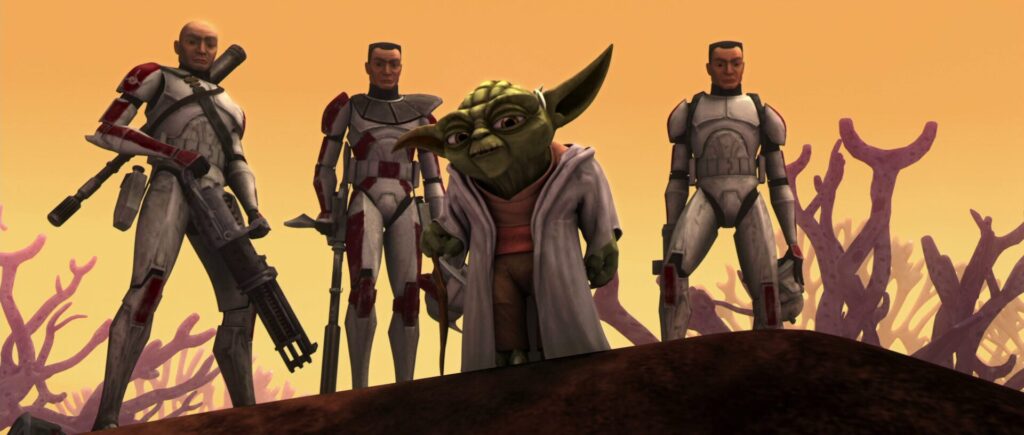
Ambush is a solid series premiere for the show, introducing key themes for both the Jedi, with Yoda as the focus, and the clones, being seen as individuals. Chronologically, this is pushed back until after its prequel episode, and Cat and Mouse doesn’t work as a thematic series premiere in the same way. Although I do like that the chronological order concentrates all the relief missions into the first few episodes, focusing on the noble intentions at the start of the war before the Jedi lose their ideals somewhat as the conflicts rages on.
Watching chronologically also means you have to suffer through the changes in animation, switching from season 3 back to season 1. There’s no enjoyment from tracking the huge progress in quality as the series develops, slowly but surely getting better with each episode. Instead, you go from the smooth animation of Clone Cadets and then episodes later have to go back to Downfall of a Droid, the first episode produced, which looks terrible by comparison.
Lair of Grievous is a standout instalment of the first season but its impact is lessened when watching chronologically. It should be the episode the whole first season up to that point has been building to. The show intentionally lulls you into thinking it’s just a goofy kids show where the heroes always win and there’s little real threat until BAM! we get the first jedi death. But that’s not the case chronologically because Ima-Gun Di (yes, that’s the character’s actual name) is killed in Supply Lines which aired in season 3 but chronologically is one of the earliest episodes. Both Hidden Enemy and Supply Lines feature separatist victories at a time when the show works best if they lose until the double hitter of Cloak of Darkness and Lair of Grievous.
Ziro the Hutt’s escape from prison is perhaps the most confusing arc of the show when viewed in release order. He’s freed in the season 1 finale but then the third season has two prequel episodes which see Ziro still behind bars, and then an immediate sequel where we find out what happened next. These episodes are best watched chronologically and yet in solving one issue the show creates another. Aurra Sing is one of the bounty hunters who assaults the senate in a plot to free Ziro but based on other season 3 prequel episodes, she herself should be in prison at that time. And also in that jumble of out-of-order early season 3 episodes, Ahsoka does a mind trick in The Academy before she learns how to do it for the first time in Sphere of Influence. StarWars.com themselves seem to have confused the order of events in their official chronological guide.
But the most damning issue I found on this rewatch was Cham Syndulla being introduced before Liberty on Ryloth, which should have remained his first episode. That episode is a perfect introduction to Cham, completely dedicated to his dilemma and philosophy, deciding whether to work with the Jedi and the Republic, a decision that reverberates across The Bad Batch, Rebels, and multiple novels. Yet, chronologically, the episode Supply Lines comes first and bafflingly already shows him working with the Jedi. It ruins that arc. Clearly the writers themselves got confused about the chronology there. It really damages the character of Cham, the later Ryloth episodes, and his storytelling going forward.
Chronological order shouldn’t be how someone is introduced to The Clone Wars. Nor should it be the go-to option for regular rewatches. It’s perfect for a second watch through, to see the connections and track the fates of characters more easily, as an experiment. But it’s not the ideal way to watch the show and I’m regretting my decision as my rewatch continues. The cons outweigh the pros. Now, to make it even more confusing, maybe there’s another way to order the episodes, part chronological, part release order, to create the ideal viewing experience. Maybe on my next rewatch….