Reviewing and Ranking Star Wars: Tales of the Jedi
Ahsoka and Dooku’s stories thematically connect but one set of shorts is much stronger than the other…
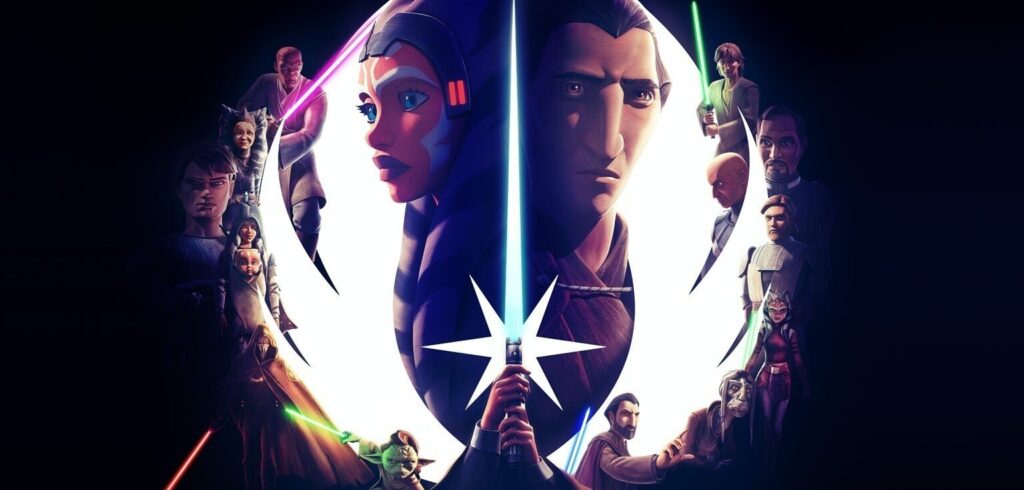
After having reviewed and ranked Tales of the Empire and Tales of the Underworld upon their respective releases, I thought I’d look back on the first of these anthology shows and give Star Wars: Tales of the Jedi the same treatment.
After three attempts, the‘Tales of…’ shows have yet to find a way to make their format truly sing. They are a fun annual tradition I hope to see continue but each have had issues, either feeling like they hint at stories rather than tell whole satisfying narratives themselves, or not having much story to work with. Tales of the Jedi is ground zero for these problems, although maybe fares best of the bunch. This is the one series to not have the pressure of delivering a long-awaited sequel, catching us up with characters who have an open-ended future, like Asajj Ventress or Barriss Offee. It can be content delivering smaller stories, being ‘filling-in-the-gaps’ storytelling. But this is both a blessing and a curse.
Personally, I’ve grown tired of Ahsoka stories, particularly in this era. Why, of all the thousands of potential Jedi to focus on, are we getting more episodes focusing on Ahsoka around the time of the Clone Wars when we have a whole series already dedicated to that? I love the character, her growth over seven seasons and beyond, but getting more of these snapshot stories didn’t do anything for me. The final episode has some good stuff, some meat to the storytelling and character work, but the other two offer little.
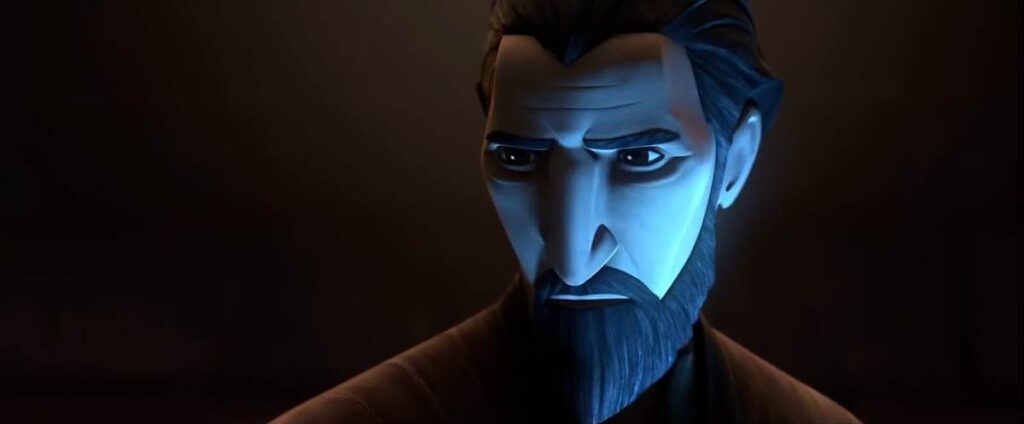
Dooku meanwhile is on the other end of the spectrum. I love his episodes. I think they are rich and dense, giving us valuable new insight into the character in a new era of his life, his time as a Jedi drawing slowly closer to the darkness that will dominate his soul. It’s storytelling that enriches so much, the prequel films and other series. The only issue is that they are great snapshots but nothing more. Brief looks into Dooku’s life, a story which perhaps deserves more exploration than this format can allow. I love his episodes but can’t help but feel frustrated that the story is restricted to three fifteen-minute shorts.
However, the format does work by pairing these two characters and their stories. There’s a thematic link between the two halves of the season that make it feel like more than just six short stories lumped together. Ahsoka and Dooku are two Jedi who see the flaws in the institution. Jedi who long to act in ways the order wouldn’t allow. While this means that Ahsoka is drawn further to the light, acting more Jedi than Jedi (as creator Dave Filoni’s great overarching franchise-wide story with her seems to be saying), Dooku’s frustrations take him towards darkness and false answers to his troubles. I also like that the episodes aren’t just split down the middle, the first three focusing on one character and the next three another. The mixture of them makes Tales of the Jedi feel like a complete season, something greater than its component parts, unlike the following two shows in this sub-franchise.
To help further examine the series, lets rank the episodes from worst to best:
6) Episode 5: Practice Makes Perfect
The slightest of the six shorts, Practice Makes Perfect is the only one I actively dislike. Flashing back to the early days of the Clone Wars, the episode feels too knowing of future events. I can handle an informed prequel but every moment and line feels like a wink and a nod to what will happen later, including the entire premise of the episode. We see that Ahsoka regularly trained by having clones shoot at her, putting her in good stead when Order 66 kicks off. I don’t need it explaining why Ahsoka could survive when other Jedi could not. I buy those scenes as they are in the final arc of The Clone Wars. This training reveal feels too unnatural, too aggressively a prequel. Dave Filoni’s worst storytelling instincts on full display.
I do enjoy the irony of Anakin and his lessons being the reason why Ahsoka ultimately survives Order 66, but that was apparent anyway. This training drill just draws intense focus to something already established. I also don’t like the episode’s retcons. Usually, that’s not the sort of thing that bothers me. I don’t mind the visual changes, like Obi-Wan having his Attack of the Clones mullet. Instead it’s, again, the overriding prequel nature of the episode. Who is watching Ahsoka train? Kanan, of course. I’d be fine if he were with a bunch of padawans watching but just him makes it seem too cute a reference, too connected. The same is true with Tera Sinube being the one to train Ahsoka. He’s wielding his lightsaber and being active despite the scene being set before Lightsaber Lost where Ashoka only thinks of him as a sleepy old man and doesn’t even know he has a lightsaber. It breaks continuity with one of my favourite episodes of The Clone Wars.
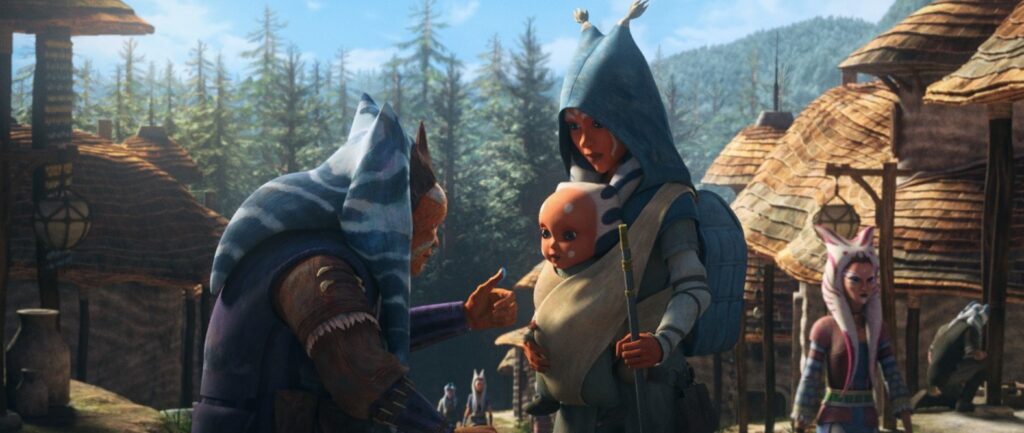
5) Episode 1: Life and Death
Life and Death is a visually stunning episode. I enjoy the slower pace, the exploration of an alien culture, and the natural beauty of the world. It’s a gorgeous, relaxing fifteen minutes of Star Wars. Part of me does wish it had committed to having no English dialogue, that every word spoken would be untranslated Togruti. It’s a simple enough story to make it work, understandable through body language and actions, but I understand that this is a kids’ show after all and it needs to be easily accessible.
The biggest issue is that, by this point, the story is fairly generic. A young child first displaying her force abilities, her parents taking note and understanding she’ll be a Jedi, is something we’ve seen a fair bit of in animated Star Wars. Especially a connection to fauna being the first indicator. The fact that it’s Ahsoka this time doesn’t completely justify it. It’s also hard to believe baby Ahsoka is taking any of this in. She’s just one year old and her mother is lecturing her on embracing death rather than fearing it. Why not set the episode a couple of years later, maybe ending with Plo Koon visiting and taking Ahsoka to the Jedi? It’s an okay episode but lacking in some respects.
4) Episode 3: Choices
The weakest of the Dooku shorts, Choices is a good episode but it’s just too similar to Justice. Rather than an escalation of the ideas from the previous episode, it feels like a repeat. Another corrupt Senator on a planet, his people taking extreme action to revolt, and Dooku understanding their point of view while the Jedi as an institution side against them. The opening shot is identical in both episodes, the Jedi arriving to investigate. The armour the guards wear is so similar at first I thought it might be direct sequel with the same characters.
Rather than Qui-Gon, Dooku is teams up with Mace Windu. I love this pairing. Mace is the ultimate personification of the issues of institutional dogma and obsession with protocol which plague the Jedi of this era. The conflict between the two is well highlighted and explored considering the episode’s short runtime. Mace being given a seat on the council over Dooku is a great moment to see, as is the beginning of the separatist movement on Raxus, and the episode gets an extra point for showing Ki-Adi Mundi with a huge hood over his elongated head. Overall, it’s a solid episode but Justice does it better.
3) Episode 6: Resolve
Ahsoka’s best short, Resolve is an episode of two halves. The first half is the one I’m unsure of. It’s an epilogue to The Clone Wars, and I thought that show ended so wonderfully that this epilogue is not only unnecessary but damaging. The image of Ahsoka flying off with Rex in that Y-Wing is great. I don’t need to see what happens immediately after, the gaps filled in so fully. Her next stop being Padme’s funeral makes sense but I don’t think I needed to see it. I want to be left on the images at the end of The Clone Wars rather than add these additional beats to it. But the opening sequence works well from Bail’s perspective, immediately wanting to take action after losing so much. He has resolve, Ahsoka’s will take time.
Which brings us to the second half of the episode, set sometime later, and I like this section a lot. It’s more a bridge between The Clone Wars and Rebels than a direct continuation, and importantly works as a cool little short in and of itself. It’s a retelling of the Ahsoka novel but I’m not too frustrated with the changes made: the novel only existed because we thought we’d never get the story onscreen, now the original version can exist. We see how Ahsoka can’t sit out this fight for long. It comes for everyone and she has rested enough, contemplated enough, and when an Inquisitor threatens her friends, she begins to fight once more. Her duel with the Inquisitor is perfectly brief, like the Obi-Wan and Maul rematch in Rebels, speaking to her reignited resolve. I think I’d actually prefer a little more dialogue, I don’t like Filoni’s more modern take on Ahsoka as so quiet and stoic she comes across as emotionless, but it’s a solid story.
2) Episode 2: Justice
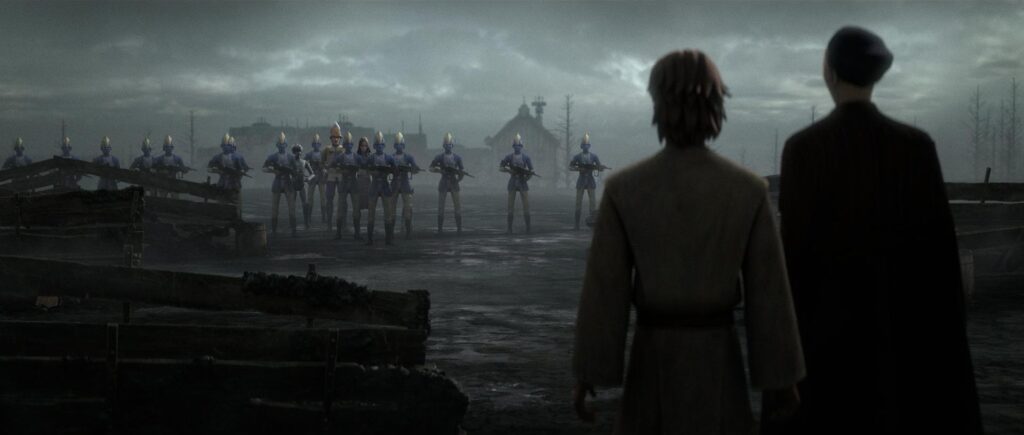
What a fantastic little episode that really shows how good this format of shorts can be. Justice tells a very simple story, keeps it brief, but with such depth beneath the surface. It’s potent, saying an awful lot with so little. It does a great job at showing how Dooku, the man who will become Darth Tyranus, began with noble intentions. The origin of his path is on display here, and it begins with him acting like you’d hope a Jedi would, coming to the aid of some villagers against a corrupt official. We see his feelings towards the Republic, and how they led him towards the separatist movement and the Sith. A road paved with good intentions.
We really needed this depth to Dooku. The Clone Wars showed the end of his journey, where he is fully corrupted, an evil Sith. Justice, finally, shows us the Jedi, the man, as he was discussed by the Jedi early in Attack of the Clones but not seen. Like Anakin, he was a good Jedi. It’s not a simple turn towards villainy. Seeing him with his padawan Qui-Gon does so much. It adds to the legacy of lessons trickling down from master to apprentice throughout the saga. We see how Dooku came to inform Qui-Gon’s worldview but also when he would stand up to his master. I also love the design of the planet. It feels unique in the franchise. Very realistic, this muddy, grey, downbeat farming world, but it’s just Star Wars enough to work.
1) Episode 4: The Sith Lord
Not to be dramatic but The Sith Lord is to The Phantom Menace what the Siege of Mandalore is to Revenge of the Sith. A huge story set concurrently with the film, showing what other characters were doing during the events. And it’s awesome. Even though he’d technically already left the order at this point, we see Dooku in the Jedi Temple deleting Kamino from the archives, setting the stage for the Clone Wars. He even bumps into Qui-Gon, about to leave for Naboo and his death, in a wonderful interaction. These aren’t just ‘oh, cool’ fanboy moments, they are so satisfying to see after all this time, slotting in perfectly with other storytelling and enriching them while doing so.
The episode also, of course, explains Yaddle’s disappearance from the prequel trilogy after The Phantom Menace. But rather than just an answer for trivia purposes, it makes Yaddle’s fate mean something. She can feel Dooku’s turmoil, follows him to a secret meeting with Sidious, and almost reveals everything. Her death is what seals Dooku’s fate, his final and full commitment to the Sith. It’s a great death, preceded by a great fight. Yaddle is the butt of jokes no longer. Her final moment in fantastic, literally shining a light on Dooku and Palpatine. She’s defeated but shows them, particularly a tortured Dooku, that the light of the Jedi never completely fades.