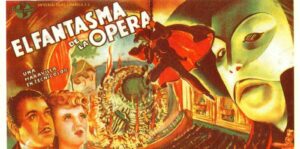
Phantom of the Opera (1943) Pioneered The Bad Horror Remake
The Claude Rains remake fails in comparison to the 1925 version, and pioneers the issues found in so many modern horror remakes
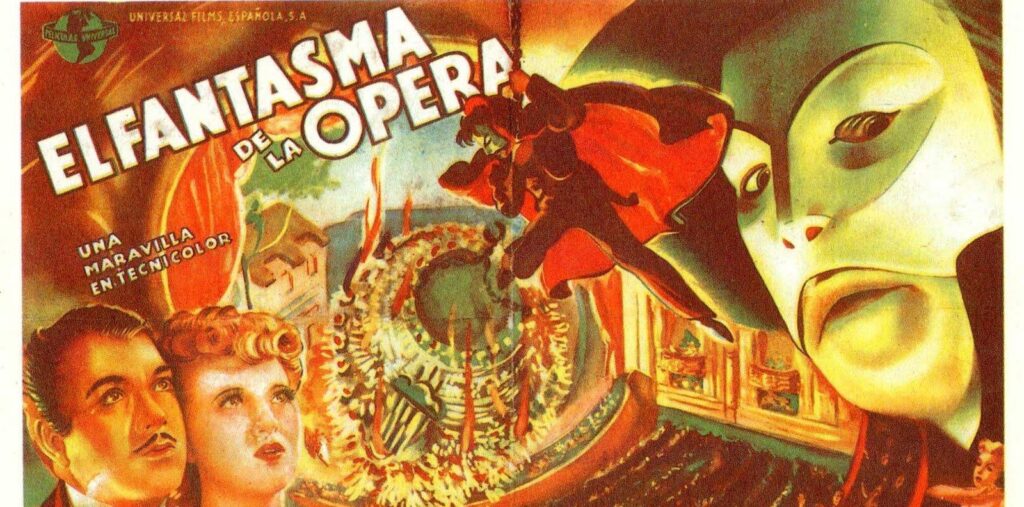
The horror remake is a perennial issue but justifying them used to be much easier. Despite being released just 18 years after the classic Lon Chaney version of The Phantom of the Opera, the 1940s remake starring Claude Rains must have seemed like a vital update. In those short years cinema changed drastically. Now there was sound and colour! Yet despite coming over half a century earlier, it’s fascinating to look back and realise that the issues that plagued horror remakes in the early 2000s are right there in 1943’s Phantom of the Opera.
The bad horror remake peaked in the first decade of the 21st century. Every possible property was milked and drained and so many had the same disastrous issue: an over-explained backstory. The mysterious killer, scary for their enigmatic persona, was time and again ruined by explaining their past to a microscopic degree. Black Christmas; Halloween; The Texas Chainsaw Massacre; A Nightmare on Elm Street. Their antagonists laid bare and neutered of fear. I thought it was a modern issue but Phantom of the Opera pioneered the problem back in the golden age of the Universal horror film.
The 1925 film begins with the Paris Opera House apparently haunted by a mysterious phantom, nothing but a shadow on the wall, the subject of scary stories whispered backstage. The 1943 version features an opening 30 minutes detailing precisely how the Phantom came to be. Claude Rains is Erique Claudin, a musician in the opera’s orchestra, and in a long tale meant to inspire sympathy we see him have a very bad day. In the film’s opening act, which is a fresh addition to this version, the shy, nebbish man has an injury to his hand which means he can’t play, he’s promptly fired, and he can’t pay his housekeeper or for the singing lessons he’s secretly gifting young singer Christine.
To put a hat on a hat, his work might be plagiarised and so he finally snaps, killing a man. In the struggle he receives a jug of acid to the face (a common piece of office stationary apparently) and staggers into the sewers, deciding to become a Batman villain the Phantom of the Opera. It’s a long and unnecessary backstory but if that’s the kind of change the filmmakers wanted to make then okay, it’s quite the update. And it’s worth noting that the film is very much a remake of the 1925 film rather than a fresh adaptation of the 1910 novel, each film version changing drastically the events of the book, like a cinematic game of Chinese whispers. The issue is that the filmmakers don’t stick to their new version.
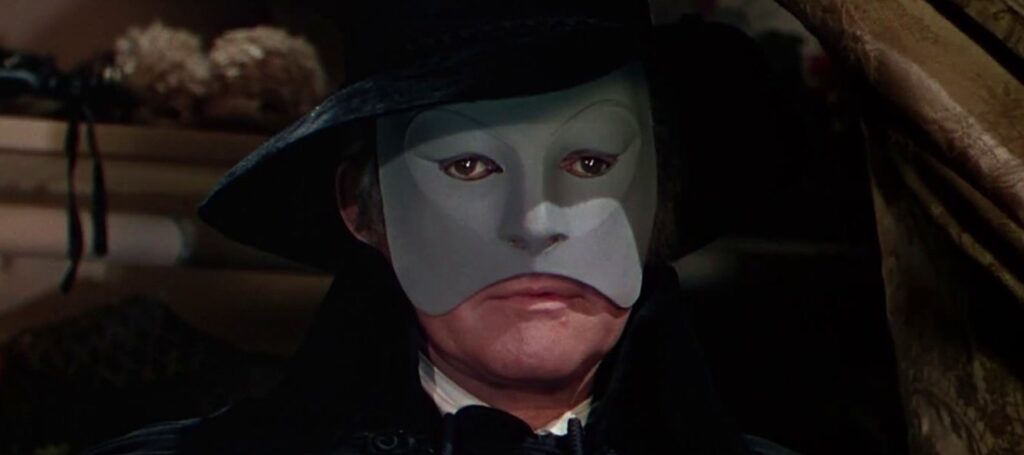
Once the first act is out of the way, the film begins anew and wants to directly echo the original. It doesn’t work. The film can’t spend so long demystifying the character, explaining everything about his origin, only to then go back to playing the Phantom as a mysterious character. He’s kept hidden, a shadow tiptoeing around the opera house, but all the audience can think is ‘oh hey, there’s Claudin’. You can’t put the backstory back in the box and play the rest as a horror story where Claudin is the tormentor rather than the pathetic victim we saw in the first act.
He also doesn’t really do anything for the longest time; he just bumbles around. There’s not enough phantom-ing. No atmosphere, tension, or horror. It may be classed as a Universal horror film, included in all the boxsets alongside Dracula and Frankenstein, but it’s not a horror. The owners of the opera house talk of him like a nuisance rather than a threat, and mention how a master key, cloak, and mask have gone missing. Even his paraphernalia for haunting is explained. Nobody is convinced he’s a ghost, nobody is scared of him, they all know about Claudin and piece together that he must be the phantom straight away. They even use one of his compositions to draw him out.
Phantom of the Opera is the only Universal horror film to win an Oscar, and on a technical level it is a handsome film. The sets, hair, and costuming are outstanding but that’s about it. Remaking a black-and-white silent movie also informed the extended opera sequences. Now that they can be heard, they are heard for a long time. The film begins with five minutes of opera but it has little to do with the actual story. The 1925 version used Faust, which thematically connects to the story. The 1943 version uses a random public domain opera for the opening and then an entirely new one for the rest of the film. Universal didn’t want to spend the money for a relevant opera, although the war also made negotiations with European rights holders difficult, if not impossible.
The film’s backstory was initially to be even more elaborate. Claudin was intended to be revealed as Christine’s father, explaining his interest in her, but this was cut from the final film. This leaves no relationship between them at all. The 1925 version had a Faustian bargain between singer and phantom, him helping her become the leading performer if she loves him back, leading to a dark and twisted game between the pair. Here there’s nothing. All Christine has to do is choose between two suitors, both of which look identical in this version.
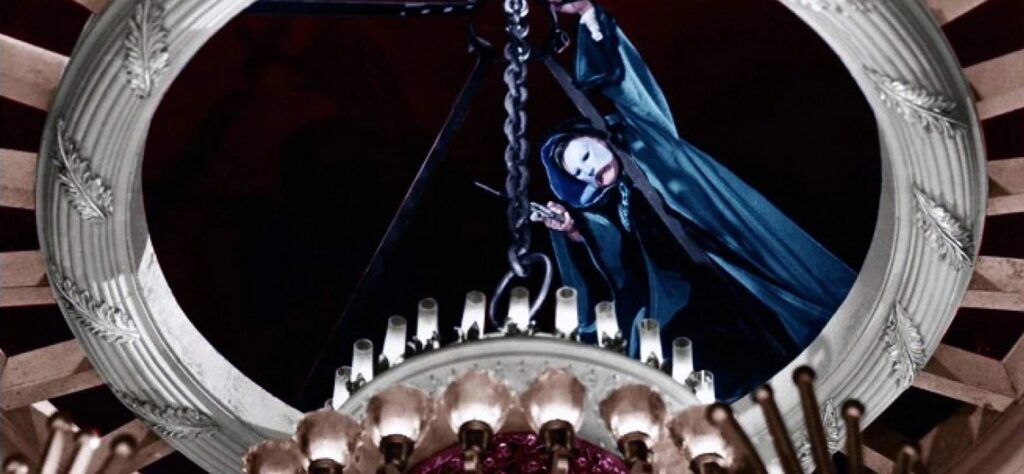
Claude Rains is a great dramatic actor (he’d just finished Casablanca before filming Phantom) but I’ve never been impressed by his horror work. He’s solid in The Invisible Man but totally unbelievable as the father in The Wolf Man (although I’d blame the casting of Lon Chaney Jr even more). He’s fine as the reserved, refined gentleman at the film’s beginning but he’s never a threatening presence. It’s such a monumental step down from Lon Chaney’s performance in the original, which remains creepy to this day. The makeup is also inferior in the 1943 version. Instead of Chaney’s iconic work, Rains is simply burnt rather than deformed, making for a lame reveal once the mask is whipped off.
The film does begin to pick up at the end but it’s far too late. We get the chandelier scene, the Phantom finally doing something villainous, and he brings Christine down into his lair. But there’s no interesting Faustian bargain, it’s just a straight kidnapping. There’s no angry mob, just the two love interests. And the lair is dull compared to Chaney’s. All the horror aspects are minimised and it all wraps up in five minutes, the mask reveal happening right at the very end rather than an hour in like the original. All the good stuff from that version’s third act, like the Edgar Allan Poe inspired Red Death scene, is removed. The brilliant third act of the original had to be cut from this version to make room for the new lame opening act with Claudin.
With Claudin dead we get a final scene with Christine, finally having to choose between the two men in her life. Her decision: neither. It feels like the film itself makes the same choice, or lack of one. Do they want Phantom of the Opera to be a detailed character drama or a mysterious horror film. The men don’t seem to mind Christine’s option, leaving together laughing, but the film can’t have such an easy resolution to its identity issue. It ends up being among the weakest of Universal’s classic horror output, and watching today feels oddly prophetic of the issues horror remakes ran into decades later.