The Surprising Influence of Alien: Resurrection on Alien: Earth and Romulus
The franchise’s fourth entry might be reviled but its legacy lives on, pioneering ideas that continue in recent Alien instalments
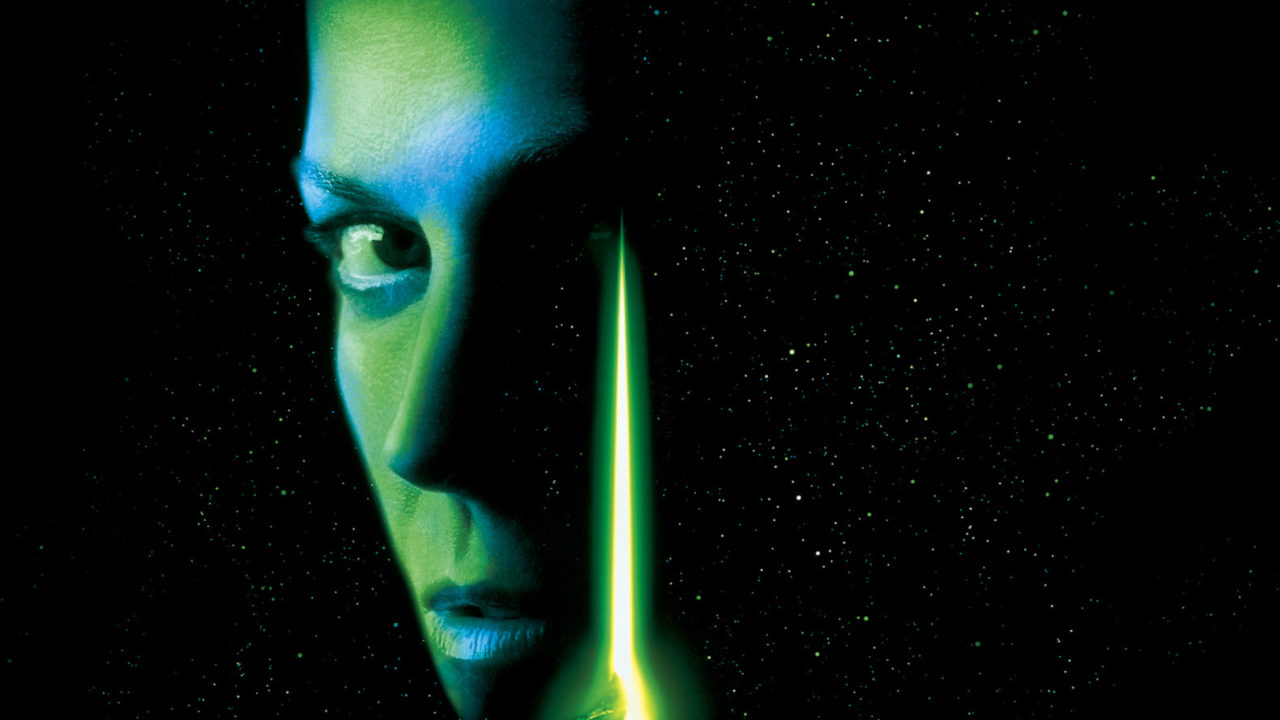
Alien: Resurrection is a frustrating film. Frustrating in that I desperately want to like it, and every time I think I do like it, that it does something well, poses an interesting idea, it immediately follows it up with something terrible. The film’s narrative and tone are wildly at odds, opting to treat itself as a weird comedy. If I were to rank the franchise’s films, AVP notwithstanding, it might come last, or maybe the fact that it carves itself a unique identity in the series would save it from the very bottom, with the dull Alien Covenant taking that spot.
The point is, it’s not good. And yet it’s fascinating to see how much of an influence it is having over the modern entries in the series. Multiple times while watching Alien: Earth, I caught myself thinking “wow, this is just like Resurrection.” Showrunner Noah Hawley is clearly basing his series on Ridley Scott’s original film, that brand of 70s retro futurism, and to a lesser extent James Cameron’s Aliens. But, whether he admits it or not, realises it or not, his series shares an awful lot of DNA with the franchise’s most reviled film, Resurrection.
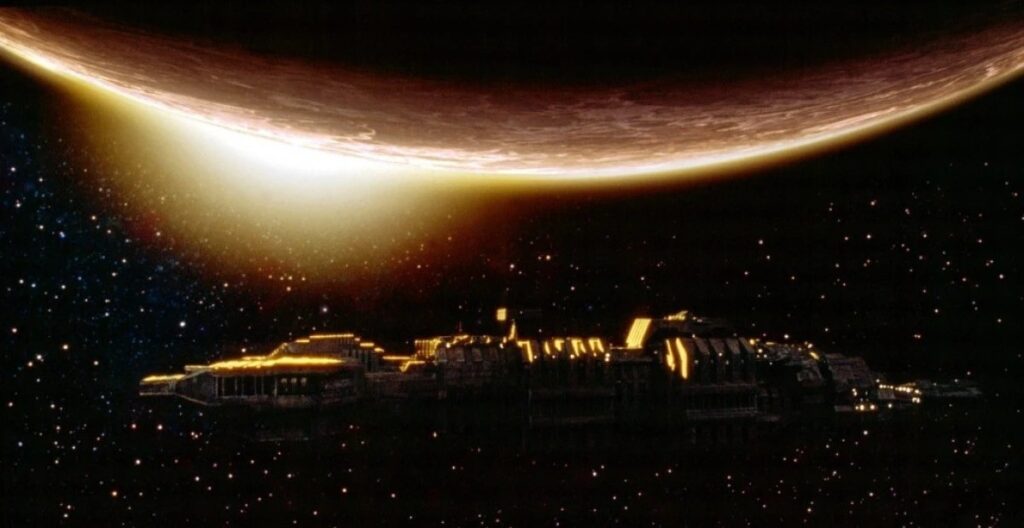
Hawley’s show might be advertised as the first time we see Earth in the franchise but that’s only kinda-sorta-not-really true. A science vessel, carrying xenomorph specimens, heading to and eventually crashing on Earth is the inciting incident of the series but also the plot of Resurrection. The beginning of one and the end of another. The threat of the first three Alien films was greedy corporations acquiring the universe’s deadliest lifeform and Alien: Earth might pay that off but Resurrection got there first. Both even skirt away from the obvious choice of focusing on Weyland-Yutani, opting for a new organisation instead.
And then there’s the protagonists. The clone of Ripley in Resurrection reminded me an awful lot of Marcie/Wendy when rewatching the film this past week. Wendy had to get used to her new synth body similarly to how Ripley had to grow accustomed to her clone body, both now possessing advanced strength and becoming something more than human. Much like Wendy, Ripley also, at least initially, acts like a child in an adult body. The main difference between the two being that Wendy is much better written. I find Ripley’s dialogue in the film, like pretty much all the dialogue, to be terrible, beginning too babyish and ending too weirdly sexual for little reason.
Wendy is similar to the Ripley we see in the film’s first half, and then reminiscent of Call from the second, when it gets revealed she’s actually a robot. Call is a sweet and innocent creation in a terrible world, like Wendy (at the beginning). This pure synthetic thing with a pixie cut in danger of corruption. Call is described as an Auton, a robot designed by other robots, outlawed in the galaxy. I know Hawley is uninterested in making Earth fit the wider canon, but it would be interesting if there was a direct link between Wendy and Call, with Wendy ultimately creating her own people. When Call does break bad she does so in a manner similar to Wendy, essentially haunting the ship like Wendy does the island facility in the final episode, opening locked doors and taunting her foes over the PA.
“Roll over. Play dead. Heel. You can’t teach it tricks.”
“Why not? We’re teaching you.”
Alien: Earth controversially tamed the xenomorph. Something I didn’t mind because by the end of the season I was so invested in the human drama (or synth drama) that its nature as an Alien story became almost irrelevant to me. Alien: Resurrection shows the franchise’s first attempt to tame the creatures and it go startingly similarly to the show. The humans lose control but Ripley is able to connect with them, just like Wendy, bonding with the species by being like them. As with the first season of the show (although I imagine this will change if it gets a second season), the film ends with the xenomorphs no longer a threat to our main character.
While praise for Resurrection is sparse, there is one positive mention of the film on the official Alien: Earth podcast where it was mentioned the creatives looked at the movie and liked the idea of the xenomorph’s survival instinct including sacrifice. In Resurrection, the aliens kill one of their own to free themselves using its acid blood and in Earth the xenomorph is willing to bite off its own inner mouth to free itself. However, the one aspect I wish the show had copied from the film is how the xenomorphs look. The practical aliens in Resurrection might be my favourite example of them in the franchise. I love how wet and disgusting they are. In the show they are far too dry. They’d look much better fully lubed up.
There are a few other minor connections. I like how Alien: Earth highlighted the connections between real animals and the xenomorph in a couple of moments open to interpretation. There was the scorpion in a jar in the premiere and the crab standoff in the finale. Resurrection did this too in the alternate beginning of the extended cut, starting on a close up of what we presume to be an alien’s jaws and then pulling back to reveal it’s just a tiny bug. The film’s alternate ending shows an apocalyptic Earth, something perhaps the series could build to if Hawley changes his inclination on the show’s place in canon. And then Resurrection also has a couple of shots that overlay Ripley’s face over the people watching her which, coincidentally, reminded me of the huge amount of 70s style fade transitions in Alien: Earth (which I loved).
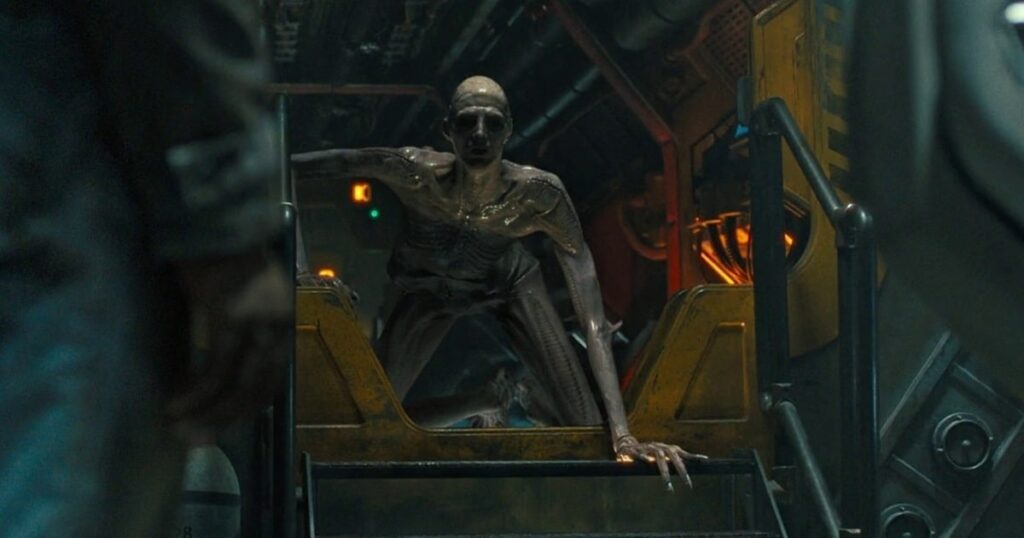
But it’s not just the television series that has echoes of Resurrection, 2024’s big screen outing Alien: Romulus also included some regurgitated ideas. The film is much more openly obsessed with referencing elements of the first two beloved films (going too heavy in the direct quote department) but, however much the filmmakers shy away from it, there’s some Resurrection in there too. A science lab studying xenomorphs is the primary setting of both films (and Earth), and the ending with the Offspring is essentially a remake of the final minutes of Resurrection. Both feature the birth of a xeno/human hybrid who has to be defeated on the escape vessel. While Resurrection plays it for weird sympathy (it has such sad eyes!), Romulus goes for sheer terror and I love that crazy sequence. The reveal shot of the Offspring is chilling.
This all shows that the problem with Alien: Resurrection was never the ideas, it was the execution. The tone, the style, the sensibilities. The direction and the dialogue. At its heart, the core concepts of that film are not only strong but the defining concepts of the post-Ripley Alien franchise, it just did them while Ripley was still around, kinda. The payoff of corporations getting their hands on xenomorphs, the implications of ‘more human than human’ synthetic beings, and the continued intermixing of alien and human DNA leading to more biological terrors. The defining ideas of the Alien franchise over the past few decades, so prominent in Alien: Earth and Romulus, are pioneered by Resurrection, good movie or not. Begrudgingly, we owe a debt to that terrible movie.