The Best and Worst of Millennium Season 2
Millennium changes drastically in its second season and enough of its bold choices pay off to make it a remarkable piece of television
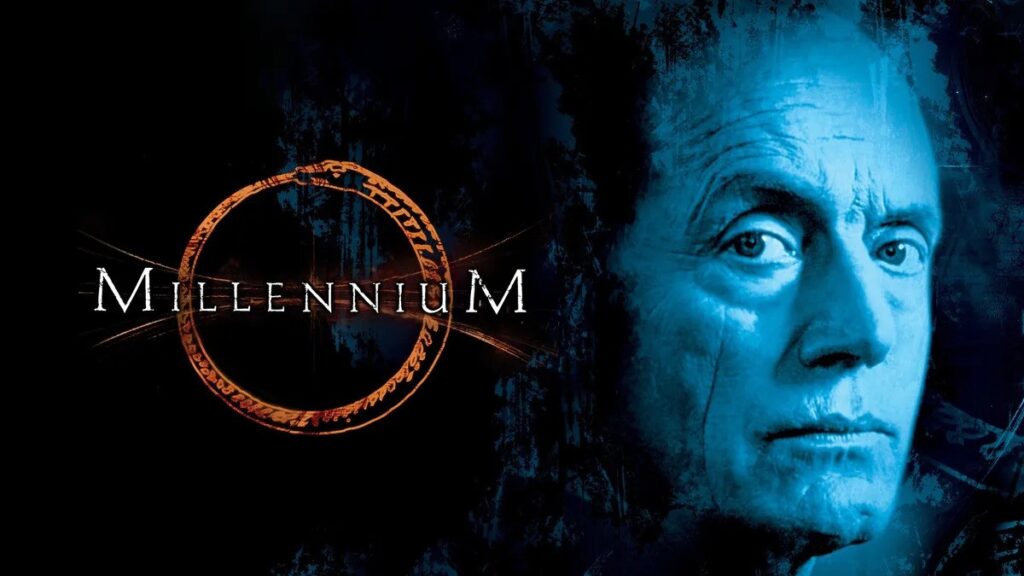
Welcome to the new Millennium. If you tuned into a second season episode after catching a few of the first season, you’d be shocked to discover that this is supposed to be the same show. In fact, watch a couple of second season episodes in a row and you’d be shocked they’re from the same show. Sometimes behind-the-scenes shakeups aren’t that apparent onscreen, the machinery of the series chugging along with little change. This is not one of those times. With Chris Carter busy with The X-Files, both TV show and movie, his duties as showrunner were passed to Glen Morgan and James Wong, writers of some classic scripts from that sister show. They make some bold choices right from the beginning, and only get bolder as the season continues.
It’s fascinating to see the new sensibilities of a new showrunner on clear display in a show like this; The X-Files reflect a writer’s specific tone for episodes but never a full season like this. As the aspect ratio of Millennium expands, so does the tonal palette. The first season was solid but very one note, a dour serial killer thriller. The second season is massively varied. There are still a couple of straight crime episodes but there’s also an increase in supernatural cases, religious stories, conspiracy episodes resembling The X-Files mythology arc, even comedy episodes from Darin Morgan and a Christmas special!
It all takes some getting used to and I could see some fans completely rejecting the new genre(s). And it’d be hard to blame them. But if you commit to the season, the new style, then you will be rewarded by a truly fascinating season of television. It may be less consistent than the first but the wild swings make it more engaging and capable of higher highs (but also lower lows). It may not appear so at first but the season, particularly the huge number of episodes written by Morgan and Wong themselves, is an intricate, tightly-coordinated thematic and narrative web of running plot threads and imagery. I often questioned it, there are still some choices I dislike, but looking back at the full season now I think it’s a remarkable piece of work.
The first season was about tone and atmosphere more than anything. The second is about plot and ideas. It moves much faster, too. Morgan and Wong, knowing they only have control for one season, cram all their ideas for the series within 23 episodes. The show is still dark but not as grim. The darkest moments of the series happen this season and yet that’s just one of its modes. Shockingly, the show is actually quite funny now. Both dark comedy but also some broad humour. The season is quirky, playful, surreal, absurd, dramatic, and depressing in equal measure. As one character puts it early on, “I’m not sure I’m comfortable with this tone,” but I grew to love it. Right from the opening episode the season is trying new things: there’s a Talking Heads soundtrack (always appreciated) and goofy tech guys dropping Soylent Green references. This is the new, funkier version of the show.
The change I’m most unsure of is that of the Millennium Group itself. The first season had them be a private group of law enforcement advisors, aiding the police and FBI in catching killers. The second, err, well, is very different. Turns out they are an ancient religious order split into competing factions, obsessed with preventing or maybe profiting from the apocalypse they think is just a couple of years away. They are secretive, conspiratorial, and untrustworthy. It’s such a big departure I struggle to get onboard with, and it’s not conducive to the standalone case-of-the-week stories (which are fewer as the season leans towards serialisation) to have this backstory in mind when they are hunting for a serial killer. But the Group do have a point. The impending apocalypse is not just the occasional mad ramble it was in the first season. The end of the world is not in question, only the method is.
A new take on the show means a new take on its protagonist Frank Black. The first season presented Frank almost as a mythic character in the real world, the second instead has him be a regular guy in a crazy world. He’s less of that stoic, inscrutable, almost-western figure travelling America helping those in need and more an adrift man looking for meaning and trying to hold onto his family in the wake of his work and psychic gifts. There are entire episodes just following Frank in his daily life, a drama with no procedural case, and they’re great.
Lance Henriksen does a superb job in making Frank a little looser to match the new tone while keeping him the still and sombre character we know. He now listens to music, goes shopping, gets irritated, occasionally smiles and dryly jokes around, and even lies to aid his investigations. As the show lightens up around him to some extent, Frank has to fight depression. His wife and daughter leave him, he moves out of the bright yellow house he was doing everything to protect, his vital grounding in the world lost, and the season has him try to fight his own personal apocalypse as well as global. One of the season’s best additions is an ally for Frank, Lara Means. A fellow former FBI agent also with psychic gifts, now recruited by Millennium, the two have a great friendship, wisely and refreshingly without any romantic undertones.
Just to highlight how much the show has changed, after finishing the first season there was nothing I wanted more than to see Lucy Butler again, Frank’s new demonic nemesis from season 1’s best episode Lamentation. Butler does reappear but it happens late in the second season and by that time I found myself only mildly interested. It’s a good episode, too! But the biggest events of the first season feel small and trivial compared to everything in season 2. Below are my thoughts on a selection of the best and worst episodes of the season, episodes I feel highlight the biggest talking points, and Lucy Butler doesn’t even get a mention…
Messiest Episode: Sense and Antisense (S2E3)
The episode Sense and Antisense certainly leans towards the latter. It’s fairly nonsensical. The issue Millennium immediately runs into after ditching the serial-killer-of-the-week format is that it doesn’t have a different format to replace it with. Therefore the early episodes of the season might be bursting with ideas, in this case too many, but there’s no real form to them. The premiere is the concluding part to last season’s cliffhanger finale so has some ingrained structure, the second episode has enough quirk to get by and transplants evil dogs into the story where a serial killer usually goes, but it’s this third episode that’s a mess.
It’s a shame the episode fails as much as it does because it makes a bad first impression for what will ultimately become some good storytelling elements. Sense and Antisense introduces dangerous pathogens to the show but does so poorly, a key component the season will handle much better later on. I could see people dropping off the show entirely back in the nineties, not willing to stick with it each week as it distances itself so drastically from the previous season. Bingeing on DVD it’s easier to zip past this bad instalment but back then this might have killed the show.
It’s all over the place. The episode features a deranged character spouting nonsense and the episode itself acts much the same way. There are viruses, conspiracies, an attempted racism allegory, some subplot about the Department of Energy for one scene only, villainous soup trucks, an intense focus on the Human Genome Project (aging the episode massively) and Frank has a new stalker just two episodes after killing the last one. It’s a mess, not able to develop one idea before ranting about the next. Sense and Antisense should have constructed the foundation the rest of the season is built on but instead dumps all the elements out into one huge messy pile.
Worst Episode: A Single Blade of Grass (S2E5)
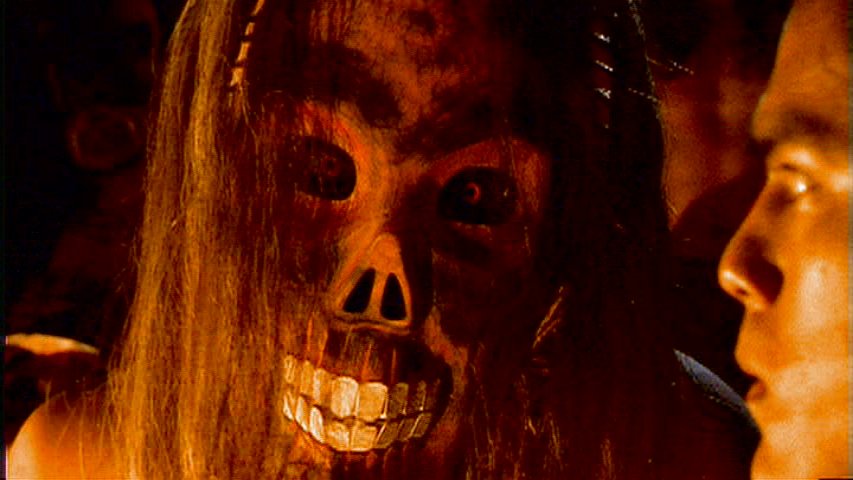
Millennium usually strives to be a very different show than The X-Files but in the case of this episode it adopts that other show’s obsession with Native American folklore. That’s not inherently a bad thing but both series clumsily mishandle the material and, while well-meaning and researched, often leads to failure. It also means composer Mark Snow, usually great, relies on his generic ethnic music cues. Whether Native American, African, or Indian, he’ll bust out the pan pipes. The episode is in need of teaming up Frank with a Native American character, perhaps someone from a different tribe to still generate conflict, but instead he’s paired with the most irritating white anthropologist who explains the culture from an outside perspective, while the Native American characters, both the murderers and victim, are relegated to standing around and watching.
But it’s not just these cultural issues that make A Single Blade of Grass the season’s low point (it is too easy to condemn a 25-year-old show for this), rather it’s that it is incredibly boring. There’s so little conflict and tension. There’s a death in the cold open and then 40-minutes of discussion about it. Frank and the anthropologist take turns to point at symbols written on walls, bodies, and artifacts. A good 30-minutes is taken up with “this symbol means this… but this symbol means this…” It’s so repetitive and tiresome. If there was a character in danger, a ticking clock behind the mystery, then that would at least have given the episode some pace. Frank himself is finally kidnapped in the last act, poisoned in order to receive some vision quest hallucinations, but even these visions are dull.
The episode also features the worst use of Frank’s psychic powers yet. He finds the body and is shown a vision of where the man was killed, travelling there to investigate further. That’s just cheating. It should present him with clues to interpret, not just show him where he needs to go. Frank’s visions had previously disappeared but now return just a few episodes later, the storyline of their absence and return being pretty much meaningless. That might be the worst thing of all: there is some promise here, somewhere, but it wasn’t capitalised on. The cold open twist, that an ancient ritual is happening under a fancy hotel in New York, is a fun idea that goes nowhere. For the rest of the episode, the only elements that hint at it being set in New York are some grainy stock footage and bad accents by the obviously Canadian cast.
Best Episode: The Curse of Frank Black (S2E6)
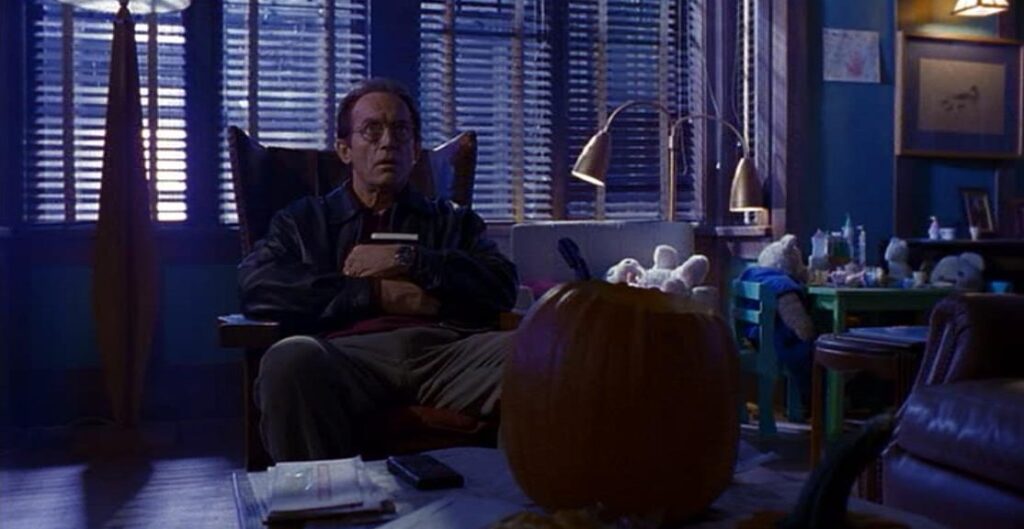
While the show’s second season is defined by its intricate, expansive serialised story, its best episode is the complete opposite. The Curse of Frank Black is as stripped down and simple an episode of Millennium can be. There’s no case, no mystery to solve, instead following Frank on Halloween night as he’s haunted by a ghost and tempted by the darkness. It’s a tone poem. An intensely focused character study and an incredible mood piece. It has the shadowy visuals and tone of the first season, with the fresh character depth of the second, creating something new. The ultimate Millennium episode despite not feeling like any other episode of the series; conversely vital to the show yet also working as an anthology story, able to be enjoyed as a standalone.
The Curse of Frank Black is the perfect snapshot of Frank as a protagonist and Lance Henriksen as an actor. The characterisation and performance are minimalist yet powerful. Frank is near silent this episode, not paired up with a co-investigator, simply trying to get home and then go to sleep, the supernatural having something else in mind. Yet it’s enthralling to watch. The stakes of this season are so massive that personal storytelling like this hits so well when it’s the focus. It’s also a great example of escalation. Like the masterful Matt Jamison episodes of The Leftovers, something new goes wrong for Frank every few minutes, starting small and getting larger in a darkly funny way. He walks through a Campbellian journey of his life, visiting his old abandoned yellow house, now a nightmarish husk of his utopic dream. His own personal apocalypse.
In a moment of dismay, he eggs the windows of his own house, angry at the course his life has taken. The episode sees Frank battle with this inner darkness. He’s at risk of becoming a figure from his youth, a solitary depressed man, the subject of urban legends, who visits Frank as a ghost years after committing suicide. Frank could succumb to the darkness, is beckoned by it. And what makes it a tempting offer is not that he would have to become evil. He would only have to do nothing, sit the fight out, give in to his depression. Instead he makes the defining choice of the series: he keeps going. Keeps fighting as a beacon of light. And not through any grand gesture. The world might be ending but he does what he can: he cleans a window. It’s what he can do, and the little action represents so much, facing off against a literalised version of his inner demon.
The Curse of Frank Black is simple, profound, scary, funny, and even cosy in that classic ghost story kind of way. Not only the best episode of the season but likely the series, too.
Worst Darin Morgan Episode: Jose Chung’s ‘Doomsday Defense’ (S2E9)
Since I began watching Millennium I knew Darin Morgan wrote a couple of episodes in season 2 and I spent the entire first season wondering how the hell that would work. What would a Darin Morgan episode of this show look like? This ultra dark, depressing series getting the guy who wrote the bonkers comedy episodes of The X-Files to pen a script? Surely that can’t work. And it probably wouldn’t have worked in the first season. But by the time Morgan’s first episode comes around in season 2, the show had already expanded its tonal range, exploded its concept enough that a comedy episode just about fits. My issue with Jose Chung’s ‘Doomsday Defense’ is not that it’s a Darin Morgan episode, it’s that it’s a not great Darin Morgan episode.
It’s worth saying that even a sub-par Darin Morgan script is still better than a great script by most other writers. Doomsday Defense is not a bad episode. It’s funny and clever and incredibly dense, packed full of little details and gags. It even gets away with being so broadly comedic by being the right level of meta. The story, among a litany of other things, is about a happiness cult, trying to force their mindset on a miserable world, like Morgan on the show itself. But, of course, the writing also has its own brand of darkness to it, Morgan’s sense of melancholy and manic depressive characters. It’s a bold new outlandish tone to the series but that’s the point of the story, commenting on Millennium’s penchant for misery.
So my issue isn’t with Darin Morgan doing Millennium, it’s with Darin Morgan doing Darin Morgan. He retains his distinctive style, signature storytelling, but more so than with his X-Files work it feels repetitive here. We get the same kind of jokes, the same kind of twists, the same kind of story beats that he’d already executed on that other show. Of course, I’m coming to this after seeing his modern work on The X-Files, and in the 1990s I’m sure this episode felt fresh, but Doomsday Defense features Morgan’s greatest hits crammed into one script, feeling less inspired than the originals.
The killer, both his MO and role in the story, feels too similar to the killer in Clyde Bruckman’s Final Repose, we get the subjective flashback scenes of characters acting like outlandish versions of themselves, narrated backstory segments with still photos and newspaper headlines, and, most damning of all, is the character of Jose Chung. A reprisal from a fantastic X-Files episode, I like Chung for most of the runtime but I really dislike the character’s ending. He becomes Clyde Bruckman in his final scene, even dying the same way on a hotel bed, revealing a nihilistic depression that fit Bruckman more than Chung. For a script by such a bold and unique writer I usually love, I found some moments, dare I say, a little stale.
Best Final Scene: Midnight of the Century (S2E10)
Midnight of the Century feels in many ways like the companion piece to The Curse of Frank Black, the Christmas episode to the former’s Halloween episode. Once again there’s no case, no killer or murder. Instead, it’s another day-in-the-life story of Frank at Christmas, trying to navigate his relationship with his daughter and his estranged father. It’s not quite as strong as the earlier episode, a little meandering in its first half, but it speaks to the show’s growing confidence as a drama rather than just a genre show.
It has a real gut punch of an ending, both uplifting and sad, perfect for a bittersweet and atmospheric ghost story. Once the mystery of Frank’s mother’s death is explained, which dominates a little too much of the runtime, the human consequences can be laid bare in a conversation between Frank and his father, Henry. It’s a touching scene, well performed by Henriksen and guest actor Darren McGavin. The two reconnect and Frank gives his father a photo of his daughter, Jordan. A healing process between three generations seems to be taking place. Then, in the final scene, on the church steps on Christmas Eve, both Jordan and Frank see the ghost of Henry, an omen of his coming death just when the family had been reunited. It’s a bittersweet moment, sad but with the promise of connection between the family, however brief, and finally confirming Jordan has Frank’s power in a way that is emotionally meaningful.
Best Guest Star: Tucker Smallwood as Steven Kiley in Goodbye Charlie (S2E11)
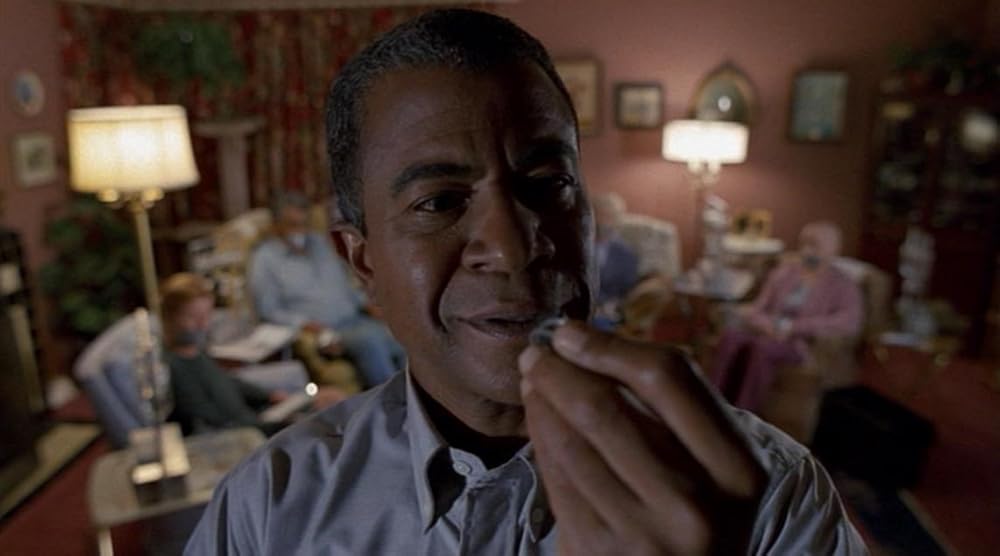
A remarkable performance in an unremarkable episode. Goodbye Charlie is one of the few killer-of-the-week stories in the second season, a throwback to the procedural cases of the first, and fairly bland in its storytelling. Not a bad episode but certainly a little dull compared to its contemporaries. It centres on a topic ripe for discussion, assisted dying, with the killer perhaps murdering people or helping the terminally ill die on their own, dignified, painless terms. Unfortunately, the script shies away from any meaningful discussion. Frank is paired with fellow Millennium member Lara Means and it seems like the perfect time for a Mulder & Scully-style debate where they have differing opinions on the topic. Instead, both of them, particularly Frank, are noncommittal and simply speak aloud that it’s a difficult quandary rather than actually dare have a take on it.
Thankfully the killer they are tracking stands out from the rest of the episode’s evasive nature. Depending on the audience’s opinion on the subject, he’s either angel or demon (literally) but it’s his human aspects I found chilling. Steven Kiley is so intense. Tucker Smallwood plays him as a believable, charismatic man who is friendly and happy and smiley, someone you can’t help but be charmed by to some degree, but also, like real world psychopaths/politicians/Tom Cruise is so intense in these aspects it becomes unsettling. He’s so confident and sure of his actions, whether for good or bad, that him speaking on the subject is chilling. Smallwood avoids the usual serial killer tropes, the obvious villainous touches, and instead is charismatic and charming and all the more disturbing for it. This includes karaoke sessions where he sings to his victims, seemingly to put them at ease as they die. Whether an agent of good or bad he believes in what he is doing to such an extreme degree it’s terrifying, yet the viewer is in danger of falling under his spell, too. A brilliant character and performance.
Best Killer: Avatar in The Mikado (S2E13)
The season takes a rare respite from the supernatural and the apocalyptic to deliver an episode more suited to the first season of the show. If the series is to return to the ‘serial-killer-of-the-week’ format the preceding twelve episodes dismissed, then it needs to make it a good one. Thankfully, The Mikado is great. Dealing with a serial killer who uses the internet to target his victims and then live stream their murders, the episode could easily have aged horribly. Yet, while there’s the odd bit of clumsy nineties terminology, The Mikado is still very effective. Rarely has the show’s great fears of the new millennium actually been this prescient, with technology changing everything. For once Millennium’s apprehension is justified.
The episode shouldn’t be as thrilling as it is. Frank is stuck in one room for the majority of the episode, looking at screens and having things explained to him as a ticking clock counts towards the next murder. Yet this distance, this separation, is what makes The Mikado so effective. Frank is frustrated and impotent, and has to come to terms with how detective work is modernising. The methodology of killers is changing with the times and Frank is struggling to keep up, his power and police background useless in the new status quo. He tries to direct people using their body cams, and interviews suspects over the phone, but it’s not the same and it’s fascinating to see the usually calm and stoic Frank flounder. But, once he’s released from that computer room, the final act has a propulsive pace.
The episode’s killer, Avatar, is essentially the Zodiac Killer in everything but name. His past murders line up with that real life killer’s, plus the costume and cryptic letters. But this isn’t laziness: I think it’s done with great purpose. The episode is all about how killers will adapt, change their methods, with the introduction of the Internet. Choosing a killer with an initial method we’re all familiar with is genius because then we can all see just how he’s changed. The killings are brutal and disturbing and the episode decides never to show the killer’s face, only a single eye through a slit in his robes. The Internet masks his identity, and the show takes it literally. It’s also refreshing to have an intelligent killer, masterminding plans and deceptions and even getting away at the end, not to set up a sequel but to further prove the episode’s point about our growing relationship with technology.
The Two-Parter I Can’t Decide Whether I Like Or Not: Owls (S2E15) and Roosters (S2E16)
Midway through its second season, Millennium builds its own mythology. In place of another standalone case, the show commits to a big two-part story that explodes the Millennium Group into two factions. The ‘Owls’ want the group to be secular, believing the apocalypse is coming in sixty years in a very scientific form, cosmic waves upsetting the universe. The ‘Roosters’ are deeply religious, believing in the supernatural and that the end times are much closer, unleashed at the turn of the millennium. The infighting turns literal as the factions begin a bloody conflict. It feels like this show’s version of the X-Files two-part mythology stories, although taking an insider perspective from within the secret society. In one moment Peter Watts even jokes about how dumb people are for believing UFO hoaxes when the real danger is very different and very real.
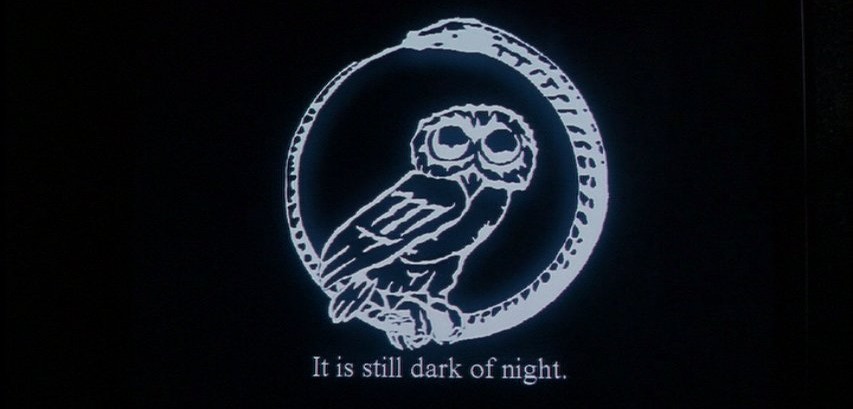
But does this huge shake-up in the show’s storytelling work? Honestly, I don’t know. I’m in two minds about it. Turning the Group into an ancient, dangerous sect is a twist I feel harms the majority of episodes. It’s hard to forget that when they are tracking down serial killers in a police procedural. But these episodes are engaging at least. It’s a bold move and I admire the wild swing. And thankfully we still have Frank to keep the show grounded. Personifying the viewer, he’s annoyed by the secrets, laments how nothing makes sense. But then again Watts is treated like the protagonist and that’s a fickle balancing act. He knows everything that’s going on but acts frustratingly obtuse. Frank asks a simple question and he answers by pulling out a dollar bill and rambling about the symbols on it like he’s ranting on Reddit.
There are some great sequences, shot and edited incredibly well. An extended sequence of a man driving in the rain, being followed and eventually executed, all while A Horse With No Name plays in the background is a highlight. But it’s ultimately a two-parter where I appreciate the attempt more than I do actually enjoy it and think it works. There are a betrayals, old men in cabins, Hitler paintings, and the discovery of what could Jesus’s cross, now imbued with magic powers. I mean, these episodes are nuts. And just when I got used to the infighting, began to understand the factions, there’s suddenly a third party, a rival group, composed of exiled Nazis from Paraguay! They are set up like they’ll be ongoing villains but then suddenly Peter Watts is in Paraguay, acting like James Bond, and assassinates everyone. It’s a cool sequence in a cool episode but so silly and such a bizarre left turn for the series that I struggle to fully get onboard with it.
Worst Catherine Episode: Anamnesis (S2E19)
One of the biggest issues with the show’s first season was that the writers struggled to come up with anything for Catherine to do. She’s Frank’s wife and apparently that’s all there is to her character. Now that the second season separates the couple, her single defining trait disappears and once again she’s unfortunately one of the weakest aspects of the show. To try and justify actress Megan Gallagher’s billing in the credits sequence, the second season gives her one episode as the lead. This worked out quite well in the first season, with The Well-Worn Lock being a solid outing. However her starring episode of the second season is less successful. Anamnesis is easily one of the worst episodes of the season.
What makes it doubly disappointing is that the cold open is fantastic. An intriguing montage set to Patti Smith’s Dancing Barefoot, with teen girls performing some ritual in the woods before purposefully striding into school and a shooting occurs. It got my attention and is a well-edited sequence. But that’s where the positives stop. Surprisingly, the direction and editing are poor for the remainder of the episode, as if the crew realised it wasn’t working and tried to fix it in post-production but just messed it up even further. It’s very rare the production of the show can be criticised. We see an apparition of Mary Magdalene appear in a church and it is laughably bad.
Anamnesis is the one episode of the series not to feature Frank Black and it fails by trying to model itself on a Frank Black investigation without the man himself. Catherine is called to a school where a prayer group of teen girls claim to see visions of Mary Magdalene, and she has to decide whether this is true or a prank. Okay, that’s fine, but it’s not really an engaging premise. Where are the stakes or the drama? However, the show treats this investigation with the same seriousness and urgency as Frank tracking down a killer. What’s the rush? Why is this such a big deal? The episode gives us very little reason to care. And with this episode immediately following In Arcadio Ego, which has a virgin birth of a new Jesus, the final twist feels repetitive.
And most damningly of all, the episode designed to highlight Catherine eventually backgrounds her. Lara Means joins her for a co-investigation and ultimately steals the focus. Does this case mean much for Catherine in the end? Not really, it’s hard to say she develops at all. But Lara, as a woman who sees religious visions herself, is very conflicted. She’s the one who truly ponders the nature of the case. Yet Lara is quite unlikable for much of the runtime, given the role of the antagonistic mysterious Millennium agent. I don’t think this works. Lara is like Frank, a new initiate to the group, just as baffled and unsure as Frank is. Here she’s played as someone who not only knows the deepest secrets of the group but is their keeper, and it really doesn’t work with the rest of the season. It’s a step towards her role in the season finale but I feel it’s too big of one.
Best Darin Morgan Episode: Somehow, Satan Got Behind Me (S2E21)
This is the Darin Morgan Millennium episode I’ve been waiting for. While Jose Chung’s ‘Doomsday Defense’ felt too much like the writer’s X-Files work, Somehow, Satan Got Behind Me is a Millennium episode through and through. How? Well, despite being a comedy, it maintains that sense of darkness and misery. It plays with the tone of the show much more successfully. At one point a young satanist is being murdered by a serial killer and cries out “please, Satan, save me!” and later the killer tries to hang himself with his underwear but finds them too stretchy. Morgan’s scripts usually have some outwardly broad and goofy elements but with a melancholic, sad core. Here he tweaks his style to be darker throughout and it makes for one of his finest scripts.
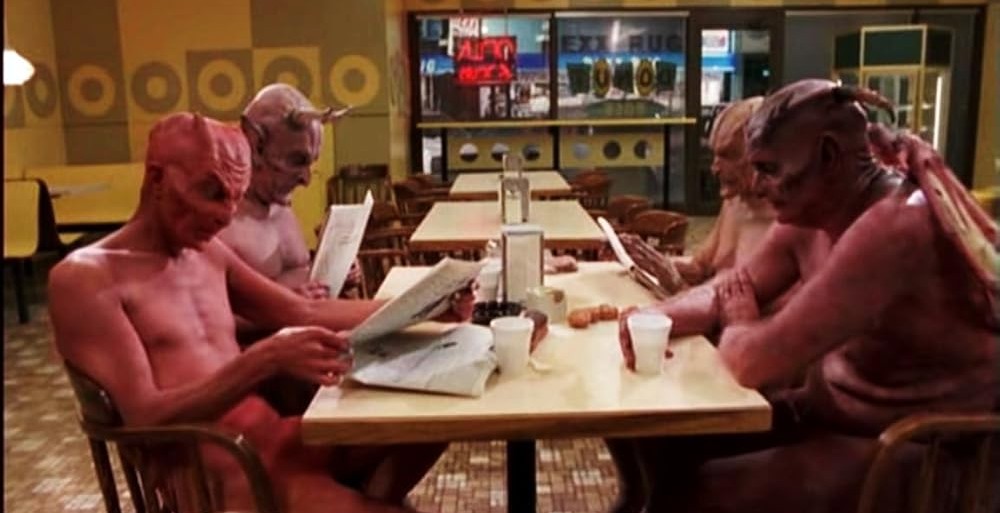
There is a little bit of a Darin Morgan formula, with the guest protagonist being quite manic and funny for much of the runtime but always ending in a place of depression, the sad clown, in an emotional conclusion. Somehow, Satan Got Behind Me features the most incredible example of this yet: four demons who meet in a coffee shop to swap stories of how they tormented humans only to reveal a deep sadness in their own unfulfilled lives. They joke around but by their nature can’t find happiness. The world might perceive them as grumpy old men but Frank Black, a figure they all encounter in their stories, can see them for what they are, uttering a line that cuts them deeply: “you must be so lonely.” It’s not sympathy for the devil but recognition, pity, and it shows Frank’s power to defeat evil greater than any other episode.
Reminding me of the classic Batman: The Animated Series episode Almost Got ‘Im, the episode is a portmanteau of four stories told by these demons, plus a framing device of them in the coffee shop, where the makeup stands up incredibly well under the harsh lighting. It’s a perfect format for Morgan, giving him enough structure to stop his wild ideas running out of control. There’s his take on a serial killer story, with a fantastic Inside No. 9 twist at the end. There’s a darkly funny tale about driving a man to suicide not with huge attacks but rather the little everyday annoyances. And the final story is genuinely heartbreaking, a romance between an older stripper and a demon who feels genuine affection for her only for it to have a deeply affecting ‘Scorpion and the Frog’ ending.
If all four of the stories were equally strong then this would be an all-time classic, Morgan’s masterpiece to rival Clyde Bruckman’s Final Repose. The issue is that the third story of the four isn’t just weaker but I would argue actively bad. It’s such a damn shame and highlights my least favourite aspects of Darin Morgan’s work. It features a demon driving a man who works for Broadcast Standards and Practices to insanity, until he barges onto the set of a show resembling The X-Files and shoots the cast before himself. Firstly, the way the demon communicates with him is to appear as a CGI devil baby who dances in what Wikipedia tells me is a reference to Ally McBeal. Not only is the sequence so much broader than the rest of the episode to the point of silliness but that Ally McBeal joke has aged incredibly poorly because no one today is going to get it. The sequence is also meta to the point of self-indulgence. It’s Morgan getting his own back on the S&P censor on The X-Files who made his time on that show hellish, but it’s a joke for him and him alone, damaging an otherwise fantastic episode.
The Incredible Two-Part Finale: The Fourth Horseman (S2E22) & The Time Is Now (S2E23)
Wow. The second season of Millennium demands commitment. It asks a lot of its audience, shifting the show into uncharted territory and making some bold choices. It’s not perfect, it doesn’t always work, there are some missteps, but if you get onboard with it then the final two episodes deliver a shocking yet inevitable finale that satisfies as a pay-off. The ending is phenomenal.
It works because if you, the viewer, commits than the show will ultimately commit too. The season follows through on all its teases and setups. The reveal that the Millennium Group are some ancient religious order is still something I struggle with for the bulk of the season, largely because I don’t find it interesting for most of the show’s episodic plots, but here it absolutely works. Their shenanigans are no longer just barely comprehensible rambles and hypotheses but cold, hard, deadly facts. The show, after two seasons, commits to the apocalypse. These two episodes truly give the sense that the world is ending. This season is about both Frank’s personal apocalypse and the wider global apocalypse. The finale delivers both.
The episodes are so good they actually got me to like Peter Watts. I love Terry O’Quinn, he’s always excellent, but this season Watts, personifying the Millennium Group, has been a frustrating presence. The Fourth Horseman makes him sympathetic, truly makes us understand his worldview and faith. It’s a great Peter Watts episode on top of everything else it’s doing. And it’s doing an awful lot.
So how does the world end? A virus. I was initially wary of this because that’s not only X-Files territory, it’s bad X-Files territory. But Millennium offers a better virus and antidote conspiracy storyline in two episodes than The X-Files does in 11 seasons and a movie. It’s genuinely nasty and scary. The virus causes blood vessels to burst, veins melt, and people to sweat out blood at rapid speed. We see this at a family dinner, a bright and happy birthday meal suddenly turning to horror as the family die in incredible pain, blood oozing from their skin, fingers rupturing as they press buttons on a phone to try and call for help. It’s a fantastic, unsettling scene. And, much like The X-Files, any episode that includes the word “exsanguinated” is going to be a good one.
And yet that’s only the second best scene of the finale. The greatest sequence of the show so far is the type of surreal move Chris Carter would never attempt, a Morgan and Wong special. The endgame of Lara Means is to be a version of Frank Black who commits to the group and breaks. And breaks she certainly does. In an extended montage, literally playing out over the entirety of Horses by Patti Smith, she sits in a motel room and has a complete mental breakdown. It’s a mixture of apocalyptic visions and distorted reality that includes symbology from throughout the season. Much of an episode’s act is composed of this music video-style epic and it is weird, wild, and glorious. I’m shocked they convinced the network to air it. It approaches Twin Peaks: The Return levels of greatness.
Yet despite the scale implied by the episode (as the finale wraps up it seems like the world is ending, descending into chaos), the finale is able to keep focus on Frank and his family when it needs to. The very end is rightfully small and contained, with Frank, Catherine, and Jordan retreating to a cabin in the woods. Frank has reconnected with Catherine after a season apart, achieved his personal goal just as society collapses. And with one vial of the antidote, Jordan is inoculated and Catherine succumbs to the virus, opting to walk out into the woods and spare her family the pain of watching her die so brutally.
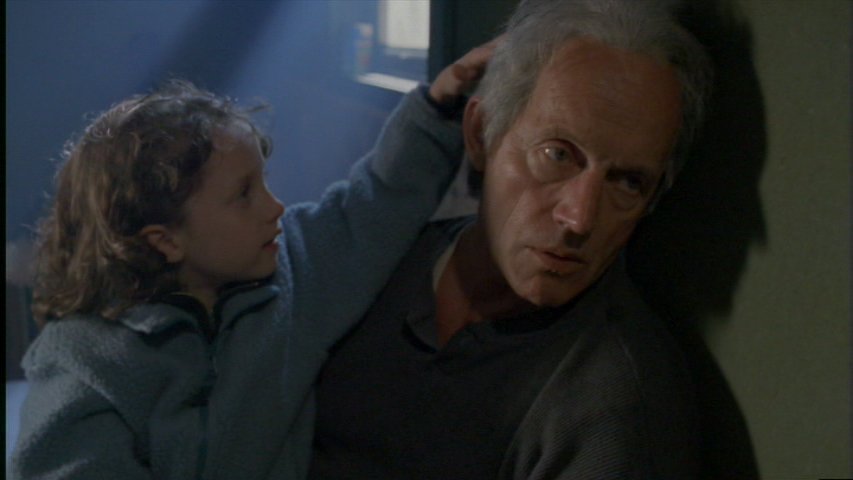
The season ends with Frank comatose, broken, his hair a shock of white, while Jordan plays with him, not knowing what has happened to her mother, his visions showing only static. It is so incredibly bleak and dark. I love it. I love the balls of it, the commitment to the bit. It’s a show about the end of the world and, as far as the episode makes clear, the world ends for Frank and maybe everyone. Millennium actually does what these shows never do and followed through on its concept to the inevitable, painful end.
Five Worst Episodes:
5. The Hand of Saint Sebastian (S2E8)
4. Sense and Antisense (S2E3)
3. Siren (S2E17)
2. Anamnesis (S2E19)
1. A Single Blade of Grass (S2E5)
Five Best Episodes:
5. Somehow, Satan Got Behind Me (S2E21)
4. The Mikado (S2E13)
3. The Fourth Horseman (S2E22)
2. The Time Is Now (S2E23)
1. The Curse of Frank Black (S2E6)
I don’t know what the third season of Millennium will look like. After the second season finale, how can there be a third season? The series was in danger of cancellation and so showrunners Morgan and Wong gave it a hell of an ending. But then it was renewed and Morgan and Wong moved on, the true final season stewarded by new showrunners under the purview of Chris Carter. If The Time Is Now was the series finale it’d be a phenomenal one, truly a TV ending for the ages. But now, where does the show go from here? Will the third season be more like season 2 or season 1? After that ending how can it resemble either? The fact that Chris Carter says in the behind-the-scenes documentary that he still hasn’t seen some of the second season episodes doesn’t give me much hope of a considered continuation. If you asked me now, I’d say there shouldn’t be a third season, that the show should end here, but there is and I’ll watch on, warily, to find out what happens after the world, or at least Frank’s world, ends.


Good post! We will be linking to this particularly great post on our site. Keep up the great writing