The Mandalorian Visual Guide Keeps (Almost) All Of The Show’s Secrets
At long last The Mandalorian gets a reference book, but the usually revealing visual guide keeps mum on most of the big, and small, secrets
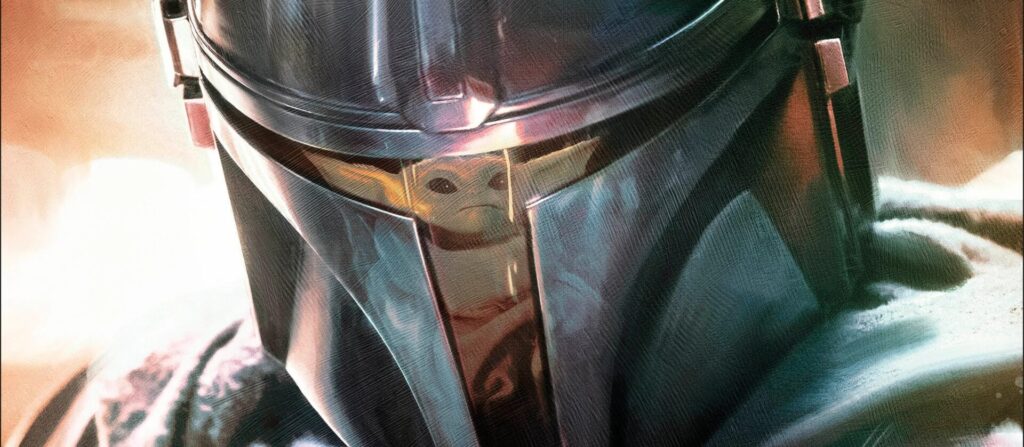
A visual guide for The Mandalorian was to be released in 2021. Then, with no reason given, the book was, ironically, shelved, along with a tie-in novel to be written by Adam Christopher. It’s been a debate in the fandom, like literally everything is, as to why books relating to the show were scrapped. The most common theory, the one I subscribe to, is that Jon Favreau didn’t want to be constrained by any more canon than absolutely necessary. Even the exact year the show is set, the time frame it covers, was up in the air for seasons. Why pin down everything in the show while it’s still lifting off? It’s worth waiting for all the building blocks of the narrative to be laid before rushing in to fill the small gaps.
You’d think that maybe the eventual release of the visual guide this year, five years after it was first supposed to come out, would dispute this theory. But in fact I think it supports it. The visual guides or dictionaries are usually full of juicy pieces of information, all the proper names and backstories an obsessive fan can dedicate their time to remember. But The Mandalorian Visual Guide is different. It’s not a book of answers but a book of secrets. In a move remarkably fresh for this franchise, things remain unknown. It’s as if Favreau or whoever is in charge of this specific area finally gave the go ahead for the reference book to be written and published but only if certain information remained obscured or redacted. As Pablo Hidalgo writes in his introduction:
“There is much to learn in these pages, but there are some names and backgrounds that will remain unknown. There are secrets some will kill to protect. There are some masks that will never come off.”
It makes for a different reading experience to the other visual guides. At first, I was disappointed. Werner Herzog’s ‘The Client’ remains ‘The Client’, no actual name or backstory given; an enigma wrapped in an accent. I can understand this, to honour the show’s decision to introduce a little more mystery to the galaxy again. But there are other details I think leaving blank feels pointless. Why not reveal the name of the planet the Mandalorian covert is based in season 3? There’s no reason for the new world to be a mystery, and it sure makes writing about it hard when you don’t have anything to call it.
The book doesn’t add many details and certainly strays away from additional storytelling. Hidalgo can recap but not create. It’s a shame. One of the best things about the other visual guides are the new little narrative threads weaved into the backstories of characters who only appear onscreen for seconds. The Rogue One book is unmatched, especially the extra details given around Dr. Evazan and the ‘Decraniated’.
There’s also hesitancy to lock down details that are hinted at or implied in the show. A sentence which really stood out was “of all the villagers, Omera seems the most comfortable and competent with blaster weaponry, suggesting some previous training at an earlier age.” This is clearly implied in the show, and I’d expect a reference book to be the place to add a little more detail. Instead, words like “seems” and “suggesting” are abound. I don’t know how the author feels about writing an extended recap of the show, but he seems to be keeping himself engaged by slipping in terms like “cometary calamity.” It might lack additional detail but the book is well written and an entertaining read.
The book also doesn’t reveal much about the upcoming movie The Mandalorian and Grogu. The final few pages have sparse detail, instead featuring images we’ve seen from trailers and the vaguest of captions. There are no mentions of any Shadow Council members other than those we know best: Pellaeon and Brendol Hux. But there was a highlighting of the escape pod on the Razor Crest, which was never seen on the show and makes me wonder whether it will play a role in the movie, the new ship only being a temporary replacement. And there is confirmation that the Naboo ship Kelleran Beq flees aboard is part of the senatorial delegation. Come on, give us a Jar Jar flashback on the big screen!
But that’s not to say there’s nothing new to learn from the book. Whether created for its pages, or used as a compendium of previous information, there were still new things I discovered from the guide. A few of the most standout ‘reveals’, for me personally, are listed below:
- In a book wary of handing out names, we find out Din’s homeworld seen in flashbacks is called Aq Vetina.
- Finally there’s confirmation that the ice planet in the premiere, Pagodon, is a different planet to the ice world in season 2, Maldo Kreis. I remember at the time there was some miscommunication or something which led to these being referred to as the same planet, which never made much sense. Also, funny that Mando caught the fish-like Mythrol (still no name for him) on a planet where the main industry is fishing.
- Blurrg mothers eat the father and regurgitate the remains for their babies to eat. Never going to look at those fish horses the same way again.
- Apparently the Jawas are saying “sooga!” and not “sooka!” as I’ve been chanting any time I get an egg out of the fridge for the past 7 years.
- Cara Dune dyes her hair apparently, so that’s something I guess. Gotta fill the pages somehow.
- Migs Mayfeld is from the planet Woostri, which I can only imagine was picked because it’s the name that sounds funniest when said by Bill Burr.
- Out of everyone, the Weequay bartender gets a name: Taanti. Still feels racist how they all just call him “Weequay”.
- Turns out the Mamacore is in the shallow hold of the Quarren fishing vessel rather than the bottom of the ship being an opening to the sea. Kinda makes Koska Reeves diving in and finding Grogu less impressive.
- Titus Welliver’s captain isn’t given a name in his description section but then is referred to as Captain Tribus elsewhere. What is going on with giving or not giving characters names in this book?
- The book mentions Boba Fett and Sugi on Serolonis, further canonising the unproduced Clone Wars episodes where Fett and Cad Bane have their (for now unseen) duel.
- The Quarren captain in love with a Mon Calamari is named Captain Shuggoth, a fitting Lovecraft refence for the betentacled alien.
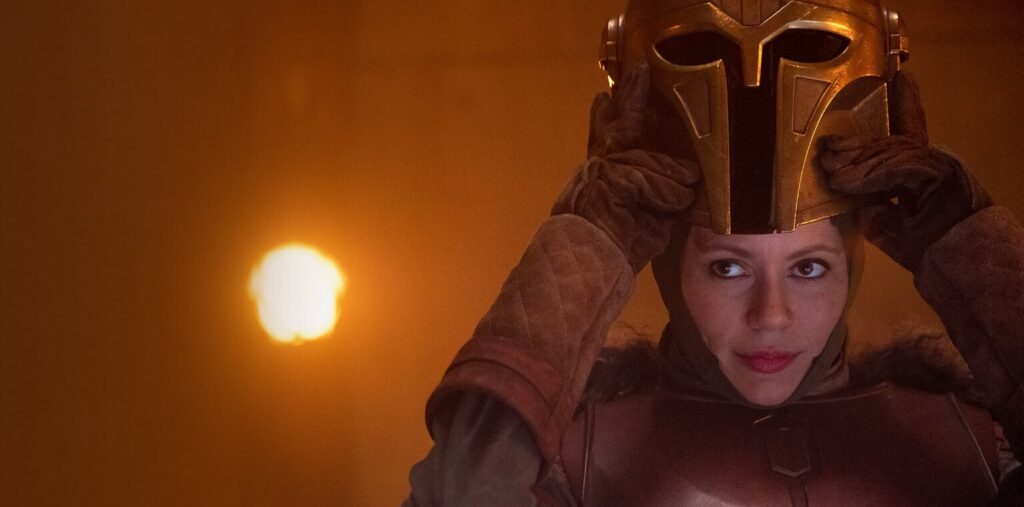
But aside from just new trivia answers, the book also made me look at some elements of the show in new ways. Although, not always positively. The big one I did like is that I feel the book heavily comes down on the side of The Armorer being a new character. Begone lame Rook Kast theories. Hidalgo writes, “So all-consuming is the esteemed station that personal identity, history, and even clan origins vanish under the mantle of Armorer”. I like this, the fact that the role demands her past to be irrelevant to her current role. Her being Kast or anyone else would add nothing to the story. And the mention of her species being unknown really got me to look at her in a new way. If her helmet was forced off, I always imagined it’d just be actress Emily Swallow as a human under there. Of course, this is Star Wars, she could be any species, head/ear size depending.
And then there’s the new details, or at least new to me, that don’t sit right with me. The Mythrol actually being Karga’s accountant on Nevarro originally, before the show begins, is not something I imagined. Karga also used to be the magistrate there before being the leader of the bounty hunters guild on the planet. I don’t like the idea that they return to their original roles, it eliminates growth. I like the journey of the two of them becoming better people, legitimate, and so this reveal feels less like growth and more regression to how they used to be. Karga in particular has a great arc but this revelation muddies it. He’s going back to the job he had before rather than reaching for being better.
The same is somewhat true for R5-D4. I know the droid used to part of the Rebel Alliance but I thought this was before the events of A New Hope. The book lays out that no, he was rescued from Tatooine after that film, joined not only the rebellion but Carson Teva’s squad, and then found himself back on Tatooine for the start of the show, before being reunited with Teva. It feels like a repetitive, contrived story which I imagine was detailed in some comic or other but was news to me.
I’m also wary of the reveal that Frog Lady (still no name other than that) can only hatch one egg per batch, so the impact of Grogu eating all those eggs is lessened. It’s not like he was eating her unfertilised babies because she only needs one to survive anyway. That doesn’t really make sense to me (but this is Star Wars and ultimately it doesn’t need to) and feels like a detail mentioned purely to combat fans who pushed back on the comedic and cute way those baby-killing scenes were portrayed. The same is true for finding out the Morak pirates also target innocent fishing vessels so it was okay for Mando to kill them all while pretending to be an imperial.
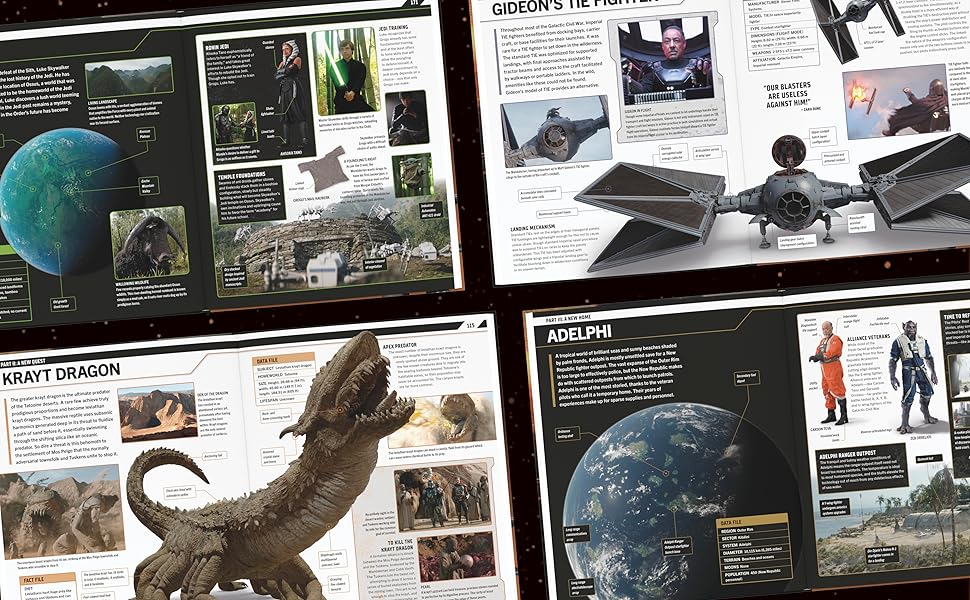
Finally, I should say it’s wrong of me to paint this book as being nothing but a delivery mechanism for proper nouns and trivia answers. It’s a celebration of the show, all of its aspects rather than just story. Detailed images and diagrams show the work of so many departments, so many people, that contribute to such a rich series. I love the full image of the Mythosaur, revealing more than just the eye seen in the show, because someone designed the whole thing. I like Hidalgo pointing out on the image of Toro Calican that his clothes and equipment are brand new, revealing character insights about him that the costume designer thought of. It is a book dense with creativity and detail, deeper than the names and backstories I was initially disappointed not to see.