Batman: Resurrection is a Fun but Misguided Prose Sequel to Tim Burton’s Poetic Batman
John Jackson Miller’s novel is a direct sequel to 1989’s Batman, and while it is a fun ‘what if?’ story, the new format struggles to capture what made Burton’s movie special
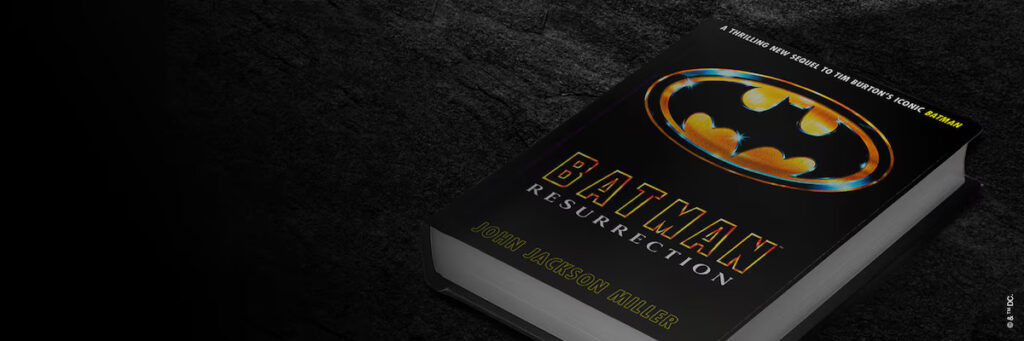
Batman Returns co-writer Daniel Waters has spoken about how Tim Burton’s Batman films are poetry. Artistic, flowing, visual tone poems when compared to Christopher Nolan’s films, which he instead sees as prose onscreen. In understand what he means and so the idea of a prose sequel to Burton’s work is a strange one. This is an interpretation of Batman dominated by visuals and music, tone and atmosphere, ambiguity and inscrutability when it comes to the protagonist, probably the version least suited to a novel. And yet a novel we have. John Jackson Miller has written Batman: Resurrection, a book set between the two Burton films, but does a prose sequel to poetry work?
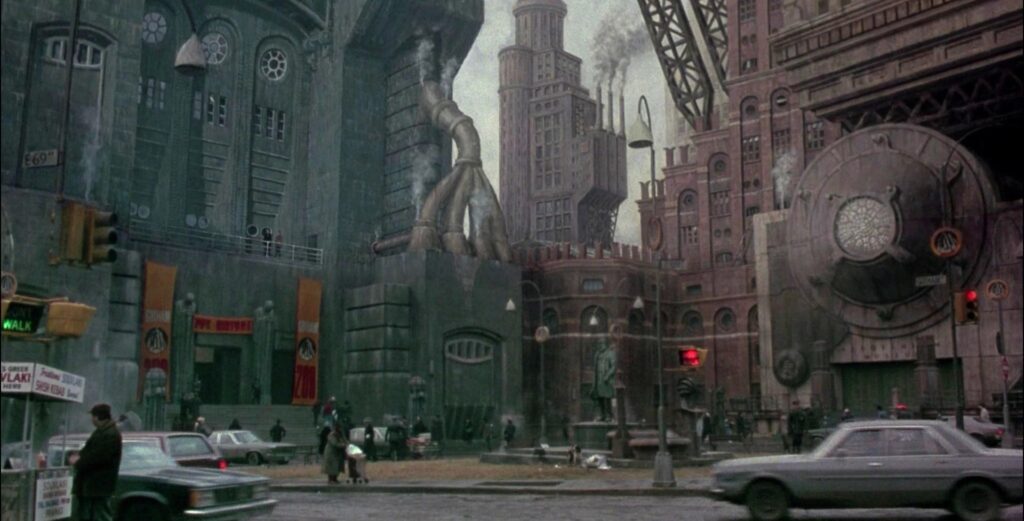
Burton’s films are all about their visuals whereas Miller’s writing is free of much imagery. There are very few visual descriptions. He writes about a hospital and it just sounds like a hospital, not the kind of bizarro art deco hospital that might appear in the films, a contorted asylum teetering on the edge of a cliff in a thunderstorm. I found the novel lacking that specific vibe, the sense of a weird gothic Gotham. The onus is on the reader to put everything through an Anton Furst filter of the mind, or to play Danny Elfman’s score in the background while reading.
It’s not until page 319 when we get the first Burton-esque description of a Gotham locale: an army base through a German expressionist mirror, complete with churning smokestacks like the gates to Hell. “Karlo could only imagine what Fritz Lang could have done with it in black-and-white”, writes Miller. The memorable imagery is sparse but from this point on there are some highlights. There’s a fantastic moment with Batman fighting onstage during a theatre show I’d love to see onscreen. And the book does capture the feel of Burton’s films when it recreates specific locations, like the cathedral or the doctor’s operating room, although much less so with anywhere new. Although one could argue perhaps the issue is with my imagination.
I do find Batman: Resurrection unsuccessful in being a sequel to the very specific tone and vibe of Burton’s Batman, but it is a successful sequel narratively. Miller and Burton have complete opposite ideas of how to do a sequel to the first film. Burton was interested in an entirely new story, a sequel only in the fact it features Batman (although somewhat minimally), whereas Miller delivers an ‘aftermath’ sequel, directly following up the events of the 1989 film and referencing them heavily.
Batman: Resurrection is very much a fan’s novel, filling in the details, connecting every connection possible, reminiscent of Star Wars books, which Miller has also penned. There are references abound, like beginning with the same two goons that feature in the film’s opening, or characters repeating classic quotes. This is hit-and-miss and enjoyment probably hinges on one’s own level of fandom.
But what makes Resurrection’s story work is that Miller imbues his fan tendencies with actual purpose and meaning. He turns plot holes into plot points. Why were Joker’s men already in the cathedral at the end of the film? Why did Joker say he was a kid when he killed Batman’s parents – did he know his identity? These are questions that have plagued audiences since the film was released and Miller tackles them head on. He makes Batman tortured by the same continuity issues as viewers, and in answering them completes a character arc for Bruce rather than just filling in the gaps for fans.
I feared the worst when seeing the novel’s title and reading the brief blurb. Oh no, Joker’s back from the dead. But no, the villain remains deceased and the title refers to more than simply Clayface, the book’s kinda-sorta antagonist, pretending to be a resurrected Joker (although that does happen.) The truth is the title is much less literal. This is about the spirit of the Joker never dying, tainting Gotham eternally. The drama is not with the Joker coming back but about the impact of Bruce thinking that he might be. Batman is the lead of the book, quite different from the films where he is almost backgrounded by the villains, and Miller makes that the point of the story in an almost meta way. Batman has to come to terms with the fact the Joker had a bigger impact on Gotham than him. That he’s a supporting actor in someone else’s story.
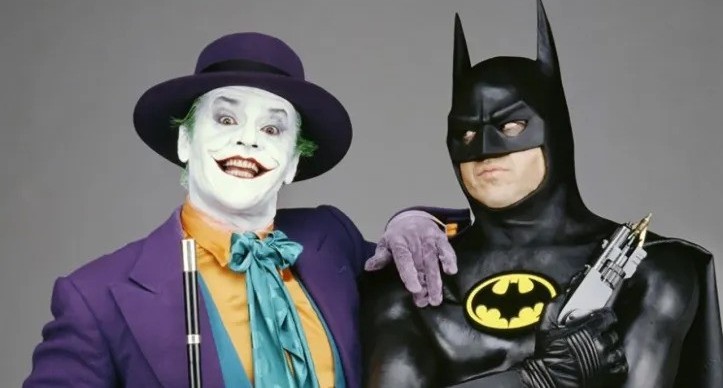
There’s also the fun meta angle with Clayface of a new actor taking on the role of the Joker. How can he live up to Jack Nicholson’s performance? One moment pushes it too far however when Clayface, or Basil Karlo, states of the dead Joker, “he reminds me of the actor from that movie that was set in the asylum,” no doubt a reference to Nicholson. But overall I found Clayface to be a great antagonist for this specific universe. He’s the kind of freakish outcast character Burton would have fun with, and the way he manually contorts his face reminds me of sequences in Beetlejuice. Plus he harkens back to classic cinema in a way attractive to Burton; he’s written as a more fantastical version of Lon Chaney doing his own monster makeup.
Because Batman and Batman Returns feel like two very different films, part of the joy of the inbetweenquel novel is linking the two stories. We get to read Max Shreck being worried about Billy Dee Williams’ Harvey Dent, and the Penguin respecting the Joker but being worried about all the tainted Smylex products being dumped in the sewers. Or how Selina Kyle actually had a run-in with the Joker during the events of the first film. That’s the kind of fun fan connections I enjoy. We get a great chapter featuring so many different characters reacting to the idea that Joker might still be alive and it’s a lot of fun. It also includes characters from the Batman ’89 comic book, which is perhaps a little awkward. The novel discounts the Schumacher films as canon to free itself up but then is beholden to the events of a comic sequel, limiting what it can do.
Miller in general does a good job capturing the voices of the film’s characters. Alfred is perfect and it’s impossible not to read Shreck’s dialogue in a Christopher Walken impression. His Batman dialogue is good, lots of short sentences, but his Bruce Wayne less so. This is just where a novel is going to differ from a film. Keaton was always so minimalist in his performance and so getting in his head, hearing so much dialogue as well as inner dialogue, is going to feel different and I rarely pictured Keaton while reading. Gordon also doesn’t sound the same as his film counterpart but that’s probably for the best: he’s pretty much useless in the movies and I never cared for Pat Hingle’s performance.
The film making the killer of Bruce’s parents the Joker, or Jack Napier, introduces the idea that Batman getting revenge/justice might be enough for him to stop his vigilantism. If the crime he fights is personified, and that person dies, why continue? Thankfully, Miller uses Resurrection to tackle this issue and makes it the core of the rift between Bruce and Vicki Vale. Vale doesn’t appear until late in the novel and I was initially disappointed by this. If we have a novel set between the two films, why leave out Vicki leaving? Thankfully she returns and their conflict is renewed. Miller does a good job in showing her anguish in a relatable way, forced into caring and mothering Bruce when he returns in the morning utterly exhausted, wanting him to stop now that Napier is dead. She doesn’t always seem like the same Vicki as the film but it’s good conflict regardless.
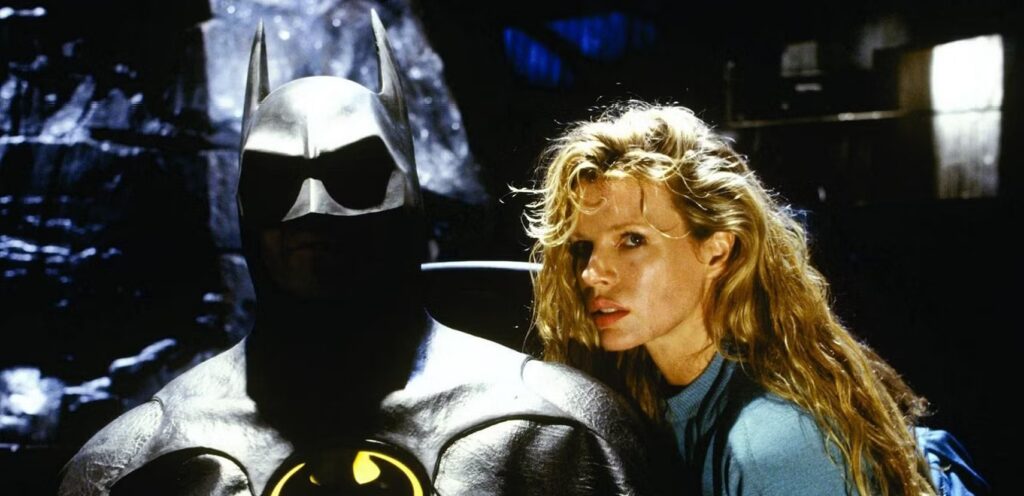
While the narrative connects to Burton’s films, the novel at times feels like it exists in a Batman universe more akin to Nolan’s trilogy. Tim Burton’s Batman embraces fantasy and while it’s weird to say this about a Clayface story, Resurrection is too obsessed with realism for my taste. Sometimes this is a good thing, like the impact of the Smylex outbreak being written about like the pandemic, with theatres struggling to reopen, or even an AIDS parallel with the stigma of patients.
Yet everything with Batman is too scientific and explained. He has a grey batsuit for daytime with a thermal imaging eyepiece and an electric current to make his cape go rigid. I hate that. Burton’s Batman is guy in a suit with clunky tech. He can only glide with that big glider he has in Returns, the electric current cape is from Batman Begins. Miller describes how low cloud cover prevents the batsignal being seen. I don’t want to think about actual weather conditions in this Tim Burton world of silly impractical mirrors reflecting the batsignal. We even get an explanation for how Joker’s gun took out the Batwing: “An experimental military rifle shell that fried electronics.” No! It’s just a big gun that could destroy the Batwing with a single bullet because that’s the kind of fantastical silly world the film exists in.
Batman: Resurrection is the first of two novels in the series and despite my issues with the book, I do look forward to reading the second. It was great to read a Batman novel again, a rare occurrence, after the novel version of No Man’s Land helped make me a Batman fan as a child when I found a copy in my local library. The ending sets up the Riddler and I like the take on the character so far, a good guy with a big ego, believing himself to be the world’s greatest detective and even saving Batman’s life. But what I’m most curious about is the mood and atmosphere of the second novel. It’s hard to capture the vibe of Burton’s Batman because his two films are so different, and while Resurrection attempted to be like Batman, I wonder if Revolution will have success in capturing the very unique and bizarre feel of Batman Returns.