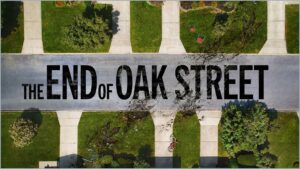
Nostalgia Disguises Darkness in The End of Oak Street
The film’s light and frothy surface hides a dark, subversive heart and unexpected mean streak.
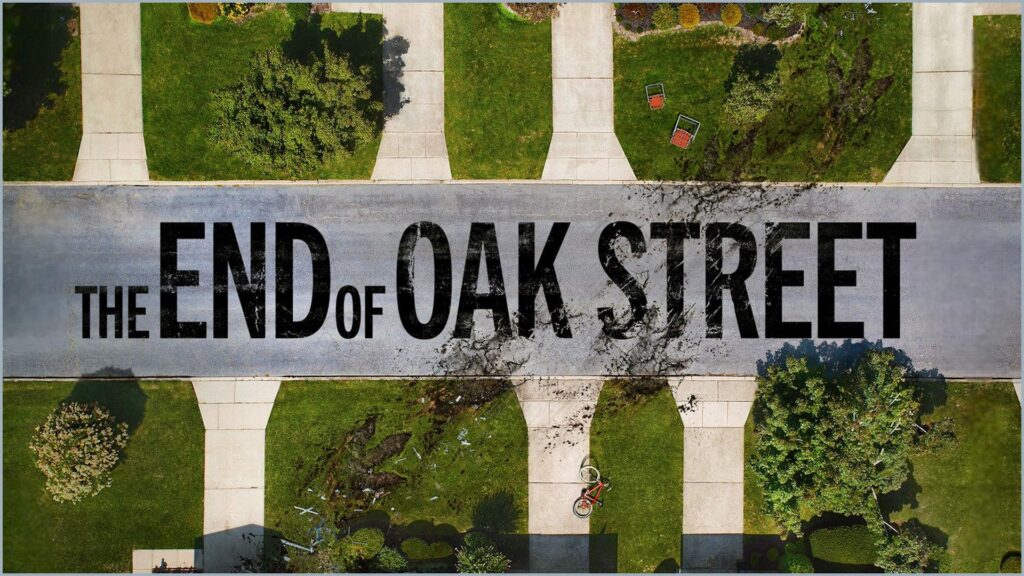
On the surface The End of Oak Street appears to be another J.J. Abrams-style, kids-on-bikes, eighties nostalgia, sense-of-wonder, fantasy-encroaching-on-reality ode to Steven Spielberg. And it is. As exhausted with it as some audiences might be, The End of Oak Street captures that genuine heart and feel, it hits the beats well, and acts as a good companion piece to Super 8. But there’s more to it than that. The film, written and directed by David Robert Mitchell, has a dark and subversive underbelly. A mean streak.
In a clever merging of two Spielbergian staples, the dinosaurs are a metaphor for divorce. Because yes, secrecy now aside, The End of Oak Street is about dinosaurs, and like many of those classic Amblin films it also concerns a fractured family. Dad Greg refuses to acknowledge the situation despite it being obvious to all. He won’t accept drifting apart from his wife just like he won’t accept the real danger his family finds themselves in now that they are millions of years in the past. He has to come to terms with it and face it, they all do, or is in danger of being consumed by it. Literally.
But the dinosaurs are also dinosaurs. And while there are some Jurassic Park moments, like there being one big pile of shit and a few seconds of characters running with a herd, overall Mitchell finds ways to make the film feel like a fresh take (more than them just having feathers). The action, and the balance between what we see and don’t see, is handled well. Although the giant beasts can apparently be totally stealthy when the plot demands it.
In fact, I think The End of Oak Street blows any of Jurassic World movies out of the water. It gives me what I wanted from those increasingly terrible sequels: dinosaurs interacting with the modern world. The incongruity of seeing them in a suburban landscape is great fun. One of my favourite moments is a dinosaur eating ice cream from a busted ice cream van and immediately shitting, which is exactly what happens to me after eating ice cream. And Mitchell is able to stretch his horror filmmaking muscle for the first time in a while with the giant snake sequence, probably the best in the film and genuinely scary for a family flick.
I love that there’s no real explanation for what’s happening. Eh, wormholes or something, just go with it. And thankfully it’s not a secret Cloverfield film. Although the town is called Flowervale, so it’s a Cloverfield film run through a thesaurus. The best explanation for what’s going on is suggested by the kids, and you know you’re watching a good David Robert Mitchell film when characters sit cross legged in a circle on the floor to discuss what’s happening. It’s like the similar scene in Mitchell’s exceptional It Follows, although with more split diopter shots, and has the same effect of making all the characters seem more like kids. Ewan McGregor’s Greg, legs tucked up beneath him, looks more childish than his kids.
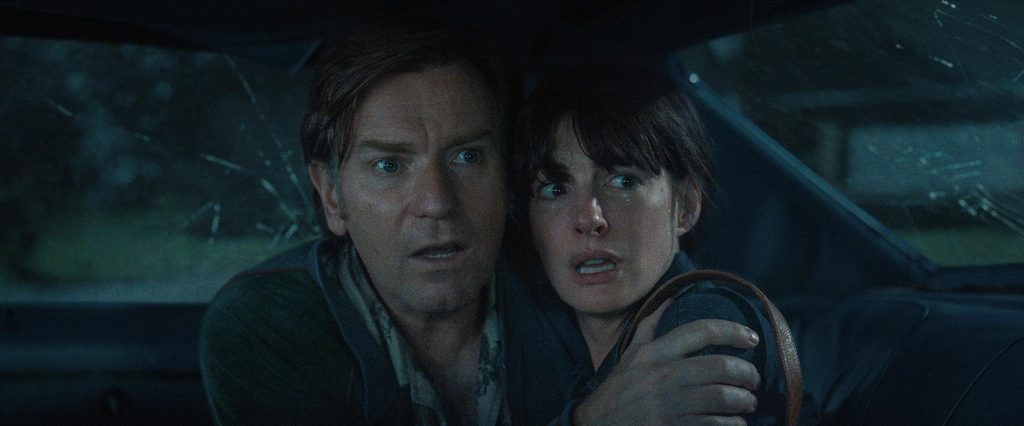
The relationship between parents Greg and Denise is the most fascinating part of the movie, and where the darkness begins to creep in. They reconnect in the backseat of a car, like horny teenagers, but this time it’s rocking because dinosaurs are trampling over it and a bloodied corpse is in the front seat. That’s the kind of detail the film excels at presenting: a fun moment with some darkness under the surface, barely bringing attention to it. There are some brutal deaths but they are always on the fringes, just out of shot. That’s how the whole film is: just out of focus is something really quite dark and disturbing. Until, of course, it takes centre frame and the dad is shocking killed in front of the family, a brilliant turning point in a film which has otherwise featured fun hero shots of dogs and shotgun-wielding librarians.
The ending is the ultimate example of this; the film’s thesis statement on the darkness hiding beneath the bright, nostalgic exterior (also a key theme in Mitchell’s Under the Silver Lake). The End of Oak Street presents its ending as clean and happy but it works because it’s actually anything but. There are some dark, fucked-up implications. Denise and the kids find themselves back to the future, fifteen minutes before their neighbourhood is sent back in time. She makes some phone calls and saves a bunch of people by telling them to get out of there, quickly, including her alternate timeline husband Greg. The family unit is intact, the family together again, without a reference to the fact she just stole another version of her husband from his family, who have been sent back in time without him to die.
You might think the film not acknowledging the implications of its ending is tantamount to it not realising those implications, but I don’t believe that for a second. Not with this filmmaker. I was baffled as to why David Robert Mitchell made this career choice, a big J.J. Abrams-produced family adventure film, but the ending makes it clear that he wants to sneak his darker subversive ideas into a mainstream movie.
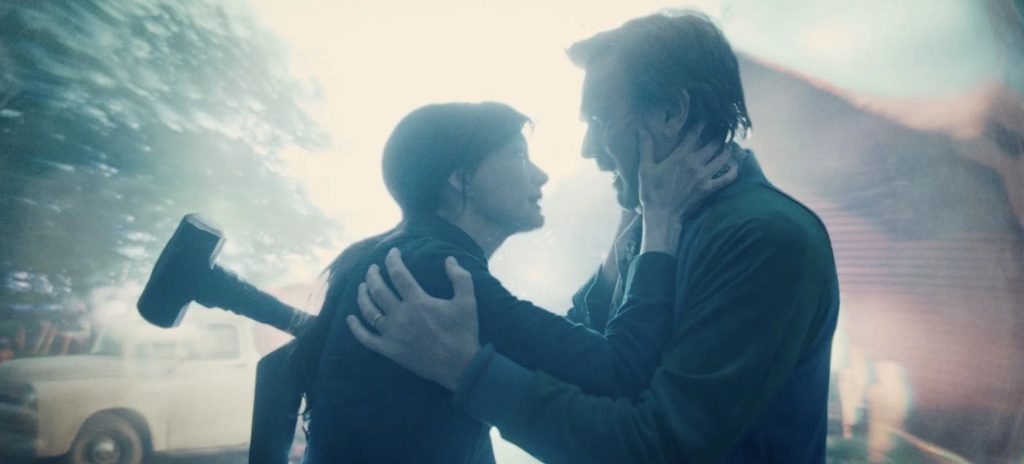
What exactly is Denise’s arc? What did she learn? I think her journey is pretty dark and selfish, disguised as an empowerment story. She might not be entirely fulfilled at the start of the movie, wanting to publish a book, but she has a nice life to begin with: a big house, a nuclear family, and yet she’s only able to enjoy it once she’s rich, famous, and a hero, too. Greg isn’t some deadbeat dad. There’s the hint of an alcohol issue, he hides losing his office job, but he’s out there working his pizza delivery job, trying to hold it all together, clearly in love with his wife. She rejects this mainly because of vanity, she’s embarrassed he delivers pizza (a noble profession). The film easily could have portrayed Greg as worse and Denise as more heroic, more sympathetic, but it’s ingenious Mitchell decided to make them messy and flawed to exaggerate the questionable morals of the their journeys and the ending.
A key detail is that in the final shot we see two identical Jeanettes at the family gathering. It proves that she was able to not only save her family but another version of herself, too. There isn’t a timey-wimey paradox preventing this, Jeanette ceasing to exist once she sets eyes on herself. That final shot makes it clear that Denise could have saved the alternate version of herself and her kids but instead left them to die, stealing her husband for herself. It might be a metaphor, letting her old self die, but it’s likely literal too. And she takes advantage of the fact the dad never acknowledges the problems in their relationship, willing to ignore that these aren’t his wife and kids so as not to rock the boat.
There’s a darkness to the bright, happy suburbia we see in The End of Oak Street and it’s not the giant monsters eating everyone. The film isn’t the regular nostalgia-goggled view of eighties americana, even though it might initially present itself as that. People online saying it’s a classic ‘don’t think too hard about the ending’ movie are dead wrong (the opening is actually the weakest part, lacking nuance in bringing up its themes and familial relationships, but I’ll take that to get the ball rolling on a perfectly paced 99-minute movie that avoids a modern overinflated turgid runtime). The whole point is to think about the ending.