Control Resonant Is A Better Prequel Than Sequel
Control Resonant isn’t a sequel, it’s a sibling
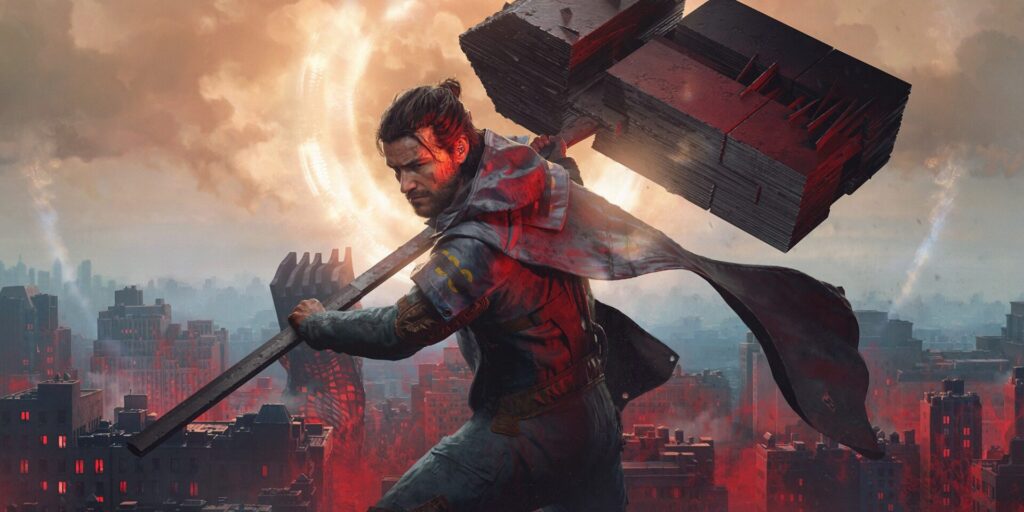
I was all set to love Control Resonant. And then I didn’t. I had just replayed Control and Alan Wake 2, two of my favourite games, to get fully ingrained again in the story, and Remedy’s next surefire masterpiece was my most anticipated game of the year, Grand Theft Auto VI be damned. The first few hours were… challenging. In mean, literally so. I’m not embarrassed to admit I’m increasingly bad at video games and don’t play them for a challenge, and so I had to mess around with the settings to make it easier. But more than that, I just struggled to jive with it, to connect with it. I was pained by this. The game felt different, a little awkward, and very much not what I was expecting.
But don’t worry, having now completed the game, cleared the map, collected the collectables, and heard the chime of a platinum trophy unlock, I can say that I really like Control Resonant. I’m eager to try out New Game+, to revisit those opening hours and see if they work for me now, but on my first playthrough the game really started to sing a few hours in and got exponentially better towards the end. Everything from the sinkhole onwards is fantastic, the more wild and patterned the landscape the better. But more than that I feel I learned a valuable lesson about expectations. I fell in love with the game on its own merits rather than the ones I expected it to have.
I was coming into Control Resonant with not only seven years of expectations for a sequel but questions. The game didn’t answer any of them. Instead, the game answered questions I hadn’t even thought of. The game isn’t forward-looking, concerned with pushing the series and Remedy-verse on, but backward. It’s introspective, questioning what we through we already knew rather than expanding outwards. Resonant is a sequel but the game’s present is more a crucible for characters, specifically Dylan, to face the sins of the past, both his own and those committed upon him. It’s a prequel at heart.
95% of the game is spent in the present, seven years after the first game in an infested, warped New York, yet in truth it’s more of a framing device, presenting us a contrast with the Dylan of the past. A place for him to grow, find confidence and humanity, and I like Dylan as a low-key, broken protagonist. It’s just that – and this is what initially irritated me – there’s little momentum to that storytelling. Lots of character growth, little plot. We learn all there is to know about what’s happening to New York in the first hour of the game and it develops very little from there. We get the Hedron reveal, an explanation for the patterning, but that’s it. The status quo never truly shifts from the beginning to the end.
What makes it ultimately work is that Resonant is a masterclass in retroactive storytelling. Not retconning in the negative way the word is often associated with, but a fantastic fleshing-out and reappraising of what we think we know. The game is a prequel, disguised as a sequel. The flipside of the first game, Dylan as protagonist instead of Jesse. His perspective on those events, the central organisation, and the same themes, rather than pushing forward into uncharted realms. Resonant makes you rethink what you think you know, and I’d be eager to revisit the first game again having played it. It’s a darker experience, changing my perspective on the FBC. Resonant is less a sequel to Control and more, fittingly, a sibling. A twin.

Dr. Darling is a highlight once again but this time for a very different reason, perfectly highlighting Resonant’s nature. The game holds him back, his video messages only appearing late on, so by the time you finally see him you’re ecstatic, and then… a total rug pull. This isn’t Jesse’s perspective of Darling from the first game, where she was a prospective director he could charm and impress with goofiness, making music videos. Here he’s cold and dark; a scientist experimenting on a kid; a prison warden; an abuser. To Dylan, and now to us, his true nature is revealed: a villain.
Those sequences walking through the Oldest House testing facility are the game’s best, despite stripping the game of its wild gameplay mechanics. The player experiences what Dylan faced since being locked up in the FBC as a kid, through Dylan’s eyes but also Zoe’s. We discover why he is this way, why he did what he did. It answers questions on the initial Hiss infiltration, but focuses on ‘why’ as well as ‘how’. The redacted documents, the live action clips, the fleshing out of the background of this world through interacting with it, is a joy in both Control games, and this section is perhaps the ultimate example of the storytelling style. Walking through empty rooms with a story to tell.
And then, Ordinary. What a brilliant way to do a flashback sequence. So much of the mystery and the storytelling of Control begins with the AWE in the town of Ordinary and I was wondering if we’d ever see those events. Never did I expect it in a 2D 8-bit style level that lasts about an hour. It’s shown through the lens of memory, Dylan reconstructing his mind, giving us answers to what happened but in a way that still obfuscates details, leaving much to interpretation. It’s a perfect and very Remedy way to offer answers and pose new questions in equal measure: how exactly were Jesse and Dylan supposedly one person now split in two?; what’s the deal with Hugo Stamp?; etc.
After Control I was looking forward to more Dr. Darling storytelling. Just where has he disappeared to? On that front, there’s no answer at all. In fact, Alan Wake 2 gives more of an indication of that with literally one second of screentime. Resonant is uninterested with picking up many of the loose threads from the first game. Now, I still want more Darling, to eventually find him, but have a very different mindset about the search. It’d be much more interesting for Dylan to find and interact with him rather than Jesse, giving us a greater purpose for a search rather than just wondering what happened.
The same is true for all Control’s lingering mysteries. Ahti is still on vacation in Watery (for seven years!) and Resonant offers no new information on his exact nature (Finnish water god?) but it does give us more reason to want to find out about him, with Dylan being recruited as his successor in whatever his role actually is, besides endless mopping. Resonant is a sequel but it’s kind of not. Little of the story is pushed further along, little is answered, but our thoughts on the narrative and its questions are altered. In fact. Resonant purposefully ends with a recreation of the first game’s ending, one Faden working for the FBC and the other in a coma, their roles flipped but deliberately in the same place. So what now? Will the next Control be the true sequel, now to both these ‘sibling’ games, with both Jesse and Dylan as playable characters, only able to move forward as one?