Revisiting Van Helsing (2004): An A-Grade B Movie That Introduced Me To Horror
Van Helsing was an early gateway drug into becoming a horror fan, but revisiting it for the first time in decades revealed that the James Bond influence is greater than its monsters
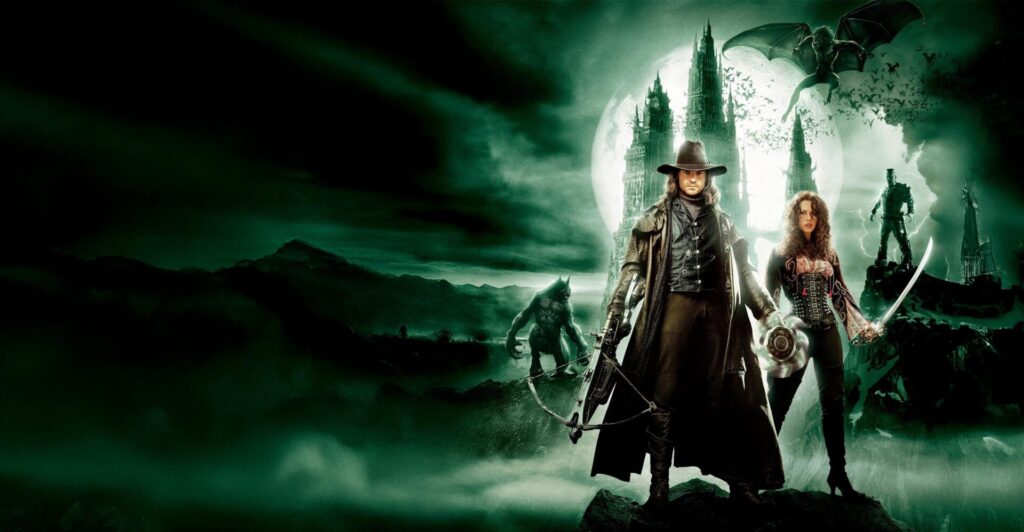
These past couple of years I’ve been using Halloween as an excuse to revisit some early horror experiences, the films that inspired my love of the genre today: kid-friendly gateway drug movies. Last year was Scooby-Doo on Zombie Island. 2026’s offering is also a film I hadn’t seen since I was young, probably going on 20 years now. Adult me has seen all the classic Universal monster movies, watched so many adaptations of Dracula and Frankenstein, and read the classic novels. But as a child my introduction to these characters and stories was 2004’s Van Helsing.
Less a horror and more an adventure movie, Van Helsing follows on the heels of The League of Extraordinary Gentlemen (also a critically derided film I loved as a kid and have been meaning to revisit) and The Mummy. In fact, Van Helsing is written and directed by Stephen Sommers, who previously helmed The Mummy and The Mummy Returns, and very much feels of a piece with them. Sommers did the Mummy in The Mummy and now does every single other classic Universal character in Van Helsing. The film was supposed to start a franchise but I’m baffled as to what sequels could be about: it leaves nothing left on the table.
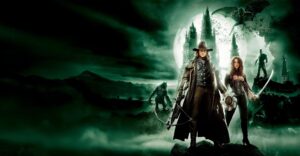
That’s the joy of the movie, and I did find it a joy to revisit. It may not be great, it may not be especially good, but it is a blast to watch such an overstuffed mash-up. Van Helsing is tasked with travelling to Transylvania to defeat Dracula, only to find himself encountering Frankenstein’s monster and the Wolfman, too. It’s like that ‘Dark Universe’ that Alex Kurtzman tried to get off the ground and failed spectacularly after just one terrible film, but universe be damned, Van Helsing just crams it all into one movie from the start.
Rewatching the film was a nostalgic treat. Scenes and lines suddenly came back to me a split second before they happened. But more so than just my own past experiences with the movie, it’s a nostalgic look at early 2000s cinema. That specific look and feel, the bad-but-also-shockingly-still-quite-good-compared-to-today CGI, and the most 2004 cast ever: Hugh Jackman, Kate Beckinsale, Richard Roxburgh, that guy that played Faramir in The Lord of the Rings (pretty sure those last two disappeared entirely after 2004). But the true star of the movie is Alan Silvestri, the composer. The music is big and bold and brilliant, genuinely so. You can cast aspersions on many aspects of the film but the music is undeniably great.
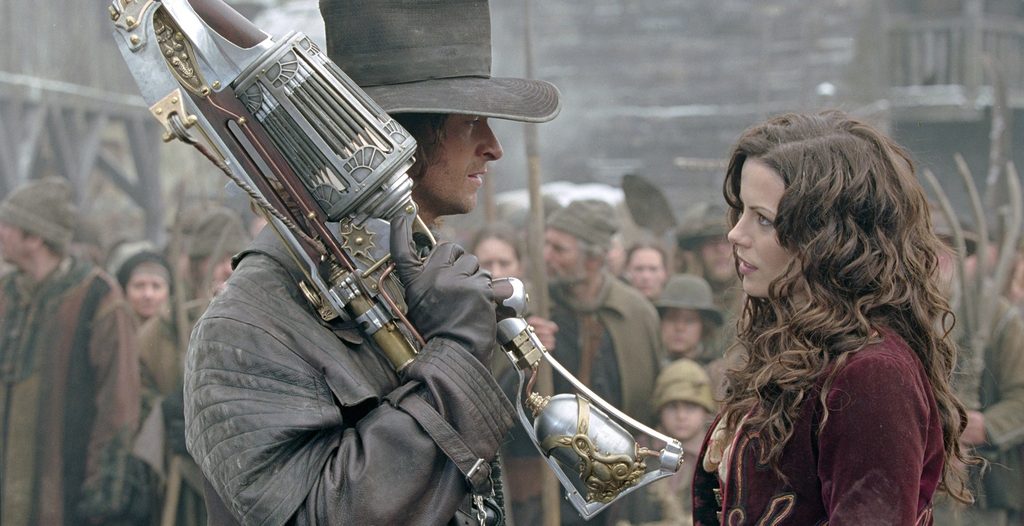
Watching today, it suddenly dawned on me why Van Helsing worked its charms on me as a kid. It’s a supernatural James Bond film (more so than Live and Let Die is). As someone who grew up on that franchise while my friends were more concerned with Pixar, it’s no wonder Van Helsing became a favourite. It shares more in common with Bond than it does the horror it presents as. We catch up with Van Helsing at the end of his previous mission for essentially a pre-title sequence, he travels back to his headquarters, which is the Vatican rather than Universal Exports. M, who in this version is a cardinal, gives him a mission before Q, or Friar Carl, supplies him with gadgets. It’s a horror skin on a James Bond frame. It’s just that the Bond villain turns out to be Dracula.
The film begins with a black-and-white opening, homaging those 1930s classics. Cutting from a ‘Transylvania’ chyron, where we’re expecting Dracula, to Frankenstein is a fun twist. We get an abridged version of James Whale’s 1931 classic in about 3 minutes, including the burning windmill that’s full of bibles and absinthe for some reason (the sacred and the propane). The issue being that, in an effort to be the ultimate monster mash, some characters are sidelined more than others.
The film rushes through the Frankenstein narrative when really that’s the one that demands the most time. The creature develops almost entirely offscreen. He’s immediately talkative and connected to his father despite them not interacting; Dr. Frankenstein is dead sixty seconds after the birth. Frankenstein’s Monster is a Macguffin, not only important as a key to the plot but also continuously spouting exposition. The verbose monster somehow knows everything about everyone despite living in a well all his very short life. I do like the version of the character, the performance and the look, but he makes very little sense. He’s also a monster who doesn’t just talk but shouts absolutely everything.
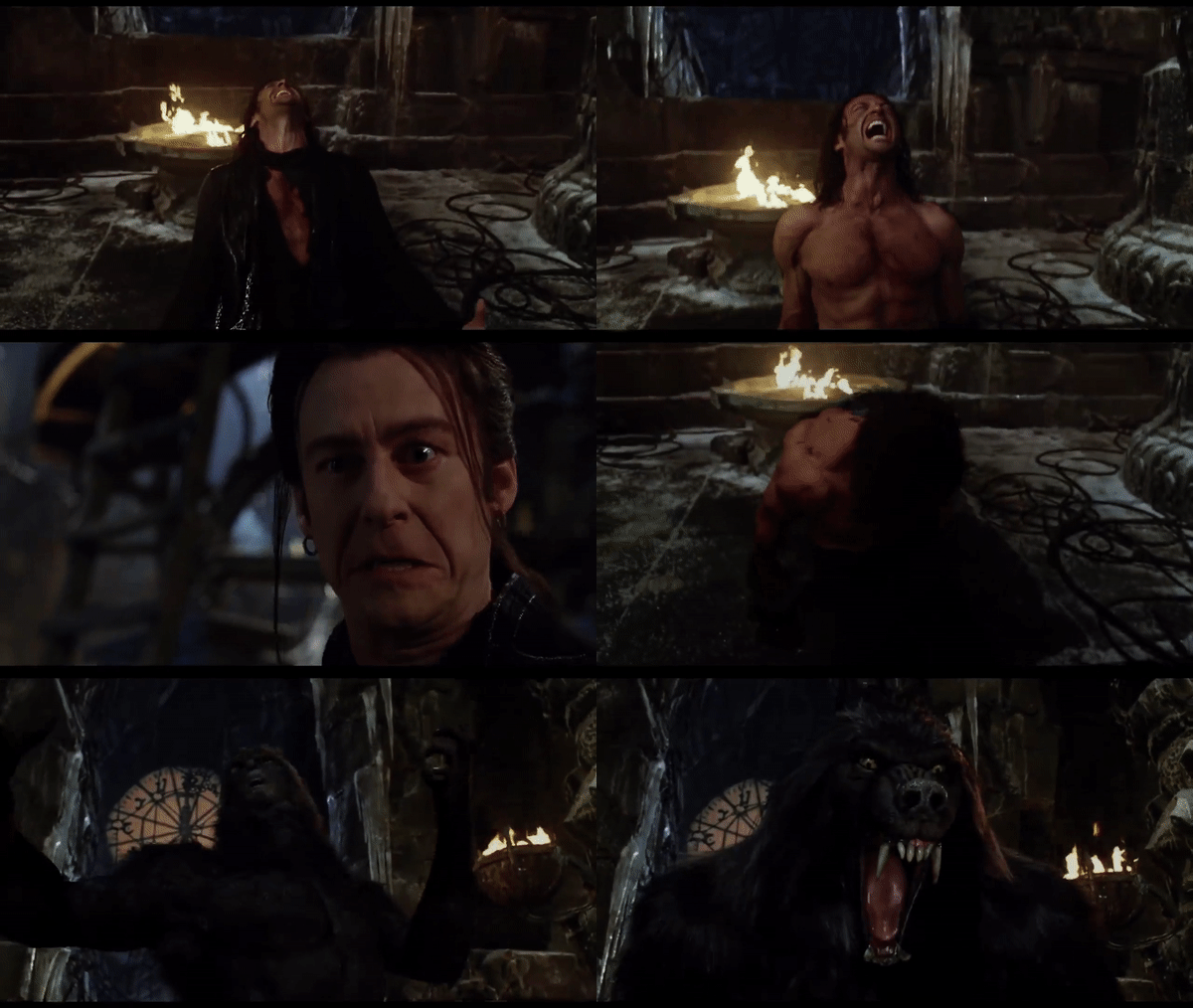
The Wolfman, or Wolfmen, is also sidelined, nothing but an enforcer for Dracula. However, for something wholly CGI and over twenty years old, I do quite like the transformation sequences. The idea is very cool, the beast within, not so much transforming as tearing through the skin and revealing itself. The scene where he writhes around in pain, supernaturally climbing the walls almost accidentally, is also very effective.
So the other horror characters are diminished to have the focus on Dracula as the primary antagonist. The issue being however is that even though they are minimised, there are so many tertiary characters that Dracula still has little to do himself. He’s surrounded by so many minions, such as werewolves, three wives, Igor, and a legion of Dwergi (evil Jawas/Oompa-Loompas). Roxburgh gives a big performances, lots of shouting in a silly accent, but there’s little substance there. His stray stands of hair are his most notable characterisation.
Dracula’s brides however might be the most memorable aspect of the film, especially for a young boy. They are wonderful, with that Mystique-style kinda-sorta nudity. I specifically remember having to turn the volume down when they die, screaming orgasmically, in case my parents heard and came rushing in to see what I was watching.
So, by trying to cram everything in, Van Helsing feels like three films in one. And, to match, Van Helsing the character feels like about three characters in one. He’s a holy man, while also being a suave, charming James Bond badass, while also having a darker side, at one point drugging and then strangling female lead Anna. He clearly has an inner darkness, trying to atone for past unknown sins before he joined the church, not having memories of his past life. But then the big reveal is that he’s the archangel Gabriel. That’s the big mystery, who he truly is, but surely that would make his unknown past one of light and godliness rather some nefarious thing informing his dark character traits? If he was actually revealed to be a demon or something then the conflict would make more sense.
I’m being negative, which is very easy to do in retrospect. Looking back, many aspects of the film fall apart. But when watching I couldn’t care less about them. It’s enormous fun. A swift, pulpy adventure movie with a great pace, fun action, and genre elements with its influences worn on its sleeve. It’s not a horror film but it did introduce me to so many elements of classic horror, my entry point to these classic characters (‘baby’s first Dracula’), even though the biggest revelation in revisiting it was that it clearly made an impact because if its similarities to James Bond. Van Helsing is an A-grade B movie, a 5-star 3-star film.