Batman: Revolution Has An Excellent Riddler But Is Otherwise A Lame Continuation Of Burton’s Batman
The second novel set between the two Tim Burton Batman movies is less concerned with connecting to the films but, other than an fantastic Riddler, has little to offer itself
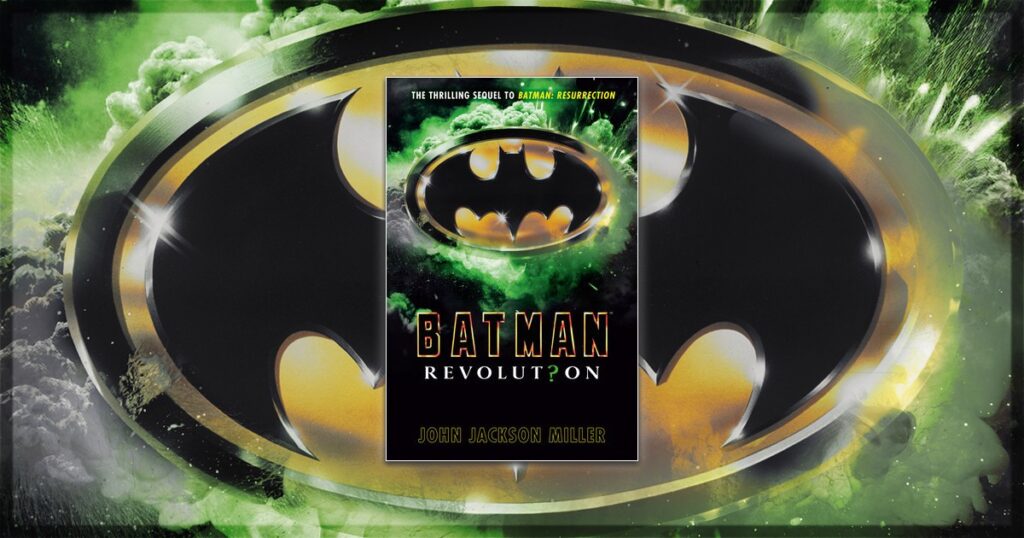
The issue with a novel sequel to Tim Burton’s Batman is that the music and the visuals are what make that film special. Batman: Resurrection may have been a solid sequel to the story but it failed to capture the style and atmosphere. It even featured Clayface as a villain, a character best suited to a visual medium rather than a novel. Batman: Revolution therefore already sets itself up better by featuring The Riddler, a villain who is the perfect fit for prose. But unfortunately everything else about the novel squanders the brilliant take on the baddie.
Author John Jackson Miller still struggles to capture the unique, bizarre essence of Burton’s movies, but that’s not such a big problem in this second book. Resurrection was so intrinsically linked to the plot of Batman, so dominated by being a direct sequel, that the fact it didn’t have the same feel as the movie was damaging. Revolution however only connects minimally to Burton’s films, mainly to set up the events of Batman Returns, so it can be easily forgotten that it is supposed to be part of the ‘Burton-verse’. It can be read as its own standalone novel, perhaps best read that way, because it feels like the Batman ’89 comic book took all the best movie-related stories for itself (like Dent becoming Two Face).
The novel concerns itself with a more realistic side to Gotham, so much so that it feels odd that this is happening in the same version of the city we see in Batman Returns. Because that’s the awkward thing about setting a book within Burton’s world: which film is it going to resemble, because the two are very different. The answer: neither. This is a novel where villains are motivated by political aims. It’s about the downtrodden fighting the rich. The actual primary villain is Camille, a political terrorist enacting a false flag operation to blow up civilians and blame it on the government. It’s an odd choice for a novel supposed to live in tandem with the films. This Batman fights criminal freaks, not political militias.
The political side of the novel works as part of Riddler’s backstory, a long chain of being screwed over leading to his breaking point. His mother escapes fascist persecution in Europe, only to have to live in a basement and work at Axis Chemicals, poisoned while she cleans and spat out by the broken healthcare system. His father was a Hollywood writer, accused of being a communist during the height of McCarthyism. It’s a rich backstory creating fascinating motivation personally, but less so when it is opened up city-wide. Try as I might, I just don’t care about Gotham’s early history, the sins of its founding fathers, and we get a lot of that in this book. Camille’s forces, the Aeterna Militia, are also uninteresting. If they worked directly for Corto Maltese than that’d be something, some connection to the films, but they are such dull antagonists when compared to Burton’s villains, Riddler, or Resurrection’s bad guys.
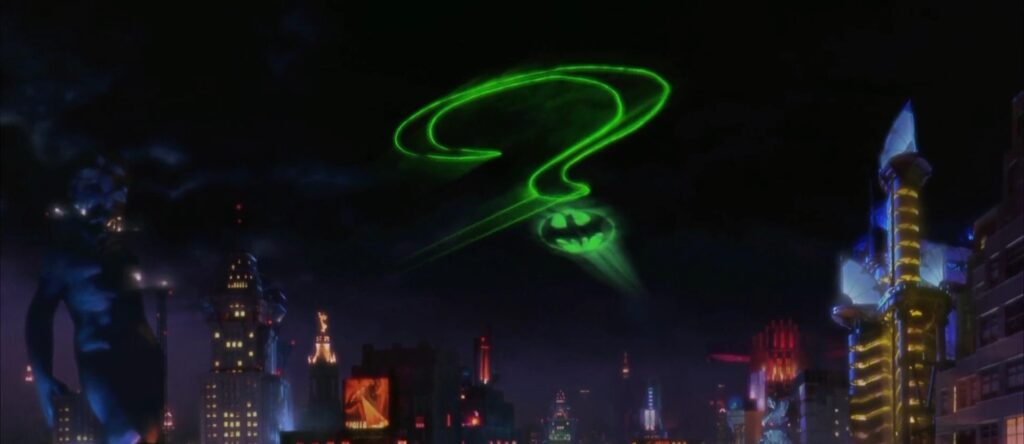
A novel about the poor demanding to overthrow the rich? You’d think Bruce Wayne/Batman would have some opinions on that, wrestle with his own inner turmoil about his wealth and position, but the themes seem to exist outside the purview of the hero characters. He barely comments. Resurrection took a meta slant on Batman being a secondary character in his own story, made it purposeful, while Revolution backgrounds him with little thought, following Burton’s sensibilities of focusing on the villains. While Riddler’s story takes off, Batman spends the first half of the book spelunking. If it was about literally anything else this would be acceptable, but with the book explicitly being about wealth and power in Gotham, not having Bruce at the centre of it is an odd call.
Resurrection was a fan’s novel, picking apart and answering every plot hole and unanswered question in the 1989 film. Revolution has one last loose end to tie up: who was the second person at the Wayne killing, Napier’s fellow assailant? It’s nice little story, with the answer being rich in character for both Bruce and surprisingly Riddler, who figured it out years ago. It’s the one insight into Bruce in the whole novel but it is treated almost as an afterthought. Seeded at the beginning, it’s not brought up again until nearly 400 pages in. It should be at the heart of the novel but barely features.
The most Burton-y aspect of the novel is the focus on the villain over the hero. I love this version of The Riddler. ‘Part 2’ of the novel, taking this nebbish character Norman Pinkus and slowly breaking him is not only the highlight of this novel but both books in the duology. He’s sympathetic, relatable, sad, funny, and very clever. As are his riddles and the machinations of his fall: it’s Miller’s best writing. It’s very Batman: The Animated Series, a ‘one bad day’ approach, which is never a bad thing. His initial meeting with Batman is handled well, with Batman being the one who comes across like a bit of a dick, and there’s a great scene of him talking to Selina Kyle, who gives him advice. They are two similar characters, introverts finally breaking and becoming their inner wild extroverted selves. Selina just has to wait a bit longer – and get defenestrated.
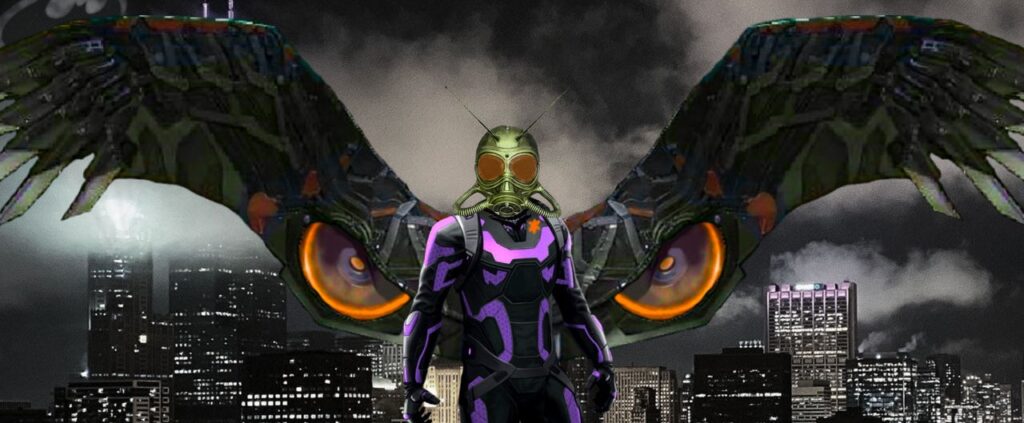
Riddler is so good he’s more than enough for this novel. Yet Miller crams a bunch more baddies into a book which ultimately feels overstuffed. It’s a like a novelisation of one of the Arkham games where all the side missions are included instead of concentrating it down to the primary narrative. This might be Miller’s last foray into this world and he’s putting everything he wants between the two covers. We get The Archer, a reimagined villain from the ‘60s show, who is fine as an early antagonist but then keeps popping up. And there’s also a whole subplot with Killer Moth. It’s a weird inclusion, a technological villain in a high-tech flying mech suit which ruins the whole timeless old-fashioned feel of Burton’s world. It’s science fiction rather than dark fantasy.
But the biggest villain issue is that Norman/Riddler never truly becomes one. It’s the Batman Returns plot, of the bad guy being manipulated and then turning against their patron. But when Penguin turned against Schreck he was still a villain, even more so in fact. Norman is a genius yet isn’t clever enough to realise he’s been tricked by Camille. He ends the novel as Batman’s ally, never becoming a criminal mastermind, a pawn in someone else’s game, and it’s disappointing because Camille is dull as a lead Batman villain. It’s also too similar to Resurrection, both books following the same formula. We get a Riddler TV message watched by multiple characters (as opposed to Joker/Clayface), the villain turning good and realising they’ve been manipulated, and then helping Batman take down the real baddie. We also get yet more Smylex. It’s a very familiar, tired finale.
So the book seems to connect to Burton’s films in the worst ways, once again copying an element of the final act of the 1989 film (Resurrection was set once more atop the cathedral, Revolution at a restaged bicentennial). But there are some fun connections to Batman Returns to set up that story and some winky references, even if the tone and style of the book doesn’t match the film. Batman is flooding his caves to store his Batskiboat; Schreck finds the Batmobile blueprints; Knox gets his grant and leaves Gotham; Roscoe Jenkins begins his journey to becoming mayor; Selina comments “I can’t imagine blowing up a building”; Batman retrieves a thrown Batarang and comments “who knew what kind of mischief someone with one of his weapons could get up to”; and we get to see more of Fred Atkins than just his hand. But my favourite connection is Knox visiting Selina’s apartment. That’s a wonderful bridging of the two films, making them feel like one world rather than two different Gothams.
In his afterword, John Jackson Miller says he hopes to write more novels in this world. I’m less emphatic about the possibility, although I like him as a writer, particularly his Star Wars work. The Riddler was excellent but the plot he was injected into and the novel overall I found a disappointment. But! Miller is exceptional at writing Max Schreck. Along with Knox, his dialogue sounds so much like the movie character. He’s also the star of the one chapter that feels the most like something out of a Burton movie, where animals invade his office. He may die in Batman Returns but there are still 6 months free in the timeline, still story left to tell, with the very Trumpian Schreck commenting that he wants to go to Washington. I’m not interested in a third Batman book by Miller but a Max Schreck novel? Yes please.