The Secret Diary of Laura Palmer Remains A Shocking And Necessary Piece Of The Twin Peaks Puzzle
Jennifer Lynch’s novel is dark, disturbing, revelatory, and gives a vital voice to Laura Palmer
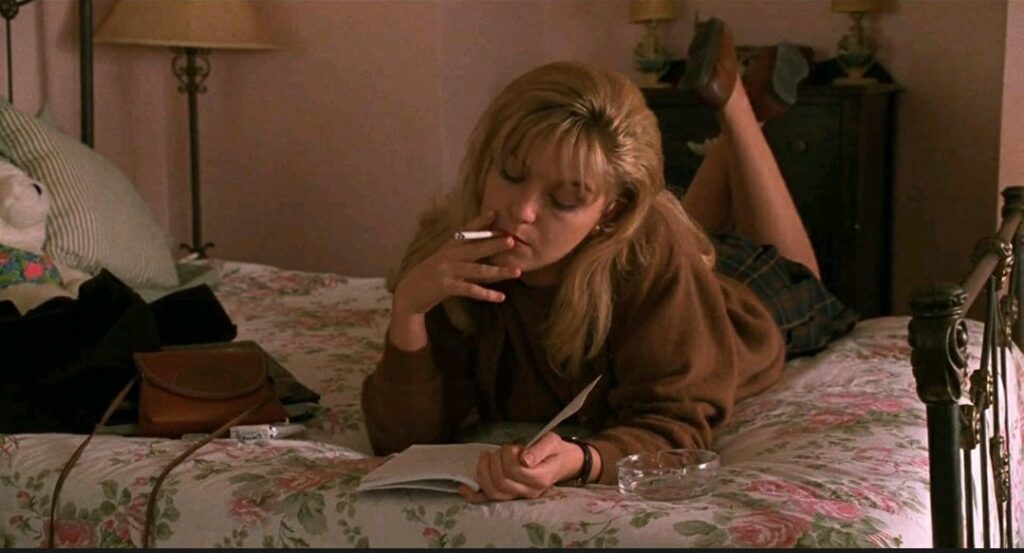
The story goes that a 12-year-old Jennifer Lynch was picked up from school one day by her father, the filmmaker David Lynch, with a look of consternation on her face. When asked what was the issue, she responded that she wished she could read another girl’s diary, to find out if her own inner troubles and thoughts were unique or universal. Nine years later, her father approached Jennifer with an offer: to write that diary she once wanted to read. Jennifer Lynch was tasked with penning the tie-in epistolary novel to her father’s television series Twin Peaks: The Secret Diary of Laura Palmer.
She actually ended up writing the book three times, an unbelievable story she tells in her interview on the Mubi Podcast, and it was published between the first and second seasons of the show. It’s important to note, only eight episodes of Twin Peaks had aired when it was published. Reading it today, in 2026, the book shocked me. I’m a huge fan of the series, it’s my favourite television show, especially the modern season, and I’m disappointed in myself for waiting so long. I had wrongly presumed it was a slightly naff, negligible tie-in book with little substance. I was so wrong. It’s an incredible piece of the Twin Peaks mythos.
It is Fire Walk With Me before that film ever existed. When it was published the show had its dark and moody moments but it was also a network TV show, limited in what it could depict, and only a single step away from some quirky comedy. The Secret Diary of Laura Palmer is the earliest example of what Twin Peaks could be outside of network TV constraints, a true precursor to the film and The Return.
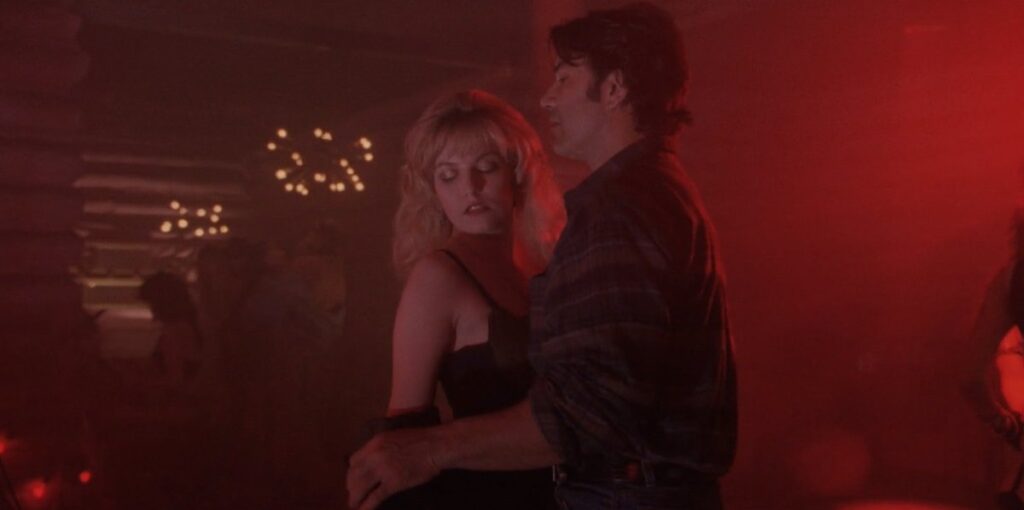
Those insane critics who panned Fire Walk With Me upon its release surely couldn’t have complained about tonal whiplash if they had read this book. It is absolutely an inspiration for the film, not just in the general exploration of Laura but specific scenes. Bobby killing a guy is described differently to what is ultimately onscreen but the scene of Laura dancing sexily with some men, Donna watching on perturbed, is so much like the ‘Pink Room’ scene in Fire Walk With Me.
Even reading today its explicitness surprised me, both its language and sexual detail, including specifically the sexual abuse she suffers. We enter the inner mind of Laura Palmer, her hopes and even more so her fears, the downward spiral of sex and drugs leading to her death. Fire Walk With Me gave us 7 days with Laura, the book gives us years. It begins on her twelfth birthday, an innocent girl on the threshold to adulthood, but even sweet early entries in the diary end with chills down the spine: “P.S. I hope BOB doesn’t come tonight.”
Laura, and Jennifer Lynch herself considering the book’s origin story, describe the diary as “like a brain you can look into.” That much is certainly true and the novel reveals the real Laura Palmer known to no one but herself, the enigma at the heart of the show’s murder mystery, which begins with Laura as nothing but a corpse and a smiling photograph. Even after getting to know her in the subsequent film it’s insightful.
And it creates a sense of lurid voyeurism in the reader. We read of her discovering masturbation, her heartbreak of getting an abortion (“come back, child, when I am no longer a child”), her sexual fantasies. It is designed as a taboo text we shouldn’t be reading but can’t tear ourselves away from, morals be damned. She even involves the reader directly, decrying someone for reading her diary, which within the story is likely Leland but in reality is us, the reader breaking the character’s trust.
It helps that Laura, conjured through Jennifer Lynch, is a good writer. The book wisely doesn’t try overly hard to capture a teenage girl’s voice. It doesn’t need to when it feels so natural, with the author being 21 when it was written. There’s no intentional spelling or grammar mistakes to try and create an overripe sense of verisimilitude. Even the few attempts at poetry are the right level of teenage ostentation and genuine quality, clearly using Emily Dickinson as an inspiration. There’s even fun in trying to piece together which details to take literally and which to take as teenage pretentious metaphor, like BOB stealing the light within her or describing “a spirit coming out of me, a dancing, flowing, wispy spirit.” Given the supernatural aspects of the series, these could be genuine descriptions.
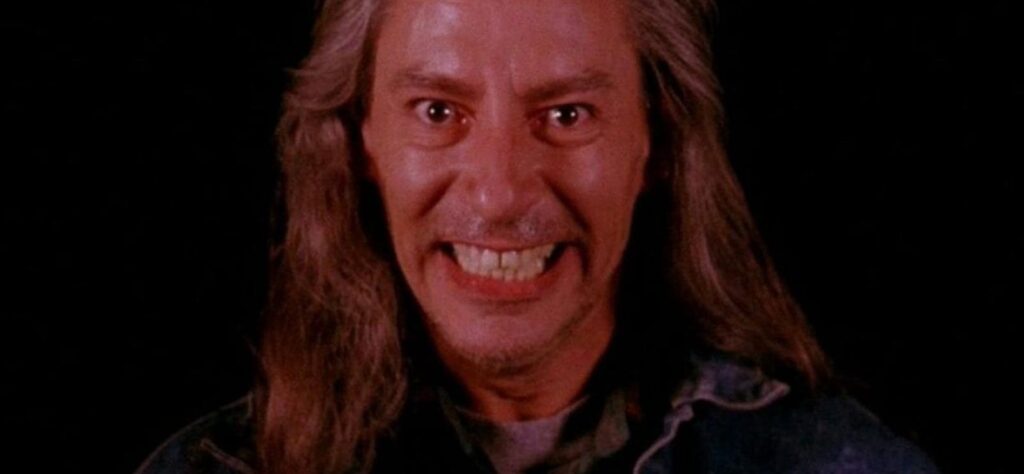
The novel doesn’t hold back from the real horrors of sexual abuse. It’s deeply disturbing and matter-of-fact but it keeps character at the heart of it all. It details Laura’s simultaneous rejection and acceptance of what happens to her, the self-blame thought processes of believing BOB is a punishment for being bad and thinking of sex, and the struggle of dealing with her own sexual urges and pleasure in spite of past abuse, maybe even informed by it: “There is no fun in a game of torture if the victim is screaming for more.”
The novel doesn’t just give Laura a voice but BOB, too. BOB is presented as an almost vampiric figure, only appearing at night and entering through Laura’s window. He infects her dreams and eventually her diary, beginning to scratch out his thoughts through Laura’s automatic writing. I really was not expecting this. But, of course, there’s the question of how much is actually BOB and how much is her inner demon personifying itself as BOB. I think it’s a mixture and that we get very little of the actual BOB himself. The book was also written before the show went fully supernatural, BOB being a literal demon thing, and it can easily be read as part of the ‘evil that men do’ explanation of the early show, with BOB a construct, a coping mechanism, to avoid the horrid truth of the actual perpetrator.
Despite being a huge Twin Peaks fan, watching the series multiple times, The Secret Diary of Laura Palmer did change my perspective on some aspects, or at least clear some things up. I never really thought about the fact that cousin Maddy is four years older than Laura. Reading about them actually interacting was fantastic. In the show it’s easy to see Maddy as the ‘second Laura’, giving Sheryl Lee a new role. But Maddy is not a contemporary of Laura, she’s the girl she strives to be. Not a replacement but the original.
The book also explains why Laura cares so much for Johnny Horne, the only person she receives unconditional love from. She also sees a photograph of a biker which acts as a sexual awakening and might explain to some degree why she likes wet blanket James Hurley. Leo also works better on the page as a dangerous man; his orgies with sleazy men who Laura makes cry and call her mommy are very Blue Velvet, which Jennifer Lynch worked on as a production assistant.
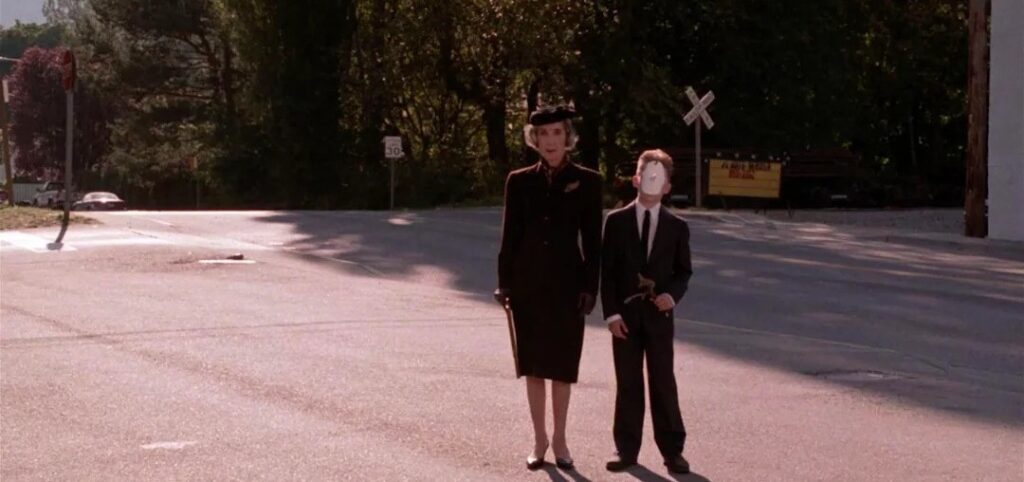
Being published after the first season, the book introduces some characters who would be introduced in the second season, such as Mrs Tremond and Harold Smith. But this very much feels like an addendum at the end. Jennifer Lynch is clearly interested in Laura’s inner struggle for the bulk of the novel, and then quickly has to introduce the final plot threads it needs to at the end to lead into the show, perhaps too quickly. Dr Jacoby is introduced very late and James Hurley only gets one mention in the penultimate entry (probably for the best).
On the back cover, the book is described as having clues to the identity of the killer, which retrospectively is the least interesting aspect. There are a few red herrings, such as “P.S. I’m going to have to tell the world about Benjamin”, and when she tells Jacoby where her drug money is, but not enough to distract from what The Secret Diary of Laura Palmer actually is: a character study of a living, breathing girl, not a crass exposé of a dead one.
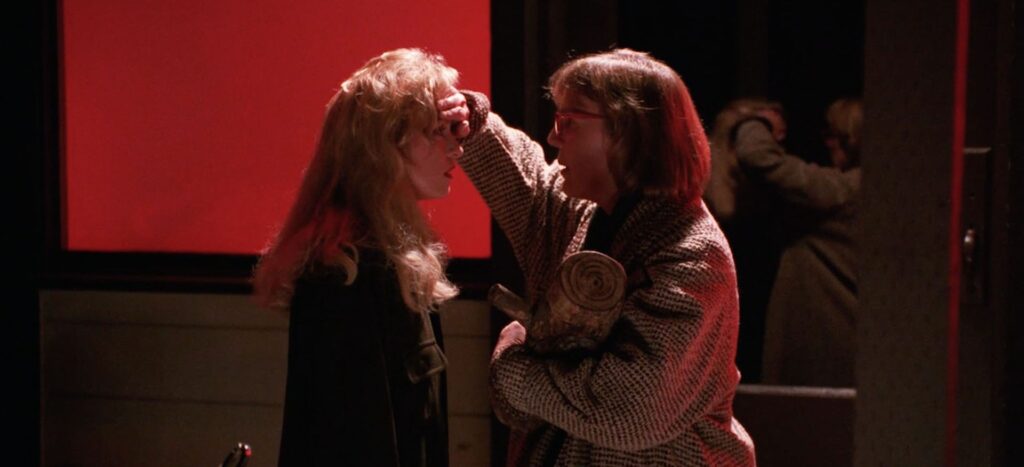
The novel is dark and disturbing, like Fire Walk With Me missing the quirkier side of the town. However, Laura does have one interaction with the Log Lady, first dreaming of her and then going to meet her. She warns Laura that “things are not what they seem”, which shows that Jennifer Lynch clearly had knowledge of what was to come in the second season, with this line hinting at Garland Briggs’ cryptic statement about owls in the second season premiere.
Log Lady also warns about the woods and that “children are prey sometimes” which not only connects to Laura’s situation but also what we learn of Log Lady’s past in The Secret History of Twin Peaks, being abducted herself as a child. I also like the added detail that her husband tripped over a root into a fire and the log might be from the tree that killed him. I’ve always taken it that his soul is trapped in the log and that is what she can hear, just as Josie becomes trapped in wood in the second season.
Jennifer Lynch was one of three people at the time who knew the identity of Laura’s killer. I’m curious what else she knew, how influential she was in her father’s work, because there are some other fun connections which link to where the series went in the future, even 25 years later in The Return:
- Laura states one of her favourite meals is “potato pancakes with creamed-corn topping”. Were the intricacies of Garmonbozia in the Lynch duo’s minds at this point or is it merely a coincidence?
- Laura gets high and starts thinking of a cosmic giant in charge of the universe, which is nothing but a ball of lint on his sweater. Is this the first mention of the Giant/Fireman, a godlike being of good in the universe who created the essence of Laura? She also says she wants to meet people from another universes. Depending on the interpretation, she may get her wish in the series finale of The Return, maybe even being from a different universe herself in that episode.
- At one point BOB says “I don’t need anything. I want things”. This is almost exactly want Mr. C, who is carrying BOB with him at the time, says in The Return.
- Laura attempts to summon BOB by masturbating in the woods and rubbing her panties on a tree. This kind of sex magic summoning might appear in The Return, with the scene in the premiere with ‘The Experiment’ in the glass box and Cooper and Diane’s night in the motel in the finale. It certainly features in The Secret History of Twins Peaks.
- Laura dreams of a rat trying to bite off her foot but she ends up doing it herself instead. It’s not the most interesting dream visual in Twin Peaks but the message is important. She vows to hurt herself rather than let other people do it. It foreshadows her death in Fire Walk With Me: she doesn’t let BOB possess her and chooses the ring instead, opting for death rather than giving him what he wants.
Finally, and most profoundly, Laura states “I wish all my life were a dream. One grand, strange dream with many realistic plot lines and relationships.” Well, damn if that doesn’t sound like Twin Peaks. The entire story being a dream is an idea repeatedly suggested in The Return but Jennifer Lynch was already hinting at it decades earlier, and it fits perfectly with my interpretation that Twin Peaks is indeed Laura’s dream, an abused girl dreaming up a more fantastic version of her reality. If this is true, or even if I’m way off, then The Secret Diary of Laura Palmer is the closest, most insightful look into the real Laura Palmer we’ve ever received. It’s a tremendous, disturbing piece of work that stands proudly alongside the series and the film, a shocking and necessary piece of the Twin Peaks puzzle.