The Best and Worst of Millennium Season 3
The show collapses in its final season, lacking any clear vision and desperate to undo the bold decisions it made in the much stronger second season
The millennium is closer than ever but the end of the world has never felt further away. While the second season of Millennium has a cult fandom within the cult fandom of the overall show, it’s clear that once showrunners Morgan and Wong departed, everyone left behind-the-scenes hated the direction the show had gone and were desperate to change the series once more in the third season. The apocalyptic second season finale is brushed aside as a small viral outbreak, the intricate mythology ignored, and Millennium is reset as a crime show with an identity crisis.
I was expecting a return to the tone, style, and ideas of the first season but no, such a strong reaction to the second sends the series even further into retreat than I thought. The writers take refuge in the comfortable offices and drab corridors of the FBI, Frank Black returning to their ranks, and the season becomes a bland and dull detective show. It’s such a disappointment to witness.
Whether you liked it or not (I loved it), season 2 had things to say. Season 3 has nothing. Millennium goes from a meticulously constructed series, building to that second season finale, to a show that is clearly making it up as it goes along. It has no idea what the current episode is, let alone a few down the pipeline. Chris Carter returns to offer some oversight over the show again but he willingly admits to not watching a bunch of season 2 episodes. The writers don’t understand what the show even was last season, and their follow-up falls flat at every turn.
Millennium season 3 is a total mess. It’s absolutely terrible, lacking any cohesion whatsoever. The showrunner changed halfway through, there are new writers and old writers who have very different ideas on what the show is, and there’s no vision whatsoever. It knows what it doesn’t want to be but not what it does want to be. Writer Kay Reindl sums up the situation:
“It was a bad year for everyone. During season three it was very hard to get anything through and when you did the life was bled out of it. It was more of a negative atmosphere: ‘we don’t want serial killers, angels, or secret societies.’ It’s hard to do that when you don’t replace it with anything else.”
Frank doesn’t have much of an arc this season, despite the huge loss he faced in season 2. A couple of episodes pay lip service to it but most of the time he’s a steadfast detective, the likes of which you’d see on any other show. His new FBI boss is the most flat, generic character I’ve ever seen. Fellow FBI agent Emma Hollis is the new co-lead and is incredibly dull. There’s nothing interesting about her whatsoever: the show introduces that she has a dead sister, then a drug-addict sister, then a dad with dementia over the course of the season to give her something to do, but a troubled family is not characterisation. And what a downgrade with Peter Watts. I used to cheer when he showed up but now I groan. His conscience is eliminated and now he exists purely to be the face of the new evil, undefined Millennium Group.
The season takes two things I previously liked and uses them as a crutch: ambiguous endings and supernatural reveals. Now, the show excuses itself for having stories that don’t make any sense by revealing a demon was involved at the end. Demons are used as a ‘get-out-of-coherence-free’ card several times throughout the season. The episode Bardo Thodol late in the season is an atrocious, inscrutable episode of television, making zero sense. Most scripts have all the right ingredients for a Millennium episode, they sneak in all the words characters usually say, but never in an order which makes any sense or has any purpose. It’s been the most difficult season of any X-Files related show I’ve had to rank episodes of: the top and bottom five episodes at the end of this article were a struggle to list. There are three episodes worthy of praise; the rest are a forgettable muddle.
The show, like Catherine and the world, dies at the end of season 2. Season 3 is the first stage of grief: denial. It wants to make us believe the story is still proceeding, but it’s just the wheels turning. There’s nothing substantive here. Frank hunts some serial killers, investigates some bizarre cases, yaps on about good and evil, but there’s no purpose behind anything, no point or perspective. The end of the world is largely ignored, the Millenium Group backgrounded to oblique villains who appear in every other episode, and the threat and danger and dark tone of the show is neutered. The writers were probably relieved the show was cancelled before the millennium so they didn’t have to deal with it.
Biggest Disappointment: The Innocents (S3E1) & Exegesis (S3E2)
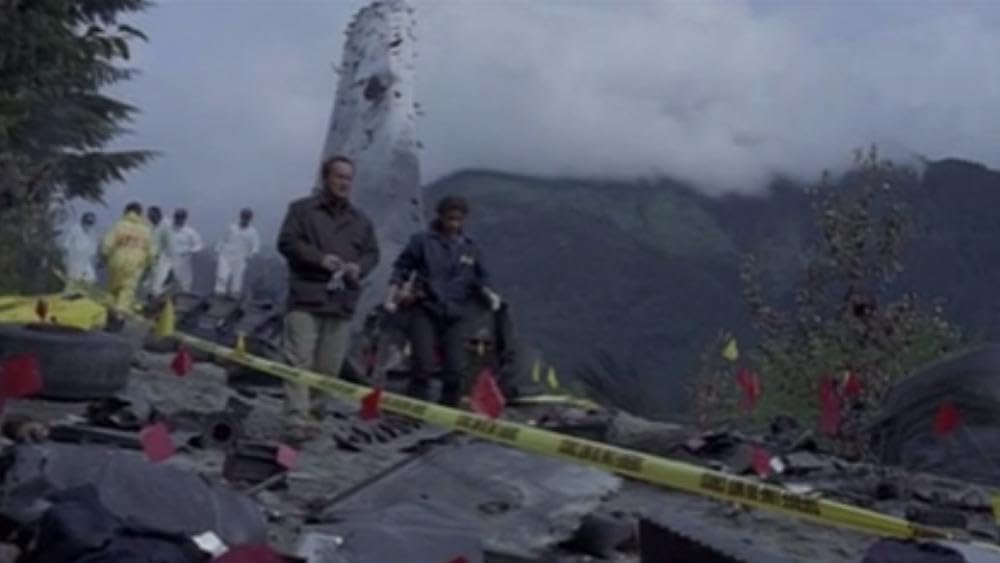
So it turns out the world didn’t end. Of course, for a somewhat procedural show on nineties network television, I was expecting some kind of reset, a return to a status quo, but it’s impossible not to be disappointed in the extent of the whiplash between the second season finale and the third season premiere. The show doesn’t so much return to a status quo as retreat. The stakes and the tension and the sheer audacity of last season are immediately eliminated.
We pick up five months later, which is a huge mistake. We skip over Frank’s grief, his anger, and find him back at the FBI solving cases. We get one brief scene of a police interview straight after Catherine’s death which shows a Frank Black full of rage and that’s the guy I wanted as the lead this season. But no, his shock of white hair has returned to its normal colour, the viral outbreak was minor, and the show tries to ignore as much of the second season as it can get away with.
Instead of being with the Millennium Group, most of Frank’s conflict in the two-part premiere is with Catherine’s parents and his new boss. It’s the most generic, uninteresting conflict that I’ve seen a million times in copious shows. The parents of the dead wife upset at their son-in-law for not protecting her. The angry boss that says Frank isn’t ready for work, chewing him out any time he thinks of going rogue. After how out-there and bold the second season was this is the most basic and bland storytelling imaginable. Even the case of the two-parter is dull: it hinges on an investigation into an air disaster, which the same team already did much better in The X-Files episodes Tempus Fugit and Max the previous year.
But aside from the reset of the plot, the most disappointing change is that of the tone. The second season is sometimes wrongly perceived as being lighter in tone than the first. Yes, it had a couple of comedy episodes, a wider emotional range, but it’s still oppressively dark and depressing, especially the ending. The season 3 premiere is quite the opposite. We see something we have barely seen in this show’s first two seasons: the sun. These are bright, summery episodes. Maybe the rain machine budget got cut or something but the way the episodes look and are shot is just as dull as the storytelling. It looks like a standard TV detective show – vastly different from the shadowy, dangerous visuals of the pilot. And to match the sunny sky, Frank, despite losing his wife and knowing the world teeters on the edge of the abyss, ends the episode with a speech about hope. The show goes from its darkest moment to its most reassuring in just 90 minutes, and it’s clear the Millennium I love is over.
First Episode With Promise: Closure (S3E4)
Closure isn’t a great episode but it is the first episode this season which isn’t bad. It’s pretty simple, a stock story, but told well enough that it convinced me to keep watching the show. The season’s first three episodes are poor but in its fourth hour there’s finally some life, some point in continuing. It’s the kind of unexciting episode the show needed, focusing on Emma Hollis and laying out her backstory. It’s no surprise that her past trauma is generic but at least it’s something, with the show finally convincing audiences why she’s a new lead of the show. We learn her sister died when they were kids in an unexplained murder, and Emma is now desperate to find out why people commit such atrocities. It’s a trauma both specific yet also applicable to a lot of cases, a character setup similar to Mulder or Doggett on The X-Files. If it ain’t broke…
Closure makes Hollis passably interesting for the first time, and the episode is helped along by the talent of Garret Dillahunt as the antagonist. I’m a big fan of Dillahunt, he portrayed two fantastic and distinct villains on Deadwood, and he certainly brings the best out of the role he’s been given here. He leads a band of nihilistic killers, operating with seemingly no motive and no values, killing their way across the United States. It’s the first ‘serial-killer-of-the-week’ plot in some time but an intriguing one befitting the series, a throwback to a season 1-style case in a way that works as a backdrop to Emma’s story like the simple cases Frank was given early on when we were still getting to know him. The show is resetting and for the first time this season not in a totally regressive way.
The ‘What The Hell Did I Just Watch?’ Award: …Thirteen Years Later (S3E5)
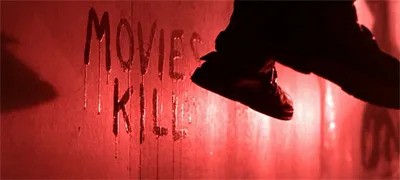
There could not have been a worse time for …Thirteen Years Later. The season was trying to solidify itself as a straightforward, serious show, casting aside the wildness of the second season while behind-the-scenes the initial showrunner of the season was about to be replaced. The fifth episode is not the place for what is perhaps the silliest episode of the series: a halloween special that’s also a goofy comedy. It’s an episode having an identity crisis within a season having an identity crisis within a show having an identity crisis. It’s bad, a real mess, and yet it’s quite entertaining in a ‘I can’t believe this episode exists’ kind of a way.
It’s a comedy that is not particularly funny but it’s saved by its portrayal of Frank. Frank is the same serious Frank, just in a crazy world he can react to. The best moments focus on him rather than the bizarre guest cast. The episode, among other things, is a murder mystery set on a film shoot, the movie being a tasteless exploitative version of a true crime case Frank was a part of. The issue is the episode never picks an angle, isn’t sure of what it wants to parody. Is it about how real cases are bastardised for entertainment, and how the actual victims/detectives/perpetrators feel about that? Is it a parody of actors, of the filmmaking process, or of specific horror films, recreating scenes from Psycho and more? The episode tries its hand at all of them and fails to say much of anything. The final reveal is so silly that any actual meaning immediately evaporates.
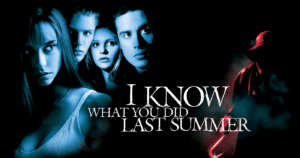
It’s clear that Scream was a huge inspiration but the thing with self-aware horror films is that to be successful they need to have a clever angle and be thrilling in their own right. …Thirteen Years Later seems to think simply recognising cliches and pointing them out excuses relying on them. It also ends with the most obvious twist ending I think I’ve ever seen, cementing it as a pale imitation of a Darin Morgan script. It’s a shame the episode couldn’t bring it all together because Michael R. Perry is a talented writer, previously penning The Mikado, and I don’t blame him. The idea for this episode was thrust upon him and he was forced to continually rewrite it to make the guest stars happy because I have yet to reveal the craziest element of the episode: KISS.
Yes, the episode only exists as an excuse to feature the band KISS. Not only do they appear as themselves to play a (terrible) song for some reason but the members also (attempt to) act in various roles. I’m not a KISS fan and maybe it would work much better if I was, but to me their casting is a bizarre choice that I think damages the show far more than any of the wild things the second season attempted. The show is stuck trying to atone for a second season that is actually great with an episode that is pretty rubbish. All it has going for it is that it has to be seen to be believed.
Worst Episode: Human Essence (S3E8)
Michael Duggan’s final Millennium script also marks his last episode as showrunner, and based on its quality it’s clear why he was replaced. Human Essence is the worst episode of a bad season of television. It accomplishes this feat mainly by being incredibly dull. This isn’t an episode that fails because it takes some big swings and misses them spectacularly, it fails by not really doing anything. It’s generic in a way that is painful to see Millennium become after the show carved out a unique vibe over the previous two seasons.
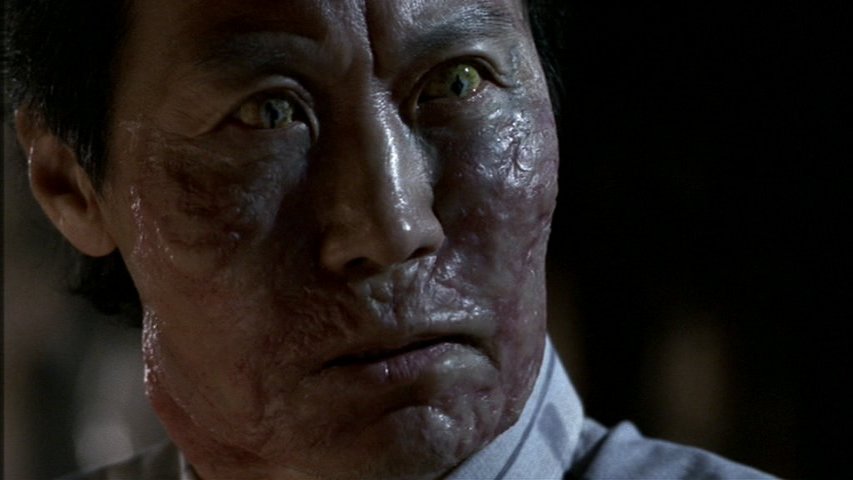
The first half features Emma Hollis as protagonist and the script can’t make her engaging even for those 20 minutes. She might be the blandest character ever on television and the writers have no idea how to make her interesting. Her last starring role was about her dead sister and this episode is about her drug addict half-sister. When a character’s extended family is brought in it’s usually a sign the writers have exhausted all other avenues of character development. For Hollis, that’s all they have from the very beginning. I feel for actress Klea Scott for being given a starring role and then nothing of actual substance.
Hollis is painted almost like a noir detective, searching for information and beating up drug dealers, but she also makes baffling decisions. She gets sent a bag of white powder in the post and decides to taste it. Meanwhile Frank is relegated to second fiddle, acting more like Emma’s unapproving father than a colleague. The episode’s greatest failing might be that it makes me dislike Frank Black. Frank is gruff and tough but he has a heart. He’s caring and empathetic: one of my favourite moments is in The Mikado where instead of angrily chasing after the killer, he hugs the victim and tells her it’ll be okay. In Human Essence he’s sceptical of the supernatural happenings, claiming people are just making it up for attention and has no empathy for any of the drug users; it’s painful to see.
And it’s not just Frank lacking empathy, the whole episode does. The way it tells its drug story feel cheap and the characters are cliché with some truly awful dialogue. The central premise, that a new street drug is turning people into literal monsters, is so unsubtle and simplistic a metaphor. If that’s the idea the show wants to go for then the least it could do is commit and have the monsters be monstrous. As it is, they wear contact lens, have slightly odd skin, and that’s it, yet the word “monster” is used about a hundred times. The motive is also muddled, with a bizarre Chinese backstory for the drugs before hinting at the involvement of the Millennium Group in the final scene once Duggan remembers what show he’s supposed to be writing. It’s terrible.
The Final Destination Episode: Borrowed Time (S3E10)
It’s a classic bit of trivia that the film Final Destination began life as a spec script for The X-Files. This episode of Millennium made me wonder if that script had actually done the rounds in the writers’ rooms for the two sister shows because it is strikingly similar to the movie. It’s a cool, almost reverse twist on the premise. It begins with a disaster, a train crash, and then flashes back and follows an angel of death figure as they kill random people in the manner the crash victims will die, almost as replacement deaths, in order to save the people in the train crash.
It’s a neat idea and if this episode was produced during the first or second season I’m sure it would be a solid instalment. But the third season is where even good concepts go to die. It’s a mess of an episode, approaching the story in a muddled way which makes it seem much more confusing than it actually is. It has what feels like three different opening sequences. And it highlights the worsening production aspects of the series. It’s shocking Borrowed Time was directed by the same director as last season’s The Fourth Horseman, Dwight Little. It’s full of odd little moments, like weird zooms and awkward cuts. Even the performances disappoint. I never thought I’d say this but Lance Henriksen isn’t very good here, with his dramatic scenes at his daughter’s hospital bedside lacking much impact. It’s as if everyone involved had resigned themselves to the fact the show was clearly dead and buried.
Best Episode: The Sound of Snow (S3E12)
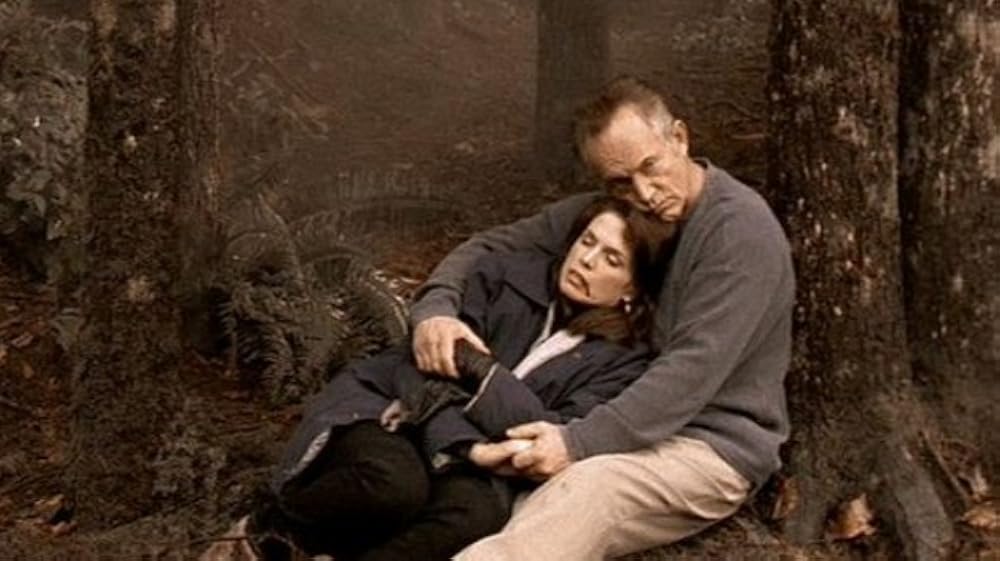
Twelve episodes into its third season Millennium finally remembers the second season finale happened. I wish The Sound of Snow was indicative of what the entire season is like rather than an outlier. It still sidesteps the scale of season 2’s dramatic ending but it commits to following up the emotional cliffhanger. Frank has to confront Catherine’s death, reckon with those events, and it’s by far the most engaging hour of television the season offers.
The Sound of Snow thankfully captures the feel of the earlier seasons. Part of this is due to surface level details, like Detective Giebelhouse appearing and Frank actually being treated as the lead, with Hollis not appearing until midway through the episode. But there’s also a return of strong production values. The directing, editing, writing, acting, and even the stunt work is great here. There’s gorgeous shot of a road lined with trees, covered in mist, that is so reminiscent of early X-Files and Millennium. It’s the first time this season I’ve been impressed with the look of the show.
People are being sent cassette tapes seemingly with only a soundtrack of static, but buried within are subliminal messages that awaken the listener’s specific fears. For Frank, that’s Catherine’s death. The wonky explanation for all this is fine because really it’s only an inciting incident to bring these fears to the surface and actually deal with them. The tapes are so powerful they drive people to suicide, finally giving me the Frank I’ve wanted all season: totally broken and depressed. His worst fears came true and yet up until now he’s been portrayed as more stable than ever for most of the season, a steadfast mentor for Emma. After some weak instalments, Lance Henriksen is back delivering a great performance, finally given something to work with that builds on his previous characterisation in a way that makes sense. It even makes the Millennium Group interesting again for an episode: them delivering Frank the tape perhaps to help him through his pain is the best idea the season has about the Group it otherwise paints as blandly villainous.
The highlight of the episode, and by far the best scene of the season, is Frank returning to his old house. In the best way possible it feels like a scene from season 2. Frank listens to his old music, although it’s The Dark End of the Street by James Carr rather than Bobby Darin, and we see his brightly lit fantasy of returning and the cold reality. The yellow house is now white, a completely blank place rather than the beacon of hope it once was. It’s the imagery of season 1 impacted by the plot of season 2 in the dark aftermath season 3 should be offering, and here it briefly does for one single episode. The Sound of Snow’s finale isn’t quite as impactful or revelatory as it perhaps should be, Frank coming to a fairly flat epiphany, but the emotional journey on the way, retracing his steps and trying to plant new ones, makes for the best watch of the season and a hint at what could have been if the season committed like the second season did.
Best Guest Star: Brittney Tiplady as Jordan Black in Saturn Dreaming of Mercury (S3E16)
It takes great confidence and/or stupidity to base an episode around an 8-year-old girl. Saturn Dreaming of Mercury easily could have collapsed, its entire weight on Brittney Tiplady’s slight shoulders. It’s remarkable that it’s not a complete disaster, even more remarkable that it is actually one of the best episodes of the season. Having Frank’s daughter Jordan be the focus forces some creativity back into the show: it’s an episode that feels somewhat fresh in its writing and direction, including shooting scenes down at her eyeline.
Tiplady has been solid throughout the show, certainly better than most child actors in nineties television. Here she proves that she’s a great actress and for all its significant failings at least the third season existing granted her a chance to shine. And it’s not the regular stock scenes with Frank, the light in his otherwise dark world, she’s given to play. Tiplady has multiple scenes without other actors, having to talk to an imaginary friend who may be something more, a difficult task. Tiplady delivers an assured, strong performance.
Overall, it’s a solid episode with a good concept. Usually we see Frank, a seasoned detective, have to deal with his terrifying visions and piece together the clues. Now it’s his young daughter who struggles to interpret what are visions and what is just her imagination. Even Frank struggles to understand whether demons he sees are literal or just a perception of evil, so for Jordan that confusion is tenfold, mixed with everything else she’s dealing with as a child who recently lost a parent. I’m surprised it took so long to feature Jordan more prominently, there’s storytelling potential there in a season struggling to find any.
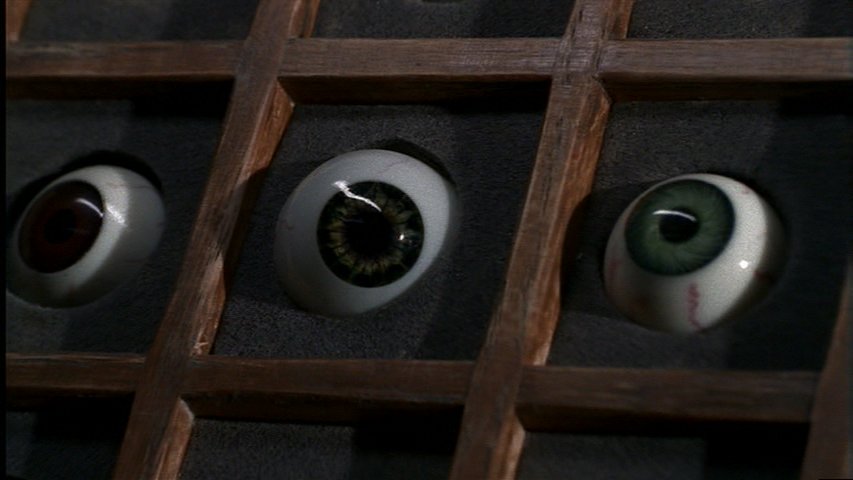
But this is still a season 3 episode. It threatens to fall apart in the final ten minutes, although to no fault of Tiplady. It’s an episode that would have worked better if it played it as a straight serial killer thriller. For the first half it is an intriguing episode, with young Jordan suspecting a new neighbour of being a killer and harming his son, the new boy at school. There’s focus on a glass eye collection, both a creepy image and part of the episode’s theme of sight and perspective. It all seemed to be working so well, even Hollis is okay in it, and then it collapses with some baffling twists and reveals which make no sense and muddle the character and thematic work.
The Twin Peaks Episode: Nostalgia (S3E20)
After his misstep earlier in the season with …Thirteen Years Later, writer Michael R. Perry delivers the final good episode of Millennium with Nostalgia. It’s a solid script that introduces a new perspective on the show’s formula: the killer is identified early in the episode and the focus expands to the wider culpabilities of the deaths in a small town. I kept expecting a twist, a reveal, but no, the obvious answer to who the killer is remains true. Instead, the episode looks into the social elements of the town, the people who turned their backs and the out-of-their-depth local PD, and how that contributed to a serial killer roaming free for years.
It’s an intelligent, subtle, and well-judged episode. It’s also a favourite of mine because it is clearly inspired by Twin Peaks. The body of a blonde girl is found in water and the investigation into her death sparks an examination into the darkness within a seemingly cheerful town. Everyone has something to hide, some secret level of culpability. The girl has a past of prostitution and drugs, writes in a secret diary crucial to the case, and spends her time at a bar called the Roadhouse. There’s even a character named Briggs.
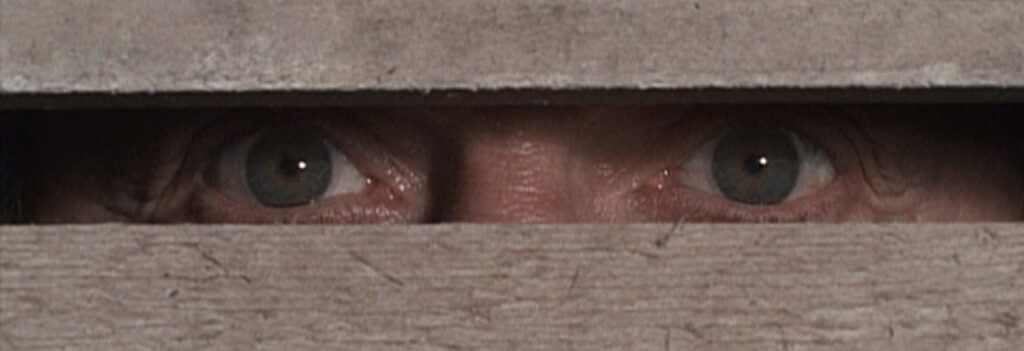
Nostalgia is also a good outing for Hollis, maybe her best episode. It turns out she grew up in the town, South Mills, and she has to suffer the cognitive dissonance of realising the idyllic place of her happy childhood has a dark heart. Sure, the script may introduce this idea with its clunkiest lines (“I liked this place. So did my sister. You know, before… when she was alive”) but by the end its explored well. One of the key themes is the contrast between innocent childhood and criminal adulthood. One second Emma is reminiscing about where she learnt to swim, the next she’s searching for semen stains left by the killer in that same location.
The Lacklustre Series Finale: Goodbye to All That (S3E22)
Each season finale of Millennium has acted like a series finale for what the show has been that year. It’s only fitting then that the third season finale, which acts as the actual series finale, is just as confused, messy, and lame as the proceeding season. It’s not the worst episode, there are flashes of inspiration, but not enough to make it anything more than a disappointment.
Firstly, it’s a ‘serial-killer-of-the-week’ story but one that feels trite. The inspiration of Thomas Harris’s Hannibal Lecter books has been clear to see from the beginning of Millennium, and even the beginning of The X-Files, with Scully being in the Clarice Starling mold. But here, Harris could sue for plagiarism. The killer is Francis Dolarhyde from Red Dragon/Manhunter in all but name, operating in much the same way. He even has a blind girlfriend who doesn’t know of his crimes, with him watching recordings of the murders while she’s in the room, oblivious. He also wears night vision goggles like Buffalo Bill in The Silence of the Lambs. These sequences are well done but there’s nothing we haven’t seen before.
Frank attends the execution of the serial killer who broke him years earlier, only for the dead man to apparently resurface and begin killing again. It’s a decent story idea, one that is identical to House III, also starring Lance Henriksen, but it’s revealed to be part of a baffling Millennium Group plot. Okay, so the Group has mind-altering technology and this is their big plan to fix humanity: the only way to create utopia is to create utopians first, the Sophia Lamb from Bioshock 2 argument. I even like that the Group are trying to defeat Frank by creating a new version of the killer who led to his past mental breakdown. But it goes further than that.
It is revealed the Millennium Group have been creating serial killers anyway, perhaps many featured in the show so far. How does this make sense with what we are presented with in either the very different first, second, or third seasons of the show? It doesn’t. I don’t mind the idea of the group being the bad guys if it’s interesting, like in the second season, but this makes no sense. They are creating both the illness and the cure. Flip flopping between damning the world and saving it with every revelation. Forget closure, the key conflict at the heart of the show has never been more confused than within the episode the series ends on.
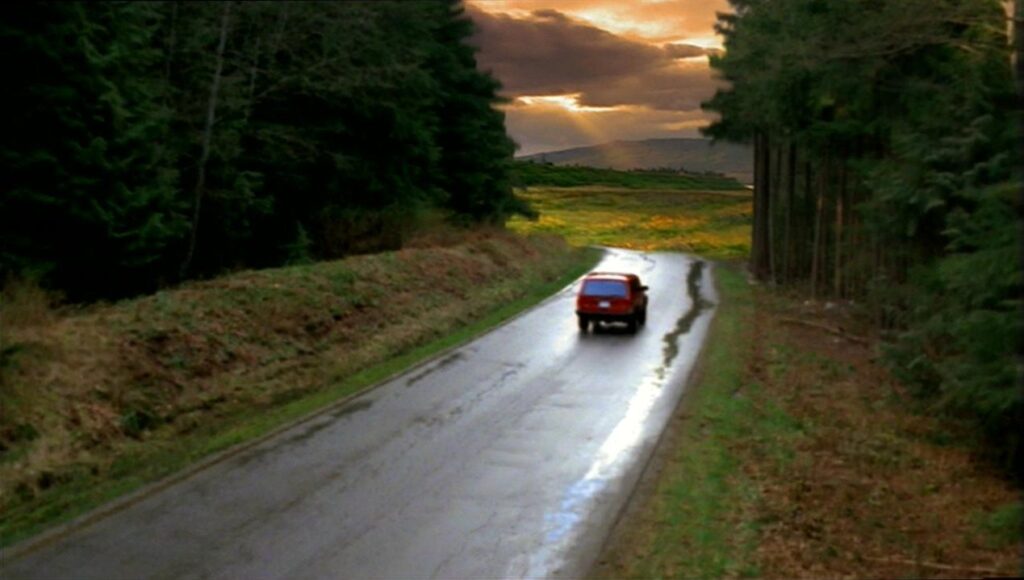
Goodbye to All That is an episode that tries to do too much to close out a season that did too little. Peter Watts, treated as evil all season, undergoes his season 2 arc again in fast forward, being horrified by the truth and helping Frank, only this time seemingly being killed for it offscreen. Emma Hollis is manipulated into being a Millennium Group member and elevated to a new position in the FBI, an arc that’s handled decently well apart from the fact she is given no agency whatsoever. And then the episode, and the series, ends with Frank taking Jordan out of school and leaving their life behind, driving into a landscape of equal bright sun and dark clouds. It’s a fitting final scene and shot but one that could have featured at the end of any case, any episode, rather than a satisfying culmination of the season.
Five Worst Episodes:
5. TEOTWAKWI (S3E3)
4. Exegesis (S3E2)
3. The Innocents (S3E1)
2. Bardo Thodol (S3E18)
1. Human Essence (S3E8)
Five Best Episodes:
5. Closure (S3E4)
4. Omerta (S3E9)
3. Saturn Dreaming of Mercury (S3E16)
2. Nostalgia (S3E20)
1. The Sound of Snow (S3E12)
The third season of Millennium immediately destroys the dramatic ending of the second but spends none of its 22 episodes telling a story worth replacing it with. By the impromptu series finale, the show cancelled the day the last episode aired, Millennium had gone from a story with an outlook, a purpose, and a perspective to a confused muddle. The increasing proximity of the actual millennium only heightened the disarray, the show ending a few months before the big event and less sure than ever what that event would be.
The season lacked a vision. A visionary. The first season had Chris Carter spearheading production. The second had Morgan and Wong. The third had sporadic input from Carter, showrunners being replaced, and a mixture of new and old writers who couldn’t get anything done. No wonder the season didn’t feel cohesive with itself, let alone with the previous seasons.
Watching the entire season only made more clear that my initial thoughts were correct. Millennium should, and in many ways truly did, end with season 2. I would recommend the show to people, particularly X-Files fans, but only the first two seasons. There is nothing to be gained, only lost, by continuing with the third.
And with that, my extensive breakdown of every season of The X-Files, the movies, spin-off show The Lone Gunmen, and sister show Millennium is over. But from recent reports it sounds like a new reboot is on the way from Ryan Coogler, which I’m very intrigued to see, and I think I might have to rewatch and write about the Millennium episode of The X-Files now that I’m familiar with the show. One final(?) article is on the way…