Door Into Darkness: The Missing Link of Dario Argento’s Filmography
The 1973 anthology series came at a time when Argento had shunned giallo, but may have led to his masterpiece Deep Red and beyond
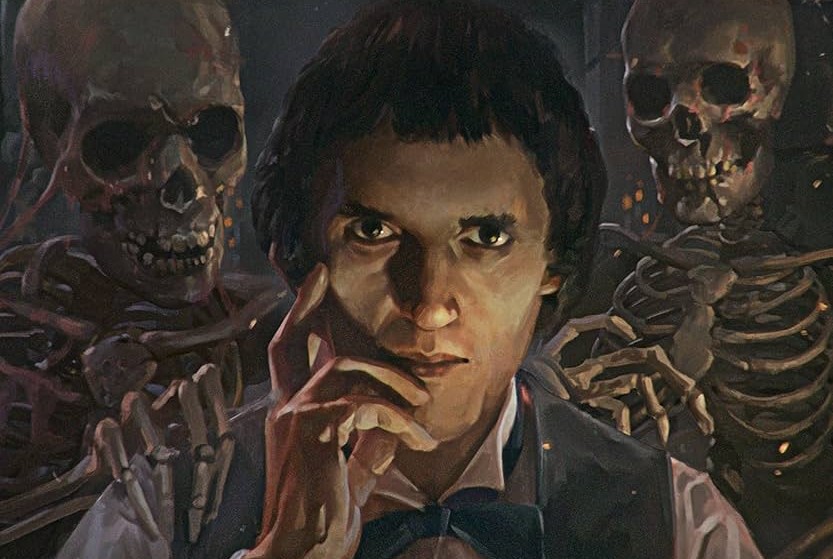
By 1973 Dario Argento had apparently sworn off giallo cinema. He’d popularised the genre in 1970 with The Bird with the Crystal Plumage, leading to a huge influx of imitators, and closed out his makeshift ‘Animal Trilogy’ the following year with two more giallo titles. He’d planned for that to be his final word on the genre, setting his sights on other cinematic avenues. But in 1975 he returned to giallo with his masterpiece Deep Red and has never strayed far since. Looking back now it’s amazing to think Argento would contemplate stopping after those three films. So what happened? What drew him back to giallo?
For years all focus has been placed on The Five Days. A strange, awkward piece of Argento’s canon, the 1973 film is a historical comedy drama film. It was a failure potent enough to drive Argento back to giallo. But recently a forgotten instalment of Argento’s work has seen the light of day. Severin Films have put out a Blu-ray of ‘Dario Argento’s Deep Cuts’, featuring for the first time the filmmaker’s 1973 anthology series Door Into Darkness. I’d never seen the series before. Now readily available, the full journey of Argento’s early directing career becomes clear.
Airing just three months before The Five Days was released in cinemas to lame reviews and returns, I’d argue the success of the show is just as much, if not more so, the reason for Argento to return to big screen giallo with Deep Red. It may not seem like it now, decades later to an international audience, but Door Into Darkness is what made Argento a celebrity director. His films were well known but the show is what made him a popular figure. With only two channels on television at the time, an estimated 30 million people watched the series when it first aired, popularising giallo and Argento like never before, creating a thirst for more that contributed to Argento’s decision to make Deep Red and commit himself fully to the genre he defined.
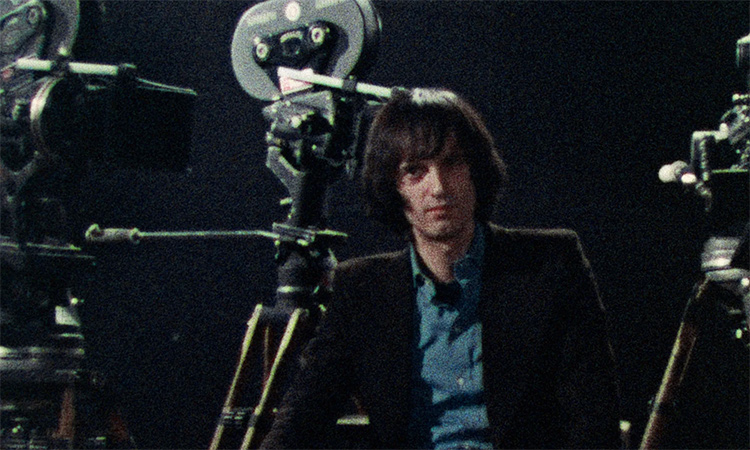
Argento introduces each of the four episodes, Alfred Hitchcock-style, getting his face out there for the first time. For a slightly odd looking man, the hair and make-up team work wonders and turn Argento into a charismatic, enigmatic presenter whose strange qualities manage to come across as somewhat endearing. They are fun intros, thrusting Argento into the spotlight and leaving a more positive impression than The Five Days did negative.
The show, or at least its name and initial premise, is built around the idea of crossing a literal threshold into the unknown, almost stepping into another, darker world that operates by its own rules. It’s an Argento staple, literalising a threshold or border like that, such as in Suspiria when Suzie steps through the automatic door at the airport into a night filled with bad weather, bright lights, and Goblin music, so it’s fun to see it highlighted so prominently. However, like the majority of anthology shows, the episodes themselves are a mixed bag.
The first, The Neighbour, is written and directed by frequent Argento collaborator Luigi Cozzi. It has great atmosphere, but that’s about it. A young couple move into a new apartment and soon discover their upstairs neighbour has killed his wife. There’s a proto-Tenebrae tracking shot which begins by looking into a window of a house and then moving around the exterior to end up on the other side, and great use of darkness. The protagonists notice a patch of damp on their ceiling growing, darkness literally consuming their world, forcing them to investigate. Offering little new, it’s a mixture of Hitchcock’s Rear Window with an ending taken from Edgar Allen Poe, two frequent giallo inspirations.
The worst episode is easily the third, The Doll. Directed by Mario Foglietti, Argento’s introduction challenges the viewer to “guess the identity of the killer before the final revelation.” The twist might have been more successful if that intro didn’t spoil that it would be a twist. The reveal probably would have worked better at the time but (SPOILERS) the killer being the character we thought was a victim and the suspected killer turning out to be her doctor in a weird role play is similar to other popular stories, like Shutter Island. It takes an awful long time to get to the revelation, the 62-minute runtime dragging in the second half.
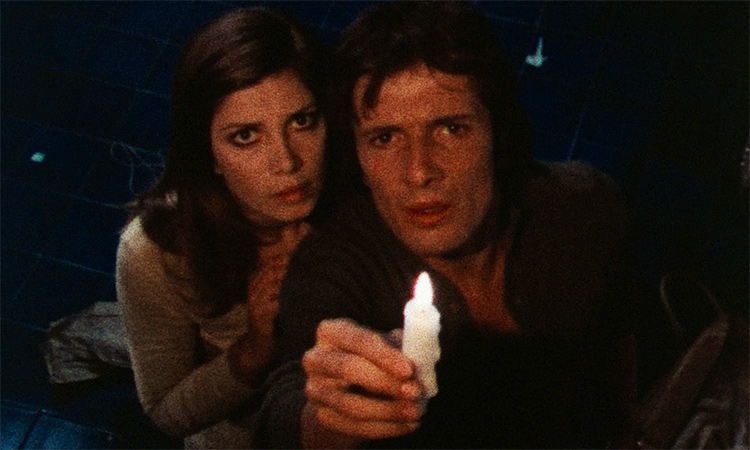
But you come to a Dario Argento TV show for the episodes directed by Dario Argento. Door Into Darkness has two. Or rather, one and a half. For the episode Eyewitness, Argento was unhappy with the original director’s work and after three days fired him and took over production himself. Despite that upheaval, it’s a strong outing, grounded by a great performance by Marilu Tolo. The story is fairly stock early seventies giallo but what makes it interesting is that this is Argento’s only classically ‘F-Gialli’, to use a term by Michael Mackenzie.
Argento’s films of the era focus on male protagonists, often active investigators, and by the time he started featuring female leads his giallo sensibilities had changed to a more surrealistic horror. Eyewitness is Argento’s only classic female-focused giallo where, like many of the period, perhaps best handled by Luciano Erocoli, the lead character witnesses a murder, is blackmailed and tormented by the killer, but no one believes her, leading to intense psychological distress.
But the true highlight is the sole episode written and directed by Argento himself: The Tram. The second episode is classic Argento from his prime period, a middle point between Four Flies on Grey Velvet and Deep Red. Based on a scene Argento originally concocted for The Bird with the Crystal Plumage but didn’t have the time or money to produce, he’s able to expand his idea into a 50-minute episode. The introduction states “a murder can happen anywhere” and the plot details a seemingly impossible crime, a woman murdered and stuffed under the chair of a populated tram car without anyone noticing.
It’s a premise all about perception and memory, classic Argento staples. The idea that someone has seen some important detail to solve the crime, they know it is locked away in their memory, but they don’t know exactly what it is or how to access it; it’s an inner conflict at the centre of many Argento mysteries. Here it plays out with a whole tram-load of people, who get together to recreate the journey and see whether that unlocks the secret. It’s a fantastic premise, aided by a strong cast. It’s a quirky, funny ensemble, including Argento regular Gildo Di Marco. In fact, it’s a full Italian cast because the show was purely for the Italian market: no international guest cast, no English language track.
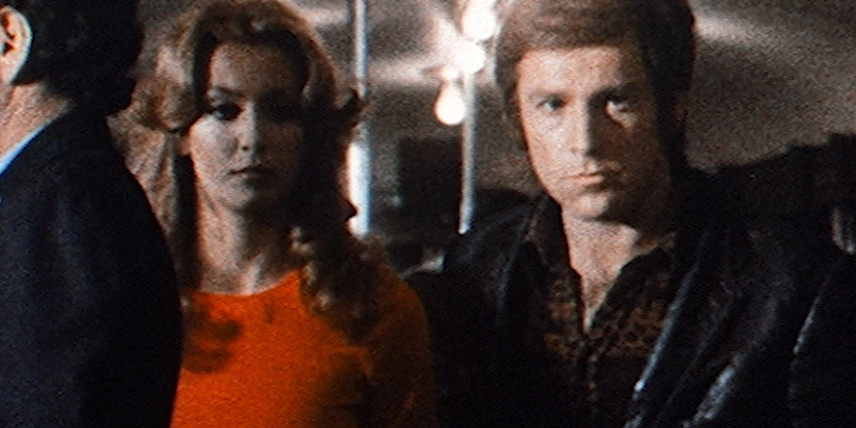
And the best thing: the answer at the end is satisfying! The final realisation is well done. Inspector Giordani (a name Argento frequently reuses) pieces together that as the tram goes around bends, those in the back can’t see what happens in the front for a few seconds, plus bumps in the track cause the lights to briefly switch off, something he couldn’t notice in daylight. This leads to a classic suspense sequence of Giordani’s girlfriend, used as bait, being followed through an empty tram station by the killer, on par with similar sequences in the ‘Animal Trilogy’.
I’m so thankful this show is now available to watch. The Tram, above the other episodes, will become a part of my regular Dario Argento viewing, and I had no idea it existed. A slice of classic giallo from the master himself, from a period where, if the Internet is to be believed, he had turned his back on giallo entirely. That clearly isn’t true and hopefully Door Into Darkness being more accessible will change the narrative. It’s the missing link between his initial trilogy and later, wilder giallo work.