Psycho II is a Surprisingly Strong Sequel
With the temerity to continue Hitchcock’s masterpiece 23 years later, Psycho 2 is a bold, clever, and worthy sequel
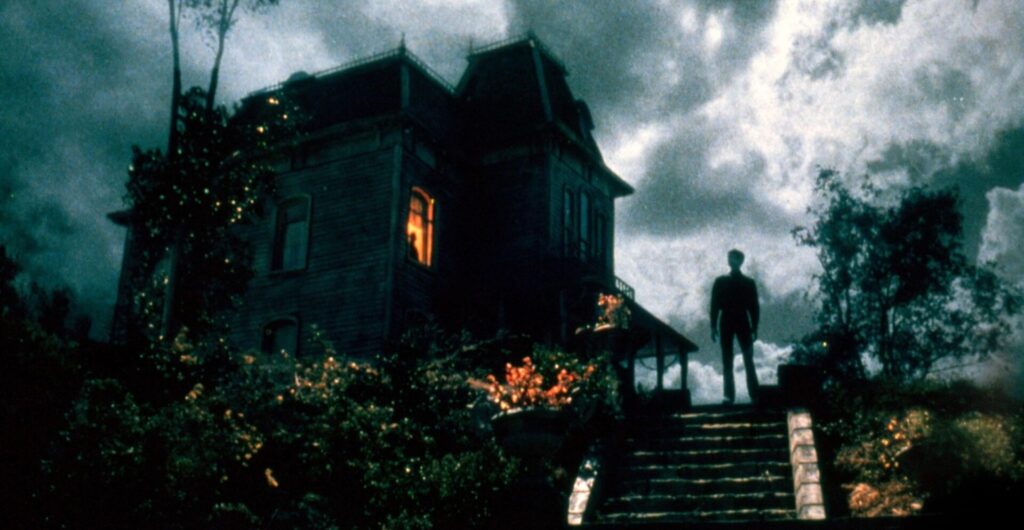
Psycho II is far better than it has any right to be. A belated sequel to a Hitchcock masterpiece, released 23 years after the original, the film easily could have been a disaster. I put off watching it for years because I assumed that it was. There’s no way it’ll be good. The sheer temerity to even dare! And yet it is good. It may not be Psycho good but what is? Psycho II is a surprisingly strong and worthy sequel.
But it starts off on potentially wobbly footing. The sequel opening with the iconic shower scene of the original belies the point the rest of the film makes: this isn’t just Psycho again. The plot is about resisting being Psycho, to an almost meta extent. Norman Bates refusing to be what characters, and the audience, want him to be, demand him to be. It refuses to play him as a horror villain, back in the costume killing again. This isn’t a traditional 80s horror sequel with the slasher back to butchering a few minutes in. Norman never dons the wig or dress in the film. The villains are the people who want that of him.
The film has a brilliant, darkly funny script by Tom Holland (the Fright Night one rather than the Spider-Man one). It wisely rushes through the setup of Norman being released and returning home, able to own and work the motel, moving quickly enough for us to barely notice how that makes little sense. The sequel allows Norman to be how he was in the original before the reveal. He’s the protagonist, and a sympathetic one at that. Anthony Perkins is once again great, now the most boyish-looking middle-aged man I’ve ever seen.
While Norman isn’t the killer (until the very, very end) the film tries to play with the idea that it could be him. It’s an idea I was never able to buy into. There are only a few scenes towards the end in which he acts dangerously, clearly frazzled and near breaking point, holding a knife over his lodger Mary’s bed like he’s Luke Skywalker. This isn’t an issue, however. Because while the film works as a thriller, with twists and reveals and murders, it is foremost an accomplished drama. I’d watch a version of this film without any killings, a character study of a man seeking to reform in a world adamant on denying him that, a now sane man being driven insane by people trying to prove he’s already insane. It’s a fun, clever tale which never takes the cheap or easy route.
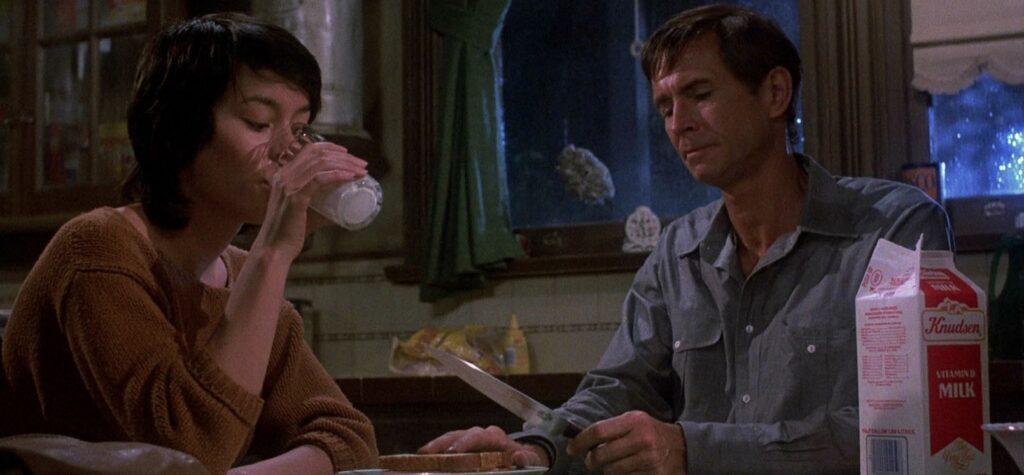
Psycho II casts the (surviving) heroes from first film as the villains and the killer as the new hero. It’s a bold move. Lila Crane, now Lila Loomis, who discovered Mother’s corpse in the original is now the controlling mother herself this time, forcing her daughter Mary to befriend Norman and try to drive him insane again so he gets sent back to the prison she feels he belongs. There are new twists on the original’s twists, making a game of subverting expectations, to use an increasingly trite phrase. The final reveal is that the mother is alive this time: the title Psycho II almost being a pun referring to the fact there’s a second psycho.
It is a film deeply respectful of Psycho when it needs to be but is not precious or beholden to it. It may put some new twists on classic scenes, even repeat some shots and feature a cameo by Hitchcock’s silhouette, but it is ultimately a very different film in a different style. Director Richard Franklin was a student of Hitchcock, and clearly knows how to put together a tense sequence in his style, but importantly he also knows when to draw the line. Franklin can’t best Hitchcock so goes in different visual direction, just as the script does. Although, one of these new styles is a Dutch angle so tilted I expected Adam West’s Batman to show up.
While I don’t think the sequel should have been in black & white, the move to colour is jarring. Without the b&w and torrential rain of the original, it is a very bright and sunny film. The first film hides the dry Californian setting in a way this one can’t and it’s an odd vibe, looking more like Texas Chainsaw Massacre, the motel seemingly in the middle of a desert. It’s hard to imagine the body-disposing swamp can exist there. I can see why the Bates Motel TV show moved the location to the Pacific Northwest. But the visuals and other production values are otherwise strong, including the music. Jerry Goldsmith is the composer and made the bold decision to not use the Bernard Herrmann score from the original despite being able to. His orchestral work for most of the film is great, although there are a few moments he uses a synthesizer which sounds like Ming’s theme from Flash Gordon.
The kill sequences, the horror, might be the weakest part of the film, but thankfully it works so well as a psychological drama without them. There’s a third party introduced, Mrs Spool, to act as an actual killer, generate further conflict, and have some actual deaths that the film could easily exist without. There are some inklings of slasher movie sensibilities (which Psycho III will take further) like teenagers sneaking into Norman’s basement for sex, who are just there to be killed and they pose no threat to Norman so it’s unclear why they are killed at all. It seems The Shining had an influence, too: Robert Loggia’s psychologist character (it’s weird seeing him as the least crazy character in a film rather than the most) goes out in very Dick Halloran fashion as soon as he finally gets to the house. Mary dressing up as Mother to satiate Norman is also very Friday the 13th Part 2.
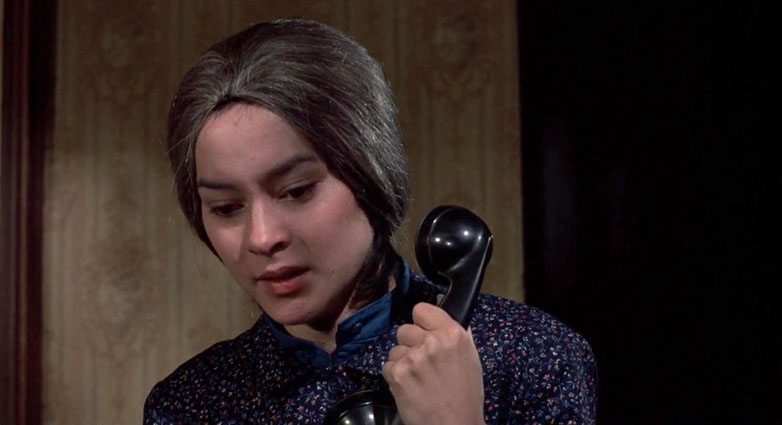
The kills themselves begin as very quick and not too bloody, tamer than the original, but escalate towards a bloodbath of a finale. Lila gets a knife to the mouth while Norman is subject to the bloodiest moment himself, stabbed multiple times, including some unsubtle stigmata markings. Times have changed and the film is not subject to the same censorship as Hitchcock’s film. Now a shower scene means bare breasts and while the original supposedly shocked audiences by being one of the first films to show a toilet flushing (the horror!) this time we see a toilet flush and blood flow out by the gallon.
It’s not just Anthony Perkins delivering a great performance. I think Meg Tilly as Mary almost steals the movie from him. She is excellent in a very difficult role. She has to be convincing as the naïve and innocent young woman Norman befriends, then manipulative at times, and then redemptive. To Norman she’s an object of desire (although briefly, and despite being cast as the romantic heartthrob in his career, I’ve never seen Anthony Perkins have much sexual chemistry onscreen, at least with women), a daughter figure, and then a mother figure. Someone so young convincingly acting as a maternal presence is no mean feat. The role almost went to Carrie Fisher but I’m glad Tilly was cast. She should have been a bigger star.
I never expected Psycho II to be this good. And after watching the rest of the franchise, it is surprisingly solid throughout. Psycho III might not be a particularly good film but it is interesting enough to merit a watch, and Psycho IV is decent, if a little dull. The first sequel is so good that the canon-busting final twist, that Norman’s real mother isn’t Norma but her sister, alive and (mentally un)well, which I would normally completely reject, sat perfectly fine with me. The final bonk on the head and brilliant final image conclude a sequel I would have argued didn’t need to exist but now that I’ve seen it I think is a worthy follow-up and a brilliant film in its own right.