Hotel Room: David Lynch’s Fascinating, Forgotten TV Show
The failed 90s pilot highlights an interesting transition point in David Lynch’s career
Just when I accepted we’d never get any more David Lynch projects, I discovered Hotel Room. The director has a famed body of work, from surreal masterpiece Eraserhead to his magnum opus Twin Peaks: The Return. As a huge fan, I thought I’d seen just about everything – a sad realisation. But then his most forgotten piece of work appeared on YouTube, a three-part television pilot made for HBO which I had never heard of, let alone seen. Hotel Room is an anthology show never straying from Room 603 of a hotel, each episode featuring different guests in a different time. It’s like HBO’s Room 104 but 20 years earlier; or Lynch’s Twilight Zone, complete with him giving an opening narration à la Rod Serling.
Lynch directed the first and third episodes of the show, aired together as a 100-minute TV feature. It’s also a joy to see the names of so many of his frequent collaborators pop up in the opening credits, cementing this as a significant part of his oeuvre. Angelo Badalamenti composed the score, Johanna Ray responsible for casting, and Peter Deming was DOP. It’s fun to see Monty Montgomery in the Mark Frost position, the co-showrunner of the series, because while he was a producer on Wild at Heart he’s best known to Lynch fans onscreen as The Cowboy in Mulholland Drive. Most notable however is writer Barry Gifford, who wrote the novel Wild at Heart and then collaborated on the script for Lost Highway.
The first episode is set in 1969. Why? I don’t really know. It could be set at any time and I think that might be the point. These are human stories about relationships and conflict and universal drama, relevant in any decade. The Railroad Hotel could be a real place but in a very Lynchian way is a waystation, a waiting room, featuring the same bellhop and maid in all time periods like benevolent denizens of a Lodge in Twin Peaks. A liminal space between time and worlds. Hotel rooms are generic places which house all aspects of humanity before the guests move on and the room is reset. The anthology show embraces that fact. The room is time travel, is metamorphosis, just like the motel rooms in Twin Peaks: The Return, which literally transport people in time and space.
![Hotel Room (1993) HD Remaster [Full Series]](https://i.ytimg.com/vi/6jjQ6qZVJQs/0.jpg)
David Lynch is usually such a cinematic visual director but Hotel Room, particularly the first episode, is him as his most stripped back. People describe Twin Peaks as being a monumental shift in bringing filmic qualities to television but the same cannot be said for this show. It is purposefully simple, and shot like a play. It is perhaps a little too bland, with some scenes feeling stilted. The first episode reminded me of the first Ben and Jerry Horne scene from the premiere of Twin Peaks: The Return, which is so flat compared with the rest of the series. Thankfully, no matter how banal the visuals might be, Lynch’s trademark sound design, complete with unsettling ethereal whooshing, creates plenty of atmosphere.
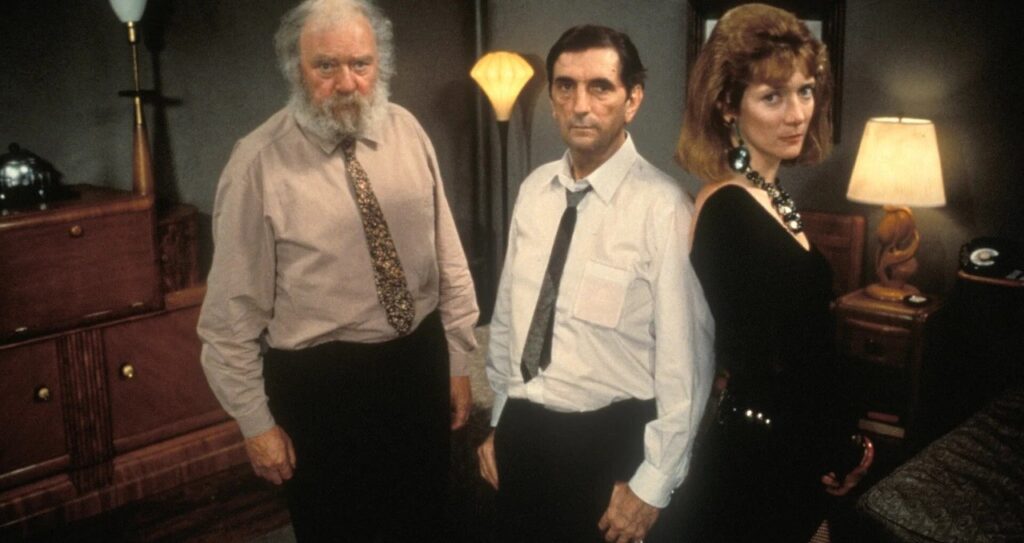
While Hotel Room is an extended pilot for a show that was never picked up, the first episode does actually work fascinatingly well as a kind of pilot for Lost Highway. Lynch and Gifford try out some ideas that would come to dominate that movie. It’s about a man, played by Harry Dean Stanton, who seemingly kills his wife and retreats into another personality to cope with it. It’s the Lynch take on a split personality, an extreme identity crisis, which is a classic twist for any anthology show, like the Inside No.9 episode Tom and Gerri. While Lynch has dealt with this idea before, such as Leland/BOB in Twin Peaks, this feels like the proto version of what comes to dominate in his later work like Mulholland Drive.
In that way Hotel Room is the interesting middle piece of Lynch’s canon. It includes actors and the feel of his earlier work but begins to explore the themes and ideas of his later work. For a forgotten show, it does feel somewhat vital to understanding the timeline of his career. Even the actors used are transitioning. This is the final of five collaborations between Lynch and Freddie Jones, which I’ve always found strange because I know Jones most from soap opera Emmerdale. It’d be like if Ian Beale kept popping up in Cronenberg films or something.
I don’t have much to say about the second episode. Neither directed by Lynch or written by Gifford, it’s simply not very good. It’s so dull and I imagine is what most episodes of the show would have been like if it were given a full series order. It’s boring watching a couple fight for 30 minutes without much insight. The script is nowhere near as funny or clever as it thinks it is, and not worthy of Lynch. The only positive is Deborah Kara Unger, an actress I love from her performance in Crash, one of my favourite films, but she’s wasted. She would have been a brilliant choice for one of Lynch’s troubled women if he had a chance to direct her.
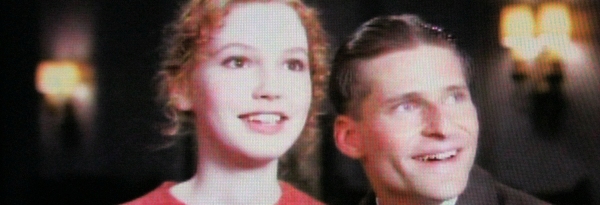
Thankfully the third episode is far more successful. It’s the instalment with a story that most fits the contained location. It is personal, emotional, and intimate. It barely leaves one small corner of the room and yet is engaging throughout. And it is pure Lynch. Gifford’s script was only 17 pages and Lynch turned it into a 47-minute episode, expanding on the script much like he did with the second season finale of Twin Peaks. It’s also the only visually interesting episode of the three. It’s dark and moody, set during a blackout with only a lantern and some candles for lighting.
The episode focuses on a couple, played by Alicia Witt and Crispin Glover, staying in New York to visit a doctor to help the psychological trauma of them losing a son. It’s a basic setup but it’s layered with strange ambiguities and asides that flesh out the couple, who eventually come together and seemingly move past the death of their child. And yet, as the lights come on, electricity crackling in classic Lynch fashion, she calls their son’s name into the all-encompassing light shining through the window. It’s the most blatant example of the hotel’s true nature: a limbo between life and death, similar to how such locations are used in The Sopranos or The Leftovers. At least, that’s what I got from it; I’m not looking to explain the episode but feel it.
As with the first episode, the third also has some repeated Lynch ideas. The female character is named Diane, and there are actually characters named Diane in two of the three episodes. She’s an innocent figure, childlike and angelic, a being of pure good. At one point she is literally a beacon of light in the darkness, walking around a pitch black room with the sole light source. It’s hard not to relate her to Laura Palmer. The ending, her gazing into light and seemingly finally free, is also similar to Fire Walk With Me. Her introduction, blind and incoherently mumbling, also reminded me of Diane’s alternate form Naido in Twin Peaks: The Return. It’s worth noting that Alicia Witt’s performance is exceptional. Crispin Glover is good too, and surprisingly reserved. Glover in a Lynch project is a combination which could create the wildest performance ever but he plays it totally straight.
It was fantastic to find new David Lynch to watch in 2026, a year after being affected by news of his death. I’m not going to pretend Hotel Room is a forgotten masterpiece, a true hidden gem. That’s the ideal narrative but it’s not totally true. I think Hotel Room is one of his weaker projects but it’s still David Lynch. It’s well worth a watch and there are still some fascinating connections and ideas that fans will want to experience. Any Lynch project which ends with Harry Dean Stanton grabbing his head and screaming “I don’t understand!” is quality viewing. It was great to finally watch it. Now only the difficult-to-find On The Air remains unseen. That Japanese bootleg on eBay is calling.